

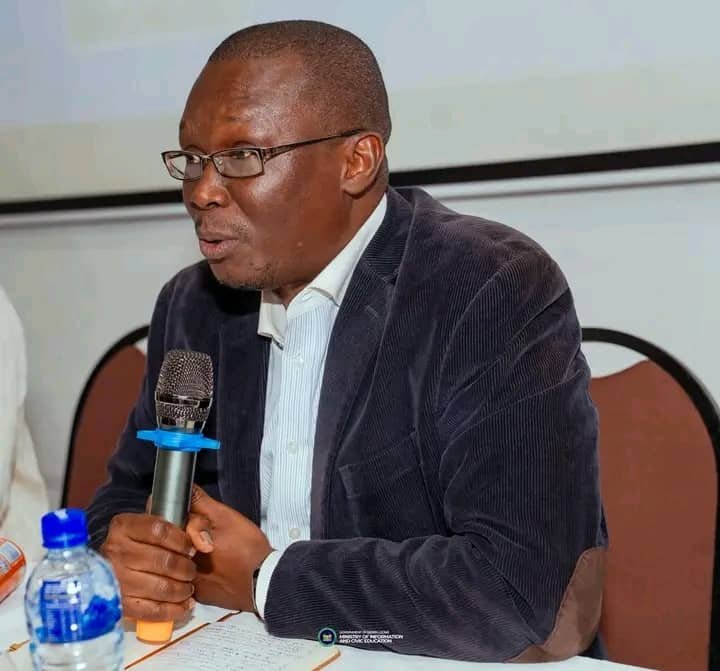
By: Mohamed Sahr
The Ministry of Information and Civic Education (MOICE) on Friday convened a high-level special press engagement in Freetown to discuss two major national priorities: the 2026 Census and the 2026 National Budget.
Moderated by the Minister of Information and Civic Education, Chernor Bah, the engagement featured three principal speakers: Matthew Dingie, Financial Secretary, Ministry of Finance Andrew Bob Johnny, Statistician-General and Head of Statistics Sierra Leone (Stats-SL) Kunle Adeniyi, UNFPA Representative in Sierra Leone
The session aimed to deepen public understanding of the technical and policy decisions underpinning both the national budget and the upcoming census.
Financial Secretary Matthew Dingie delivered the first detailed briefing, offering insights into the 2025 Budget, which had been laid before Parliament only hours earlier. He explained that the budget was crafted under clear and specific directives from His Excellency President Julius Maada Bio. “This must be a poor-people’s budget one that protects the vulnerable, lowers the cost of living, creates and safeguards jobs, and strengthens service delivery.”
Dingie acknowledged that the global economic landscape remains challenging, with international development assistance declining across low-income countries. He stressed that Sierra Leone must now depend more on domestic revenue mobilization, fiscal efficiency, and clear national priorities.
“External aid is slowing everywhere. Every country is dealing with its own pressures. So we must harness our own resources to support our people, while utilising partner support when it comes,” he said.
Several tax reforms were highlighted as central to easing financial pressure on households. A major policy shift includes the removal of all taxes on household solar equipment such as panels, batteries, and inverters as well as LPG gas and cooking canisters.
Dingie stressed that this measure will make clean and affordable energy more accessible, especially for rural and peri-urban families. “If you buy your solar equipment abroad at a reasonable price, it will now enter the country tax-free. That means cheaper access to 24-hour power for homes,” he explained.
Local manufacturers producing essential goods such as bottled water, tomato paste, cooking oil, eggs, juices, and condiments will continue to receive incentives to expand production and create jobs. In contrast, imported equivalents will attract 35% tax, a move designed to boost domestic manufacturing.
“If we want jobs for our young graduates, we must support the private sector. When companies grow, they hire more Sierra Leoneans,” Dingie emphasized.
The budget reinforces the government’s Big Five Agenda, with key investments in:
Education: Nearly US$50 million allocated for nationwide school feeding in 2025.
Health: Improvements in healthcare contributing to increased life expectancy from 52 to 62 years in recent years.
Agriculture: Support through the Agricultural Investment Fund and mechanisms designed to stabilize food prices.