

(Feature)
By: Saidu Jalloh (Intern)
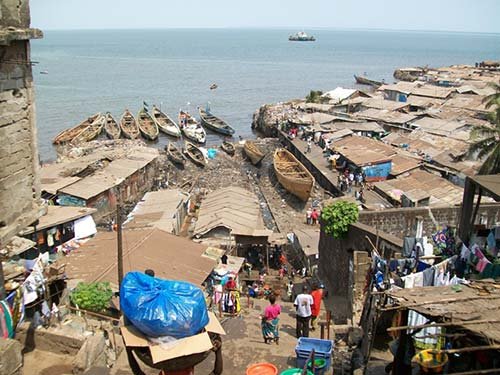
Susan’s Bay a sea side community in Freetown, a home to almost two thousand people, and it is one of Freetown’s largest and informal settlements unable to access formal houses.
My visit there exposed me to many things though it is not new to many. Susan’s Bay, like any other bays, is faced with a lot of challenges, ranging from poor drainage which causes flooding in the community and poor waste disposal which also imbed lack of environmental sanitation. Residents empty their waste in the sea which affects fishes and pollutes the water. In fact, most of them do not have access to pure and clean water, hospital, schools and community gathering.
It’s difficult to even imagine the poor conditions of the people there. And yes, it’s evident that most of them live in penury. Houses are mostly dilapidated, narrowly set together by tiny apartments.
Unless and until you actually experience this nightmare, you won’t relate better to the way of life at Susan’s Bay slum.
Six to eight people share a cramped room and only they know how so many people fit in such a small room. There are no streets but consist of narrow paths, hinged like a corridor, which expose you to the Susan’s Bay Slum.
During the rains, people do not have peaceful night rest with leaking roof over their head, flooding and damage of properties, rubbish in drains and gutters can also cause water to stagnate, leading to various diseases.
The seaside slums have disease outbreaks and floods, while accommodations are cheaper for people live there.
With these challenges, these people are still living a happy life. They prefer a life at Susan’s Bay to that of Waterloo as the Community Chairman revealed to me.
They have their own way of life and culture which is unique, perhaps completely different from others living in other parts of the capital.
Slums settlers also contribute significantly to the economic force neglected by government. There are lot of businesses done down there unknown to people outside slums and government.
Government has tried to relocated residents from flood-prone slums in recent years, but they either refused or simply returned when water levels receded.
They demand to move, but this is just a lip service. We can no longer live here they say, but guess who is back the next day? They blame flooding on people living at the top of the hill for dumping trash in the drainage, but that is not the problem. They simply live in dangerous flood-prone areas.
Amid widespread criminality, the menace of disease and the perpetual risk of heavy rain, it is the threat of eviction from their corrugated steel and tarpaulin shacks that hangs heaviest over tens of thousands of slum dwellers.
But the government has now enacted a new land policy last year, which has possibly provisions for forceful evictions of slum dwellers and address the current lack of land security.
However, the state is wavering between two options: developing the slums or relocating its inhabitants, according to Francis Anthony Reffell, manager of the Slum Livelihood Project at the Young Men’s Christian Association (YMCA) in Freetown.
“The message from the slum dwellers is clear,” he said. “Upgrade wherever possible, and relocate only where necessary.”