

The United Nations World Food Programme (WFP) has welcomed the disbursement of US$3.2 million from the United States Agency for International Development (USAID), in order to provide emergency food and development assistance to 68,000 women, men, and children in Sierra Leone.
The assistance was precipitated by the ongoing Russian/Ukraine war on Sierra Leone`s economy and it has been acknowledged by WFP.
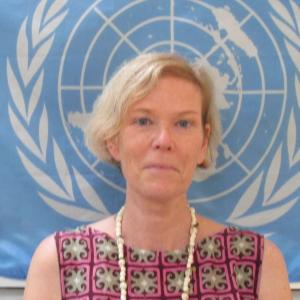
“Sierra Leone imports a large quantity of its food, and with the global food and fuel crisis, compounded by the Russia-Ukraine conflict, poor households have not been spared,” said Yvonne Forsén, WFP’s Country Representative and Director “Inflation has also meant that people now buy fewer commodities from their income, which is increasing hunger levels.”
With the new funding, WFP would provide emergency cash transfers to the worst-hit communities expand homegrown school feeding and support agricultural efforts to strengthen people’s resilience.
Some 40,000 people in Port Loko, Tonkolili and Pujehun Districts would receive mobile money to meet their immediate food needs. Elsewhere, WFP would also provide cash to 30 more schools in Kambia and Pujehun Districts in order to buy fresh vegetables and highly nutritious sweet potatoes directly from small-scale farmers for 6,400 children.
WFP will also provide agricultural equipment for small-scale farming communities and Mother Support Groups in Falaba, Koinadugu, Tonkolili, Kambia, Moyamba and Pujehun Districts in order to clear more land, process rice and produce feed for poultry enterprises. Some 95 farming groups managing Village Loans and Savings (VLS) schemes will receive training in Financial Management.
“The United States of America is committed to supporting all the people of Sierra Leone in achieving human development and we are encouraged that this funding will benefit entire communities including school children and small-scale farmers,” the American Ambassador, David Reimer, said.
”This contribution underscores our desire to invest in the local economies through school feeding and agriculture and stimulate community-led systems that can break the cycle of hunger and malnutrition” Reimer added.
The Food Security Monitoring System analysis of August 2022 found that 81 per cent of households in Sierra Leone were unable to meet their basic food and nutrition needs. Of these, 15 percent were severely food insecure, requiring emergency food assistance.
Data from the joint government and WFP market monitoring also shows that the price of imported rice, the staple food in Sierra Leone, rose by 40 per cent between January and October 2022, while that of locally produced crops almost doubled, forcing most households to expend over 75 per cent of their incomes on food.
In terms of monitoring the implementation of such funding, Madam Forsen in an exclusive interview said there are two interventions within the said funding; one way is that WFP supports households with physical cash through electronic mobile money. She furthered that these beneficiary households are selected based on the vulnerability criteria together with the Ministry of Social Welfare and Child’s Affairs, Chiefdoms and Locations based on food security and assessment. She added that such a method has been in existence since 2019 with successful feedback.
Madam Forsen also assured that WFP works with the farmers directly adding that, they are not just a donor that gives out and sit back. Rather, she said WFP has created more than 140 farm-based organizations which they work with and has been supporting them in every sector.
“We do not just give the farming equipment to farmers we conduct training for them and also work with Ministry of Agriculture, extension workers and also monitoring the farmer-based organizations in seeing that the equipment is used in the right way”, she stated.
The Country Director also mentioned that training farmers to use the right seeds and advising them to use the right kind of fertilizers have been the cardinal focus for WFP to always work alongside the farmers for a certain period of time with annual support.