

By: Precious Miracle Kargbo (Snr)
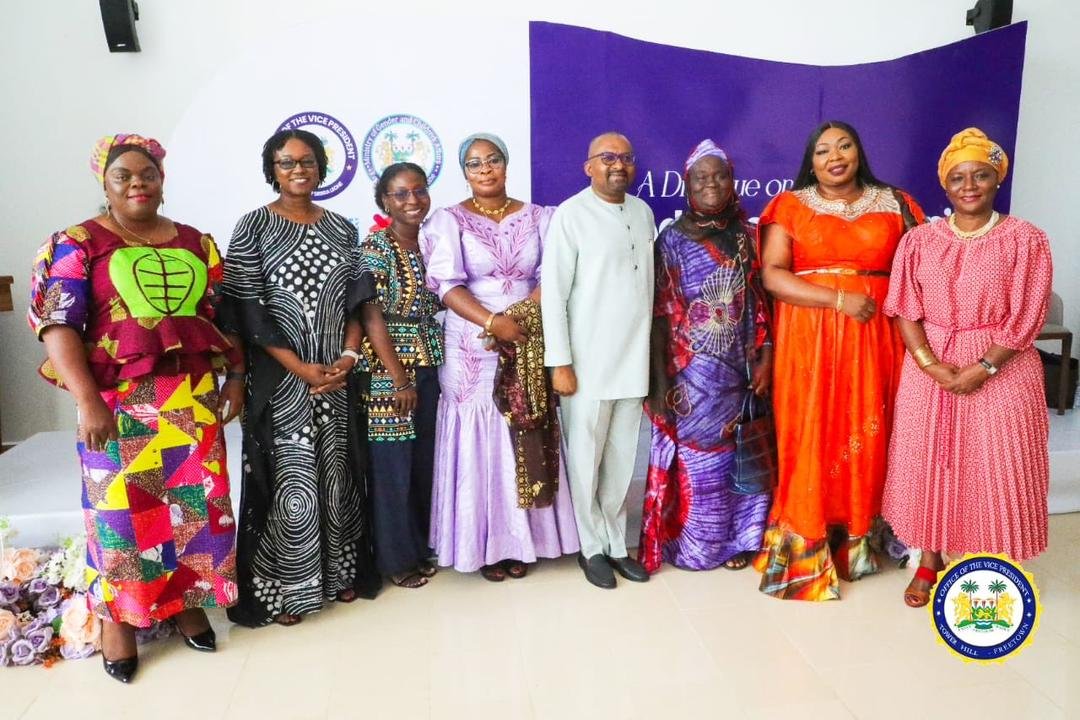
Vice President Mohamed Juldeh Jalloh devoted a full day to a Women’s Dialogue that brought together a cross-section of Sierra Leonean women to examine implementation gaps and set priorities for the forthcoming National Women’s Conference, officials said.
The session focused on translating the landmark Gender Equality and Women’s Empowerment Act 2022 from legislation into measurable change at the community level.
Framing the event as a deliberate listening exercise, Dr. Jalloh remained present throughout the dialogue to hear women from diverse backgrounds including civil society activists, grassroots organisers, professionals, and community leaders share candid perspectives on progress and ongoing challenges. Participants reviewed achievements under the GEWE Act while identifying obstacles that continue to hinder women’s full participation in public, economic, and social life.
A recurring concern raised during the dialogue was the implementation gap. Participants noted that although the Act provides legal guarantees including provisions on women’s representation and economic rights these commitments have not always translated into immediate improvements on the ground.
Women at the forum called for clearer operational plans, dedicated budget allocations, and stronger institutional capacity at the local level to enforce the law effectively. Practical recommendations that emerged included targeted training for frontline officials, improved referral systems for survivors of gender-based violence, and enhanced support mechanisms to help women entrepreneurs access finance and markets.
Dr. Jalloh highlighted President Julius Maada Bio’s commitment to recognising women as central actors in Sierra Leone’s inclusive development agenda. He thanked participants for openly sharing their experiences and solutions, emphasising that the dialogue forms part of a broader consultative process.
According to the Vice President, insights and recommendations from the Women’s Dialogue will directly inform the agenda and priorities of the upcoming National Women’s Conference, which aims to convert discussions into coordinated national action.
Organisers said the conference will provide a platform to harmonise sectoral strategies, establish time-bound targets, and mobilise resources to operationalise the GEWE Act across ministries and local councils. Participants also recommended the establishment of strong monitoring and accountability frameworks, including regular public reporting and active involvement of women’s organisations in tracking implementation.
Speakers further stressed that legal reform must be accompanied by changes in social norms. They proposed expanding community outreach initiatives, engaging traditional and religious leaders, and launching public education campaigns to encourage families and local institutions to uphold women’s rights.
Economic inclusion was also highlighted as a key priority. Participants emphasised that improved access to land, finance, and public procurement opportunities is essential for shifting power dynamics and enabling women’s economic independence.
Civil society representatives welcomed the Vice President’s hands-on engagement but noted that political commitment must be matched with concrete resource allocations. Dr. Jalloh’s full-day participation signalled the government’s readiness to listen; organisers now expect the National Women’s Conference to deliver a clear roadmap for translating the GEWE Act’s promises into tangible outcomes for women across Sierra Leone.