

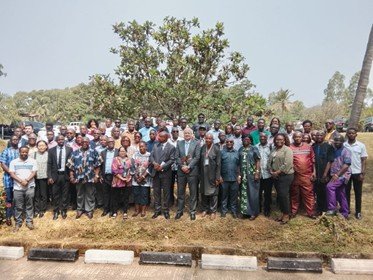
UNICEF and the Mastercard Foundation, in collaboration with the Ministry of Health, on Wednesday launched a nationwide verification and geo-mapping exercise for the Community Health Workers (CHWs) programme on 28th January 2026.
The launch took place at the Radisson Blu Hotel and brought together officials from the Ministry of Health and development partners within the health sector.
In his opening remarks, Dr. Brima Osio Kamara, Director of Primary Health Care at the Ministry of Health, thanked Community Health Workers for their dedication, noting that they serve as the first line of defense in communities against malaria, typhoid, and other common ailments.
“Today’s programme seeks to answer key questions about CHWs: What are their qualifications? Are they committed? Do they have the necessary knowledge, and where are they located?” Dr. Kamara said. He emphasized the importance of addressing challenges faced by CHWs and highlighted the role of geo-mapping in improving coverage and linking workers to specific communities.
Dr. Kamara added that the exercise aims to ensure the sustainability of the CHWs programme by accurately identifying who the CHWs are and where they operate. He thanked UNICEF and partners for funding the initiative and urged District Medical Officers to take the process seriously to strengthen primary health care delivery.
Speaking at the launch, UNICEF Country Representative Rudolf Schwenk highlighted the challenges of accessing health care in remote communities, particularly for children. “Community Health Workers are often the first and sometimes only health professionals children encounter. They are not only the backbone of primary health care but a vital link between families and the health system,” he said.
Schwenk noted that the initiative, made possible through the support of the Mastercard Foundation, reflects a shared commitment to government-led solutions that strengthen national systems and deliver results for children, especially those living in hard-to-reach areas.
“The nationwide verification of over 6,000 Community Health Workers, alongside the geo-mapping of more than 2,000 CHWs into a national digital registry, will ensure services are better planned, more effectively targeted, and accountable,” he added.
Dr. Alieu Wurie, Deputy Chief Medical Officer at the Ministry of Health, emphasized the critical role CHWs play in primary health care. He noted that institutionalizing the CHWs programme has improved community engagement, including increased clinic visits by pregnant women and the distribution of bed nets.
“CHWs are community members trained to deliver services at the community level, not in health facilities. They bridge gaps for communities far from health facilities. We are now considering expanding their scope and role,” Dr. Wurie said, expressing gratitude to partners for their continued support.
In the keynote address, Deputy Minister of Health Professor Charles Senesie acknowledged the Ministry’s partners for their support and stressed the importance of a strong primary health care system.
“CHWs are the first line of defense during disease outbreaks and other health emergencies. While gaps in data remain, this geo-mapping exercise will help us identify and solve these challenges. We aim to leave no one behind and accelerate quality health care delivery across the country,” he said.
The launch highlighted the critical role of Community Health Workers in preventing avoidable deaths among children, particularly in hard-to-reach communities, and demonstrated Sierra Leone’s commitment to leveraging digital tools to strengthen its health care system.