

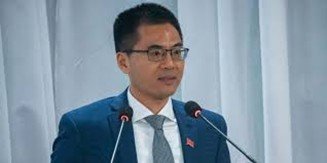
By: H.E. Wang Qing
Chinese Ambassador to Sierra Leone
The One-China principle, enshrined in UNGA Resolution 2758, is a fundamental norm in international relations and a prevailing international consensus. It reflects the direction in which history is moving and aligns with global opinion. However, some countries have recently colluded with the authorities in Taiwan, misinterpreting UNGA Resolution 2758 and spreading fallacies such as “Taiwan’s status is undetermined.” This is a blatant challenge to the principles and purposes of the United Nations Charter and the post-WWII international order. To clarify the historical facts and set the record straight, I wish to share the truths concerning the Taiwan question with our Sierra Leonean friends.
Taiwan has been an inseparable part of China since ancient times. In 1894, Japan launched an aggressive war against China, forcing the Qing Dynasty to cede Taiwan to Japan, which led to Taiwan’s occupation for half a century. During World War II, the Cairo Declaration of 1943 and the Potsdam Proclamation of 1945 both explicitly stipulated that territories stolen by Japan, including Taiwan and the Penghu Islands, should be returned to China. In September 1945, Japan signed the instrument of surrender, and China resumed its sovereignty over Taiwan. Taiwan’s restoration to China is the result of the victory in WWII and is an integral part of the post-war international order.
On October 1, 1949, the People’s Republic of China (PRC) was founded, becoming the legitimate successor to the Republic of China (1912–1949). The new government of the PRC replaced the previous KMT regime, while China, as a subject of international law, remained unchanged. Due to civil war and external interference, the two sides of the Taiwan Strait have been in a prolonged state of political confrontation. However, China’s sovereignty and territorial integrity have never been divided, and Taiwan’s status as part of China’s territory has never changed, nor will it ever be allowed to change.
In October 1971, during the 26th session of the United Nations General Assembly, UNGA Resolution 2758 was adopted. It “decides to restore all its rights to the People’s Republic of China and to recognize the representatives of its Government as the only legitimate representatives of China to the United Nations, and to expel forthwith the representatives of Chiang Kai-shek from the place where they unlawfully occupy at the United Nations and in all the organizations related to it.” This resolution decisively addressed, politically, legally, and procedurally, the issue of China’s representation at the UN, including Taiwan. It made it clear that only one seat represents China at the UN, and there is no room for the so-called “two Chinas” or “one China, one Taiwan.”
After the adoption of UNGA Resolution 2758, all official UN documents referred to Taiwan as “Taiwan, Province of China.” The UN’s Office of Legal Affairs issued an official legal opinion stating that “the United Nations considers ‘Taiwan’ as a province of China with no separate status,” and that “the ‘authorities’ in ‘Taipei’ are not considered to enjoy any form of government status.”
UNGA Resolution 2758 stands as a testament to the authority and impartiality of the United Nations and reflects the global consensus on the Taiwan question. Adhering to the resolution and upholding the One-China principle is a serious political commitment and legal obligation for all UN members. However, certain countries have recently attempted to reverse history by distorting UNGA Resolution 2758, emboldening “Taiwan independence” separatist activities, and spreading false claims such as “Taiwan’s status is undetermined.” These actions seek to contain China and undermine its sovereignty and territorial integrity, as well as international justice and the rule of law. Such attempts will ultimately fail.
Sierra Leone is one of the co-sponsor countries of UNGA Resolution 2758 and made significant contributions to its adoption. Over the 54 years since the establishment of diplomatic relations between China and Sierra Leone, Sierra Leone has consistently upheld the One-China principle and supported China’s just cause of national reunification. I would like to express my sincere appreciation for this.
Currently, both China and Sierra Leone are members of the UN Security Council, bearing important responsibilities to uphold international peace and security, as well as to safeguard the authority of UN resolutions. China stands ready to work with Sierra Leone to uphold the purposes and principles of the UN Charter, defend international equity and justice, and jointly promote global peace, security, and prosperity.