

By: Precious Miracle Kargbo (Snr)
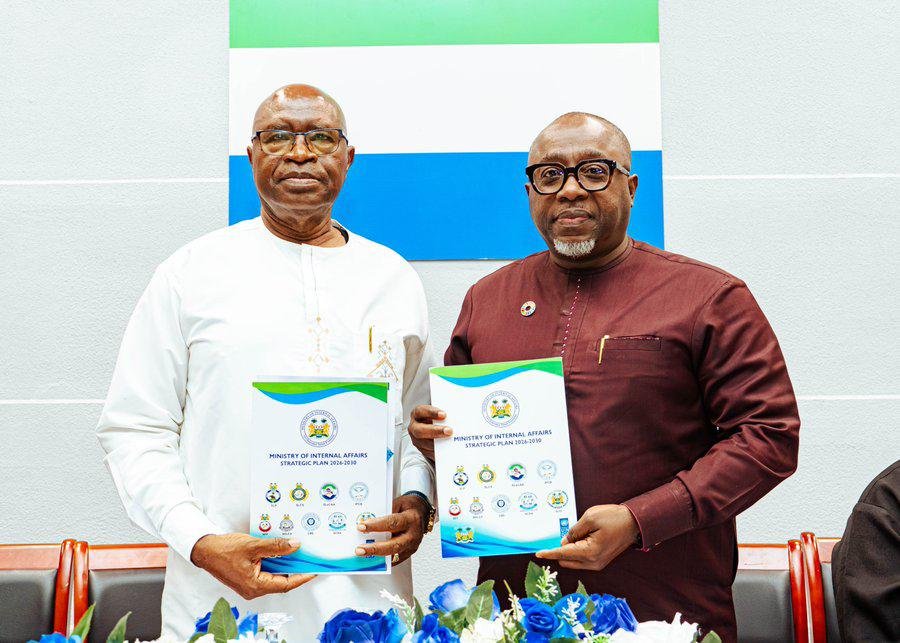
The United Nations Development Programme (UNDP) in Sierra Leone on Monday joined the Ministry of Internal Affairs to officially launch the Ministry’s Strategic Plan for 2026-2030 a landmark, homegrown roadmap designed to modernize public order management, immigration services, and border protection across the country.
Officials described the five-year plan as the first of its kind for the Ministry: a nationally led, evidence-based framework that outlines strategic priorities, institutional targets, and implementation mechanisms aimed at improving citizen security and public service delivery. Developed with technical and financial support from UNDP, the strategy seeks to align the Ministry’s core functions with broader national governance and security sector reform objectives.
The plan sets out measures to professionalize public order management, enhance immigration services, and strengthen border control capacity. Key interventions include modernizing systems and operational processes, investing in staff training and capacity building, upgrading infrastructure and information management platforms, and improving inter-agency coordination at both national and border levels. The strategy also emphasizes adherence to human rights standards, transparency, and community engagement to ensure that security measures respect civil liberties and build public trust.
Speaking at the launch, UNDP Resident Representative Fred Ampiah reaffirmed the agency’s commitment to sustained technical partnership and coordinated action with government institutions. He noted that UNDP will continue to support the Ministry in translating the strategic framework into concrete and measurable reforms, particularly in areas such as capacity development, digital systems design, and institutional strengthening. Officials highlighted that effective donor coordination and adequate domestic budget allocations will be critical to implementing the plan successfully.
Policy analysts have welcomed the Ministry’s ownership of the strategy but cautioned that significant implementation challenges remain. Sustained financing, the procurement of appropriate technologies, and the recruitment and retention of skilled personnel were identified as key hurdles. Effective monitoring and evaluation mechanisms will also be essential to track progress and ensure accountability. The Strategic Plan reportedly includes clear performance indicators and milestones to guide implementation and reporting.
Civil society and human rights organizations underscored the importance of embedding strong safeguards within the plan, particularly in areas related to border management and public order operations, to prevent abuses and discrimination. They recommended strengthening community policing initiatives, establishing accessible grievance redress mechanisms, and providing training in international human rights standards to complement technical upgrades.
Regional cooperation is another central component of the strategy, reflecting the transnational nature of migration, trafficking, and cross-border crime. Strengthening partnerships with neighbouring countries and relevant regional bodies is expected to enhance information sharing and enable more coordinated responses to shared security challenges.
The launch marks a significant step in Sierra Leone’s efforts to modernize its internal affairs institutions while grounding reforms in national ownership and international best practices. As the Ministry and UNDP transition from planning to implementation, stakeholders will be closely monitoring progress for tangible improvements in service delivery, accountability, and citizen safety.