

By: Aminata Sesay
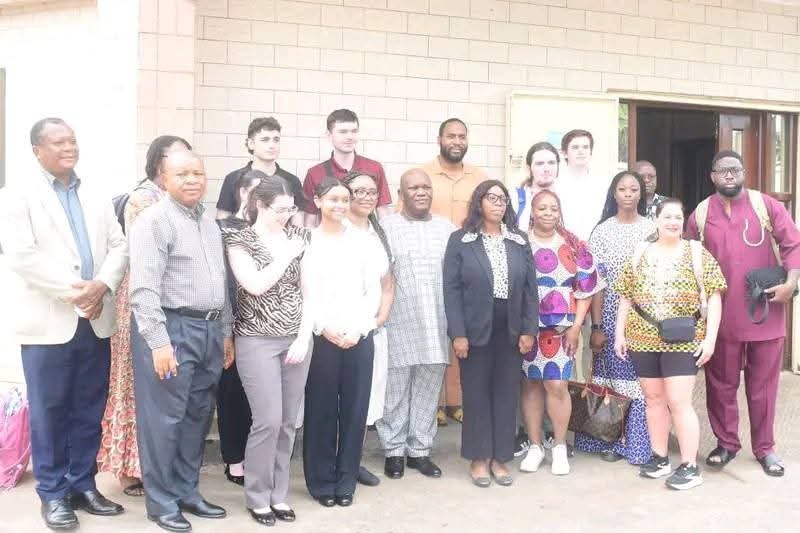
Sierra Leone’s post-war recovery efforts were highlighted on Monday when the Human Rights Commission of Sierra Leone (HRCSL) hosted a delegation of diplomacy students from Seton Hall University in the United States.
The delegation, comprising thirteen students and a lecturer from the university’s School of Diplomacy and International Relations, visited the Commission as part of an academic seminar examining post-conflict reconstruction and institutional reform. The study tour focuses on how countries emerging from civil war rebuild governance systems, strengthen accountability mechanisms, and restore public trust.
Rather than a ceremonial engagement, the visit developed into an in-depth institutional dialogue, offering the students direct exposure to Sierra Leone’s human rights architecture and reform journey.
Welcoming the delegation at the Commission’s headquarters at Tower Hill in Freetown, Commissioner Hassan Samba Yarjah described human rights as a shared global responsibility, emphasising that the principles guiding the Commission transcend national borders.
The discussion then turned to the origins and legal foundation of the Commission. Executive Secretary Joseph Kamara explained that the HRCSL was established by an Act of Parliament in 2004, in line with the internationally recognised Paris Principles governing national human rights institutions. He outlined the Commission’s broad mandate, which includes human rights protection and promotion, treaty monitoring, complaint investigations, and providing policy advice to the government.
Beyond its structure and mandate, the delegation showed particular interest in how theory is translated into practice. Discussions covered the Commission’s complaint-handling mechanisms, public education initiatives, and collaboration with state and non-state actors key elements in strengthening democratic governance in a post-conflict setting.
Addressing questions about institutional independence, Commissioner Simitie Lavaly clarified the statutory procedures through which Commissioners are nominated, vetted, and appointed, underscoring the safeguards designed to preserve the Commission’s credibility and autonomy.
For the visiting students, the engagement provided valuable real-world insight into the complexities of rebuilding institutions after conflict. For HRCSL, the visit reaffirmed Sierra Leone’s continued relevance as a case study in resilience, reform, and democratic consolidation.
The exchange reflects growing international academic interest in Sierra Leone’s recovery journey and the evolving role national institutions play in advancing accountability, the rule of law, and sustainable peace.