By: Saidu Jalloh
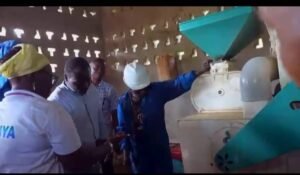
In a significant stride towards achieving food self-sufficiency in Sierra Leone, Tivamya Sierra Leone Limited has officially launched a state-of-the-art rice processing plant and agricultural training center in Pujehun District on Saturday 11th October 2025. This facility is a key contribution to the government’s Feed Salone initiative, aimed at boosting local rice production, packaging, and farmer training across the country.
The new plant is set to not only enhance Sierra Leone’s domestic rice processing capacity but also act as a hub for equipping local farmers with modern agricultural skills. The launch represents a major milestone in Sierra Leone’s journey to reduce rice importation and achieve food security.
During the commissioning ceremony, Madam Lilian Rogers, Chief Executive Officer of Tivamya Limited, expressed her gratitude to the Government of Sierra Leone for its continued support of local agri-businesses.
“We are grateful for the government’s backing and proud to contribute meaningfully to the Feed Salone vision,” Madam Rogers stated. “Our aim is to ensure Sierra Leone produces enough rice to feed itself year-round.”
Madam Rogers announced that Tivamya has already cultivated 200 hectares of rice and plans to expand to 10,000 hectares by December 2025. She urged fellow farmers to unite in ensuring food sufficiency, emphasizing that the time to end rice importation is now.
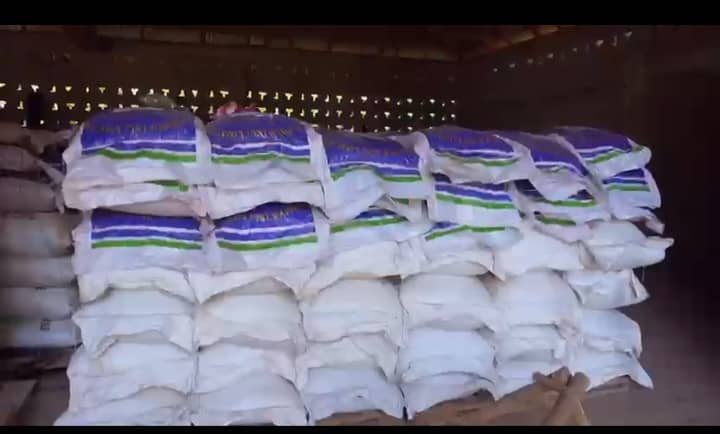
Additionally, she unveiled Tivamya’s newly branded rice packaging and announced that their products are now available in Freetown (Lumley Beach Road), Bo, and Kenema. She assured the public that Tivamya rice is available year-round, not just during the dry season.
“We are not only in Pujehun. Our facilities in Bo and Kenema are fully operational, processing and selling rice across the country,” she noted, encouraging Sierra Leoneans to support locally grown products.
Madam Rogers concluded by reaffirming the company’s commitment to producing healthy, homegrown food and called on more Sierra Leoneans, especially youth, to join the agricultural revolution.
“Let us all contribute to making Sierra Leone food self-sufficient. Agriculture is the future, and we are ready to lead the way,” she affirmed.
Speaking with AZ Newspaper, Mr. Saffa Woya Rogers, Proprietor of Tivamya Limited, highlighted the company’s growing presence in Bo, Pujehun, Blama, Wonde, and Gbondape, emphasizing Tivamya’s national footprint.
“We call on every citizen to embrace the Feed Salone initiative to promote President Julius Maada Bio’s flagship program. This is not about politics it’s about food security and emancipating our people,” Mr. Rogers said.
He also shared that Tivamya has expanded its investments into fisheries and animal husbandry to ensure the country has sufficient fish and meat, further reducing reliance on imports.
At the event, Dr. Henry Kpaka, Minister of Agriculture and Food Security, commended Tivamya for its innovation and steadfast commitment to local agriculture.
“Tivamya is one of the few Sierra Leonean companies that packages and brands locally grown rice,” Dr. Kpaka remarked. “They are not just selling rice they are changing the narrative around agriculture in Sierra Leone.”
Dr. Kpaka further praised Tivamya’s diverse agricultural operations, which include oil pressing, livestock rearing, and bean production, calling the company a “champion and star of the Feed Salone project.” He added that Tivamya’s model of youth empowerment and agribusiness development aligns perfectly with President Bio’s vision of a food-secure Sierra Leone.
Founded by Madam Lilian Rogers, Tivamya Sierra Leone Limited is a fast-growing, indigenous agri-business focused on sustainable food production, farmer empowerment, and value addition through processing and packaging. Operating in Pujehun, Bo, and Kenema, Tivamya continues to play a pivotal role in Sierra Leone’s agricultural transformation.
With its focus on modern farming techniques, rural job creation, and year-round rice availability, Tivamya stands as a key partner in advancing the government’s efforts to achieve food self-sufficiency and eliminate dependence on food imports.