

By: Saidu Jalloh
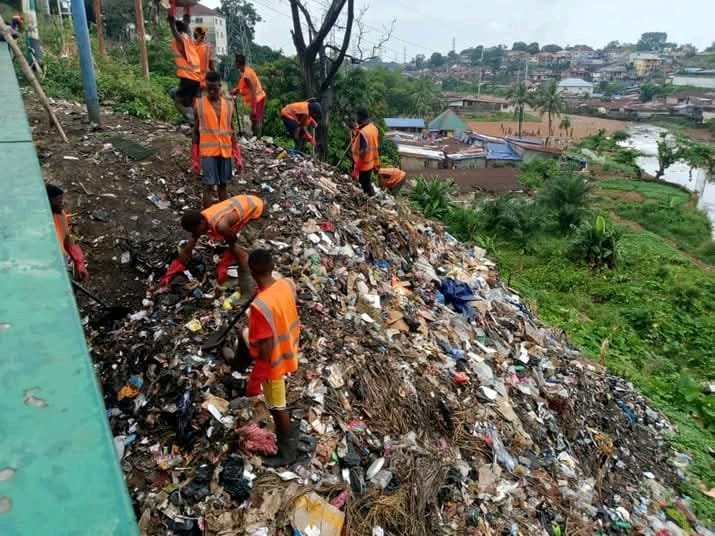
Freetown, Sierra Leone’s bustling capital, is a city rich in history, culture, and vibrant daily life. Yet beneath this energy lies a persistent and growing public challenge: poor waste management. Every day, hundreds of tonnes of solid waste are generated across the city, but only a fraction is collected and properly disposed of. As a result, streets, drainages, and neighborhoods are increasingly littered with rubbish, posing serious risks to public health, the environment, and the city’s overall development.
Freetown’s waste management system continues to struggle to keep pace with the volume of rubbish produced. Estimates indicate that the city generates approximately 550 tonnes of solid waste daily, yet only about 30 per cent is formally collected and transported to designated disposal sites. The remaining waste is often buried, burned, or dumped indiscriminately in drains, waterways, and informal dumping sites scattered across the city.
Several factors contribute to this challenge, including rapid urbanization, population growth, and Freetown’s difficult topography. The city’s steep hills, narrow roads, and densely populated informal settlements make it difficult for waste collection vehicles to access all areas efficiently.
When waste is not collected regularly, residents often resort to indiscriminate dumping—leaving rubbish in open spaces, along streets, and in waterways. These practices clog drainage systems, a problem that becomes especially severe during the rainy season. Blocked drains are a leading cause of flooding in Freetown, disrupting daily life and accelerating the spread of waterborne and vector-borne diseases.
Plastics, food waste, and other debris block culverts and water channels, causing rainwater to overflow onto roads and into homes. Stagnant water then becomes a breeding ground for mosquitoes and other disease carriers, increasing the risk of malaria, cholera, typhoid, and other infections particularly in low-income communities and informal settlements.
Beyond disease transmission, poorly managed waste contributes significantly to air and water pollution. Burning garbage remains a common disposal method in many neighborhoods, releasing harmful smoke and toxins that irritate the lungs and worsen respiratory conditions. When waste contaminants enter water sources, drinking water quality is compromised, leading to gastrointestinal illnesses and other serious health hazards.
These risks are especially acute for children, the elderly, and residents of overcrowded communities where waste accumulates quickly and sanitation infrastructure is limited.
Concern over poor sanitation has also drawn strong reactions from the highest levels of government. Speaking at the opening of a newly refurbished police quarter in eastern Freetown, Vice President Dr. Mohamed Juldeh Jalloh stressed that police officers deployed across the city must take responsibility for maintaining cleanliness at their checkpoints particularly at strategic locations such as Mile 38 and other major security points, which he described as “entry and control points that should reflect order and discipline.”
The Vice President warned that indiscriminate dumping around police stations and checkpoints would no longer be tolerated. He cautioned that individuals found disposing of refuse in such areas should be arrested and charged.
“If a person leaves their home to dump rubbish at a checkpoint or police station, that individual should be jailed,” Dr. Jalloh said, adding that officers who ignore such behaviour risk encouraging indiscipline and undermining public order.
He further warned that poorly managed waste around security installations could pose serious security threats, as heaps of refuse may be exploited by criminal elements to conceal illegal activities.
Dr. Jalloh revealed that he has called for a meeting with the Mayor of Freetown to address the growing challenge of indiscriminate dumping, which he described as an emerging urban crime requiring coordinated action between central government and local authorities.
According to him, sustained collaboration is needed to ensure regular waste collection, strict enforcement of sanitation laws, and discipline for individuals who deliberately undermine public order. While emphasizing that cleanliness is a shared responsibility, the Vice President noted that the police have a primary duty to enforce safety, discipline, and order. He urged officers at checkpoints to take ownership of their surroundings, insisting that maintaining cleanliness should be treated as part of their operational responsibilities not merely traffic control.
In response, the Freetown City Council (FCC) has taken steps to improve waste management services. These include reinstalling public trash bins across the city to encourage proper disposal and urging residents to use only FCC-approved waste service providers to prevent illegal dumping.
The Council has also partnered with private companies through concession agreements aimed at modernizing waste collection in different parts of Freetown. Digital platforms and mobile payment systems are being introduced to make waste services more accessible and responsive.
Despite these efforts, many residents believe progress remains slow and insufficient. Complaints persist about overflowing waste on streets, inadequate cleaning crews, and clogged culverts especially during the rainy season.
Improving waste management in Freetown will require coordinated action from government authorities, private sector partners, civil society, and residents themselves. Strengthening regulatory enforcement, expanding collection coverage, investing in recycling and composting initiatives, and intensifying public education on sanitation are critical steps toward building a cleaner and healthier city.
Effective waste management is not merely an environmental concern it is a public health imperative that directly affects the wellbeing of every resident. Ensuring that Freetown’s streets and communities are free from rubbish is a challenge worth confronting for the sake of both present and future generations.