

By: Saidu Jalloh
In a landmark move to enhance agricultural productivity, the Sierra Leone Agricultural Research Institute (SLARI), in partnership with the Morocco-based agricultural company OCP, has officially launched a research-driven initiative aimed at reducing soil acidity across Sierra Leone.
This collaborative project marks a major step in addressing one of the most persistent challenges facing Sierra Leone’s agricultural sector acidic soils that limit nutrient uptake and stunt crop growth. By improving soil health, the initiative seeks to significantly increase crop yields and support national food security efforts
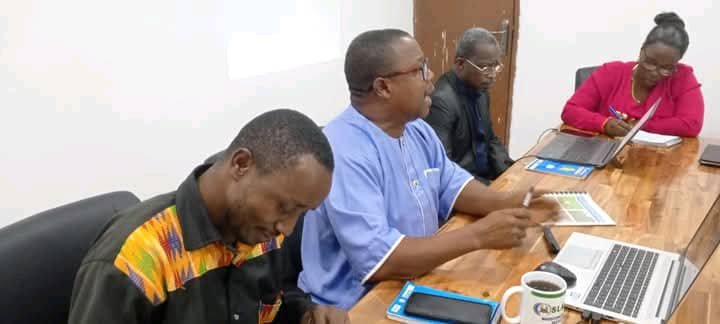
A pivotal planning meeting convened to kick off the project brought together a cross-section of stakeholders, including SLARI researchers, soil scientists, crop specialists, farm managers, and agricultural extension officers. The session provided a strategic platform for aligning efforts, sharing technical knowledge, and mapping out actionable steps for effective implementation.
Key discussions focused on the systematic preparation of field trial plots, where various methods for mitigating soil acidity will be tested. The group reviewed appropriate application rates of agricultural lime and the balanced fertilizer NPK 15-15-15, while also stressing the importance of timing and frequency to maximize effectiveness.
The research team also laid out comprehensive data collection protocols to monitor changes in soil pH, nutrient availability, and crop performance. This approach is designed to generate credible, evidence-based findings that can inform national agricultural policy and extension programs.
Speaking at the event, Dr. Abdul Rahman Conteh, Acting Director General of SLARI and a seasoned Chief Research Officer, emphasized the need for high-quality, science-based research.
“We are not just seeking resultsvwe are seeking reliable results that can inform national policy and extension services,” Dr. Conteh stated.
Two staple crops rice and maize have been chosen for the pilot field trials due to their critical importance to food security and livelihoods in Sierra Leone. Field experiments led by crop and soil experts will evaluate best practices for neutralizing acidity and improving crop outcomes.
Soil acidity in Sierra Leone, often caused by prolonged use of certain fertilizers and natural leaching processes, severely restricts root development and nutrient absorption. By tackling this challenge, the project has the potential to unlock increased productivity for smallholder farmers, many of whom struggle with declining yields.
Looking ahead, it is expected that the findings from this initiative will contribute to a national soil health strategy, offering sustainable, science-led solutions for farmers across the country. This collaboration between SLARI and OCP could also become a regional model for agricultural innovation across West Africa.
In conclusion, the Soil Acidity Reduction Project, combining local research capacity with international expertise, stands to be a transformative milestone in Sierra Leone’s pursuit of resilient, climate-smart, and productive agriculture.