

By: Saidu Jalloh
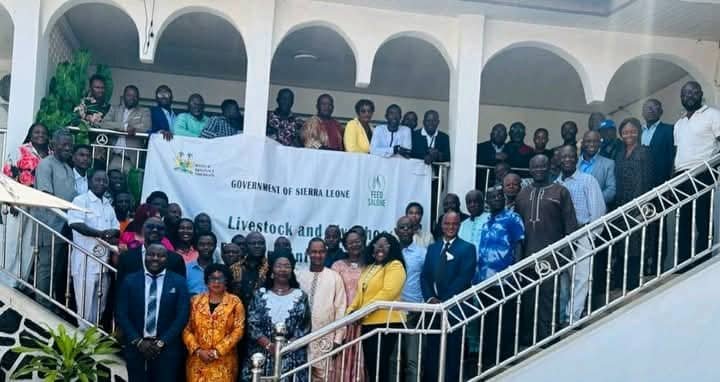
The Ministry of Agriculture and Food Security (MAFS) has commenced a three-day Start-Up Workshop for the Livestock and Livelihood Development Project (LLDP) at Hotel Barmoi in Freetown, marking the official launch of the project’s operational phase. The LLDP is co-financed by the International Fund for Agricultural Development (IFAD), the Islamic Development Bank (IsDB), and the Government of Sierra Leone.
The workshop brought together key stakeholders across the livestock value chain to review the project design and reinforce a common understanding of roles, responsibilities, and expected outcomes as implementation begins.
Speaking on behalf of the Ministry, the Deputy Minister of Agriculture and Food Security, Dr. Theresa Tenneh Dick, commended the LLDP project team and MAFS technical units for their diligence. She described the initiative as a transformative intervention for the livestock sector one aimed at strengthening food security, boosting livestock production, improving livelihoods, and enhancing climate resilience for livestock farmers.
Dr. Dick explained that the project will be implemented across 12 livestock-farming districts, with a focus on improving smallholder livestock production and productivity. She noted that the initiative will support micro- and small-scale livestock enterprises while ensuring strong institutional support and effective coordination. As Sierra Leone pursues increased agricultural productivity and sustainable land management, she said, the LLDP provides a timely opportunity to address longstanding challenges in the livestock sector.
Representing IFAD, the Country Representative for Sierra Leone and Liberia, Pascaline Barankeba, affirmed that the workshop reflects a shared belief in the transformative potential of the LLDP. She underscored the project’s strategic value as a response to a national priority promoting sustainable livestock production, stimulating job creation, improving household nutrition, and strengthening climate resilience.
Barankeba stressed that the success of the project will not be measured by the amount of money disbursed, but by the tangible changes experienced by farmers—in their fields, in markets, and within their households. She added that the workshop was intentionally designed to be practical and solutions-oriented.
Providing an update on preparations, Project Coordinator Tejan Koroma reported significant progress, including the establishment of the Project Management Unit to deliver early interventions.
Participants concluded the workshop by offering recommendations on key actions required to ensure the effective and efficient implementation of the LLDP.