

By: Aminata Sesay
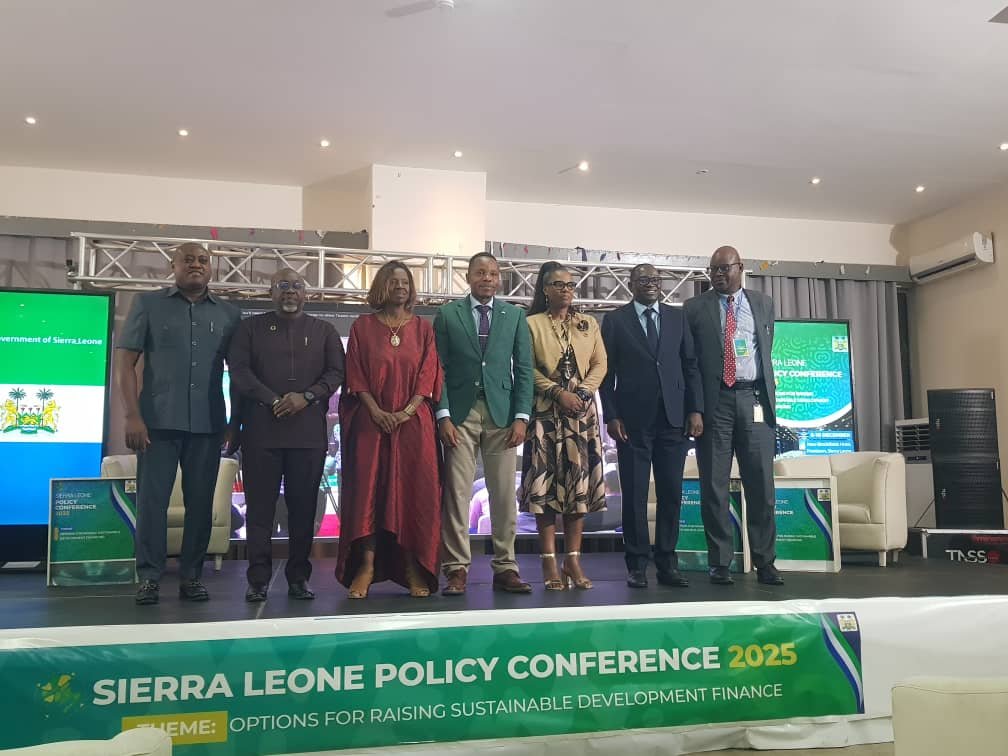
Sierra Leone is charting a renewed path toward financing its development as government leaders, economists, international partners, academics, and civil society actors convene in Freetown for the Sierra Leone Policy Conference 2025. The three-day event, taking place from 8–10 December at the New Brookfields Hotel, focuses on practical strategies for mobilizing sustainable development financing amid tightening global aid flows and growing domestic needs.
Delivering the keynote address on the opening day, Chief Minister Dr. David Moinina Sengeh said the conference aligns with President Dr. Julius Maada Bio’s vision to accelerate national development and position Sierra Leone as an inclusive, prosperous, middle-income country by 2039. He emphasized that the gathering is action-oriented rather than symbolic, providing a platform to assess how policies and financing decisions are translating into real benefits for citizens.
Dr. Sengeh noted that after the international Financing for Development conference in Seville, the President instructed the government to replicate the conversation domestically. As a result, Sierra Leone has brought together public institutions, the private sector, researchers, development partners, and civil society to transform global commitments into national action. He stressed that development financing must be contextualized, reminding participants that decisions made in global capitals can directly influence food prices, fiscal stability, and economic conditions in Sierra Leone.
Highlighting the government’s philosophy of “Together We Deliver,” the Chief Minister said Sierra Leone is not waiting for change but driving it proactively. He acknowledged global economic uncertainties, election cycles in major economies, and shrinking concessional financing factors that make domestic reforms and coordination even more urgent. The nation’s financing gap, he said, is reflected in everyday needs such as schools, roads, healthcare, energy, and social services.
Dr. Sengeh also underscored progress in domestic revenue mobilisation, noting significant growth over the past decade, though gaps persist. He called for bold reforms, shared responsibility, and greater accountability, stressing that revenue growth must support private sector expansion while safeguarding vulnerable populations. He urged businesses to meet their tax obligations and contribute to maintaining critical national infrastructure.
Earlier in the programme, Dr. Chukwu Emeka Chikezie, Country Director of the International Growth Centre, highlighted a shift among development partners from direct funding to supporting domestic systems, legislation, and institutional capacity. He said localisation requires stronger reliance on national actors including the private sector and diaspora networks—and stressed that political economy constraints often hinder the implementation of sound, evidence-based policies.
UN Resident Coordinator Ms. Seraphine Wakana described the conference as timely, noting that the global financing gap required to achieve the Sustainable Development Goals stands at approximately four trillion US dollars annually. She said the Seville conference marked a turning point in reframing development finance as an issue of justice, shared prosperity, and global responsibility, applauding Sierra Leone for bringing the conversation home.
Minister of Finance Sheku Fantamadi Bangura stated that the government is already integrating the conference’s insights into policy decisions, emphasizing improved public financial management, enhanced skills development, and strengthened value-for-money principles in development spending.
Dr. Samuel Bonzu, President of the Economic Association of Sierra Leone, reminded participants that development financing is ultimately a human issue. He warned that rising debt and global financial volatility threaten essential spending on health, education, and social services. He outlined several financing options, including domestic resource mobilisation, strengthened tax systems, Islamic finance, climate and nature-based financing, and deeper regional capital market integration.
The Sierra Leone Policy Conference 2025 continues through Wednesday, with participants expected to refine policy proposals and forge partnerships aimed at building a more resilient, inclusive, and sustainable financing framework to support the country’s long-term development goals.