

By: Ibrahim S. Bangura
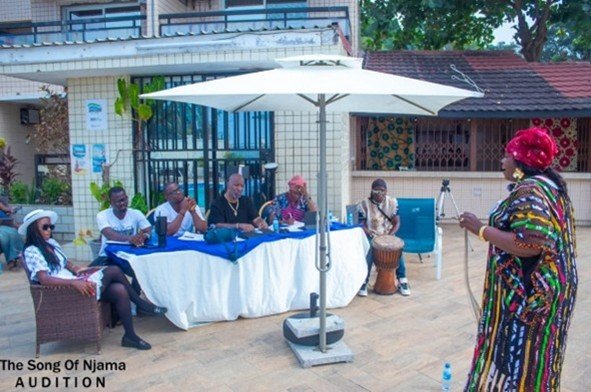
Salone Hidden Gems, one of Sierra Leone’s emerging theatre production companies, has auditioned 91 performers for its forthcoming stage production, Song of Njama, as part of efforts to strengthen professional theatre practice in the country.
The auditions, which attracted many young creatives, were held in eastern Freetown on Saturday, January 24, 2026, and western Freetown on Sunday, January 25, 2026. The exercise forms part of the company’s preparation for the upcoming production.
Speaking to this medium, one of the Creative Directors, Sheku “Limitless” Koroma, said that although 91 people auditioned, only a small number met the standards required for the production.
Koroma explained that Song of Njama is inspired by the personal life experience of the company’s founder and Chief Executive Officer (CEO), Dori Massey Turay. He said the concept for the play emerged after Turay conducted a DNA test that revealed her Mende ancestry from Sierra Leone.
“The play tells the story of a woman and her husband who form a relationship without initially knowing that they share ancestral ties to Sierra Leone. As the story unfolds, the woman discovers her heritage and traces her roots to Njama, a village in the Mende region, from which the play takes its title,” Koroma explained. He added that the production explores themes of diaspora identity, belonging, ancestry, and cultural rediscovery.
Koroma further noted that Turay has lived in Sierra Leone for the past seven years, during which she has immersed herself in the local culture and creative industry. This experience, he said, influenced her decision to invest in theatre production and talent development.
According to Koroma, the CEO is determined to present the story in a highly professional theatrical form and has set high standards for production, with the aim of creating a performance that can compete both locally and internationally.
“She wants this theatre company to be among the best theatre productions in Sierra Leone,” he said.
Addressing concerns about remuneration, Koroma assured that all performers selected for the production would be paid, noting that a budget has been allocated to compensate everyone involved.
“There is a budget for everyone participating in this forthcoming production, and they will all be paid,” he stated.
He also disclosed that the vision of Salone Hidden Gems extends beyond a single production. According to him, the company aims to build a cross-border theatre outfit that showcases Sierra Leonean stories on international stages.
Koroma described the project as part of the company’s broader effort to contribute to society by creating opportunities for young people, particularly within the creative sector.
“This is one of the ways the CEO wants to give back to society and help create employment for youths through theatre and the arts,” he said.
Reiterating her vision, Dori Massey Turay said Song of Njama was born out of love, return, and recognition.
“Long before I knew my DNA connected me to a Mende woman, I met and fell in love with a man from Sierra Leone. Through his deep love for his country and his refusal to forget home, I became curious enough to return. What began as curiosity became a reckoning,” she said.
According to Turay, the play explores what happens when people are disconnected from their land, their names, and their songs, and what becomes possible when remembrance begins.
She explained that Njama represents both a place and a memory symbolizing the home that was lost and the home that has been waiting.
“At its core, The Song of Njama is about remembering—not only for those of us in the diaspora who were taken from the soil, but also for the people who remained and were forced to survive in ways that required forgetting. The song becomes a call and response across generations, asking what was broken, who carried the memory, and what happens when the song is finally sung again,” she said.
Turay emphasized that the play is not a story of blame or shame, but one of recognition.
“My hope is that audiences leave feeling that something has shifted that they have witnessed a story rooted in Sierra Leone that speaks to the global African experience. I hope it opens space for honest conversation around reconnection, healing, and responsibility, not only emotionally, but culturally and spiritually,” she concluded.