

By: James Kamara-Manneh
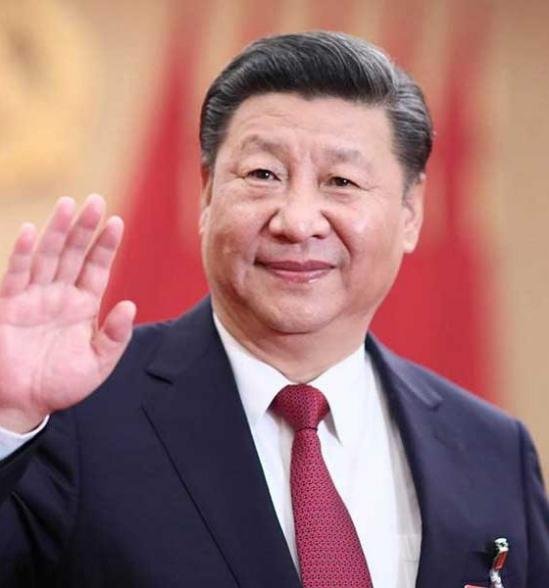
Chinese President Jinping has not relented in demonstrating a knack for true leadership within the CPC party and beyond. His astute leadership has been transforming the lives of over 1.4 billion people in terms of providing basic social amenities for the people of China.
In the just concluded 20th National Congress of the CPC party, President XI emphatically reaffirmed his commitment to support the drive for sustainable food sufficiency globally. Under CPC, amid unstable global supply conditions, China will ensure national food security by enhancing domestic supply capabilities, and China would ramp up modernization efforts in the sector and maintain suitable food reserves by improving its monitoring system.
Due to the twin surge (Ebola and Covid-19) facing the world, and the recent Ukraine/ Russia war, the lopping from food shortages and hiking of prices have become problematic for the world. The report has it that a new type of seed, recent technological advances, a new model of cultivation and new agricultural equipment have boosted the harvest growth in wheat and rice in china.
Under President XI, China is always committed to safeguarding food security; the fundamental role played by the agriculture sector can never be ignored or weakened.
China uses 9% of the world’s arable land to feed one-fifth of the world’s population. China is not only the largest grain producer but also the third largest grain exporter in the world. China has vigorously helped other developing countries in the agriculture sector, for example, the cultivation of 8 million hectares of Chinese hybrid rice in Asia, Africa and the Americas provides food for 80 million people. China has provided more than 15,000 tons of humanitarian food aid to other developing countries to relieve the urgent needs of the people there.
In recent times, China proposes a global food cooperation initiative and leads the world’s food security governance. Last year, President Xi Jinping put forward the Global Development Initiative (GDI) at the 76th UN General Assembly, making food security one of the eight key areas of cooperation.
China further proposed a cooperation initiative on global food security, when addressing the G20 foreign ministers meeting which proposes eight global initiatives:
First, China supports the central role of the United Nations in coordination: The role of the UN should be strengthened rather than weakened, and the work of FAO, IFAD and WFP should be supported.
Next, not imposing export restrictions on humanitarian food purchases by the WFP.
On the other hand, facilitates the entry of Russian, Ukrainian and Belarusian agricultural products and inputs into the international market.
Fourth, major food-producing and net food-exporting countries should release their export potential, reduce trade and technical barriers, and control making fuel out of crops, to ease the tight food supply in the market.
Fifth, the emergency measures taken by countries for food trade should be short-term, transparent, targeted and appropriate, and conform to the rules of the World Trade Organization.
Sixth, supporting the Consultative Group on International Agricultural Research and the cooperation on agricultural science and technology innovation among countries, and reducing restrictions on high-tech exchanges.
Seventh, reducing food loss and waste: China has hosted the International Conference on Food Loss and Waste and stands ready to jointly follow through on the consensus reached the conference.
Eighth, helping developing countries enhance their capacity for food production, storage and loss reduction in terms of capital, technology market and others.
However, Sierra Leone can emulate the good examples from China whose relationship has spanned for over four decades. It is no secret that China has been contributing to Sierra Leone’s agricultural sector for many years but, little or nothing is realised from those donations. China has sent more than 100 agricultural experts to Sierra Leone to provide technical training, agricultural machinery use demonstration and rice breeding research etc.
Through bilateral and multilateral channels, the Chinese government has provided different batches of food aid to needy people in Sierra Leone. Recently more than 2,700 pieces of various types of agricultural machinery given gratis by the Chinese government have arrived at the warehouse of the Ministry of Agriculture.
In addition, Food security involves the lives of every household and the shortage of food poses a major challenge to our planet. China has vouched to continue leading and participating in global food security governance, and work with all friendly countries including Sierra Leone to actively implement the UN 2030 Agenda for Sustainable Development and make greater contributions to safeguarding world food security.
In 2019, China donated almost 7,000 tons of food aid to Sierra Leone to help cushion the effects of the growing hardship facing millions of Sierra Leoneans, as the government struggles to manage the economic downturn. Millions of people, especially children are at risk of severe malnutrition as food prices continue to rise.
Therefore, to be able to fend for ourselves rather than accepting a ready-made food donation, the Chinese Government has contributed to boosting Sierra Leone’s efforts to tackle food insecurity through modern farming techniques.
Recently, the Chinese government supported Sierra Leone with a consignment of 400 Mobile Rice Threshers, 400 Winnowers, 60 Rice Whiteners, 400 Brush Cutters, 500 Rice Transplanters, 100 Chain Saws, 400 Knapsack Manual Sprayers, 200 Repair Tool Kits, 100 Hand Drills, 5 Diesel Generator Sets, 200 Grease Guns and 10 Diesel Welder Sets.
The consignment was received by the people of Sierra Leone who noted that the machines, donated through the generosity of the People’s Republic of China, were a huge structural complement to the machine rings.
The hope is that the vision of the People’s Republic of China if cascaded to our leaders in demonstrating agricultural prudence and making the sector enviable, then Sierra Leoneans can proudly feed themselves and alleviate poverty.