

By: Aminata Sesay
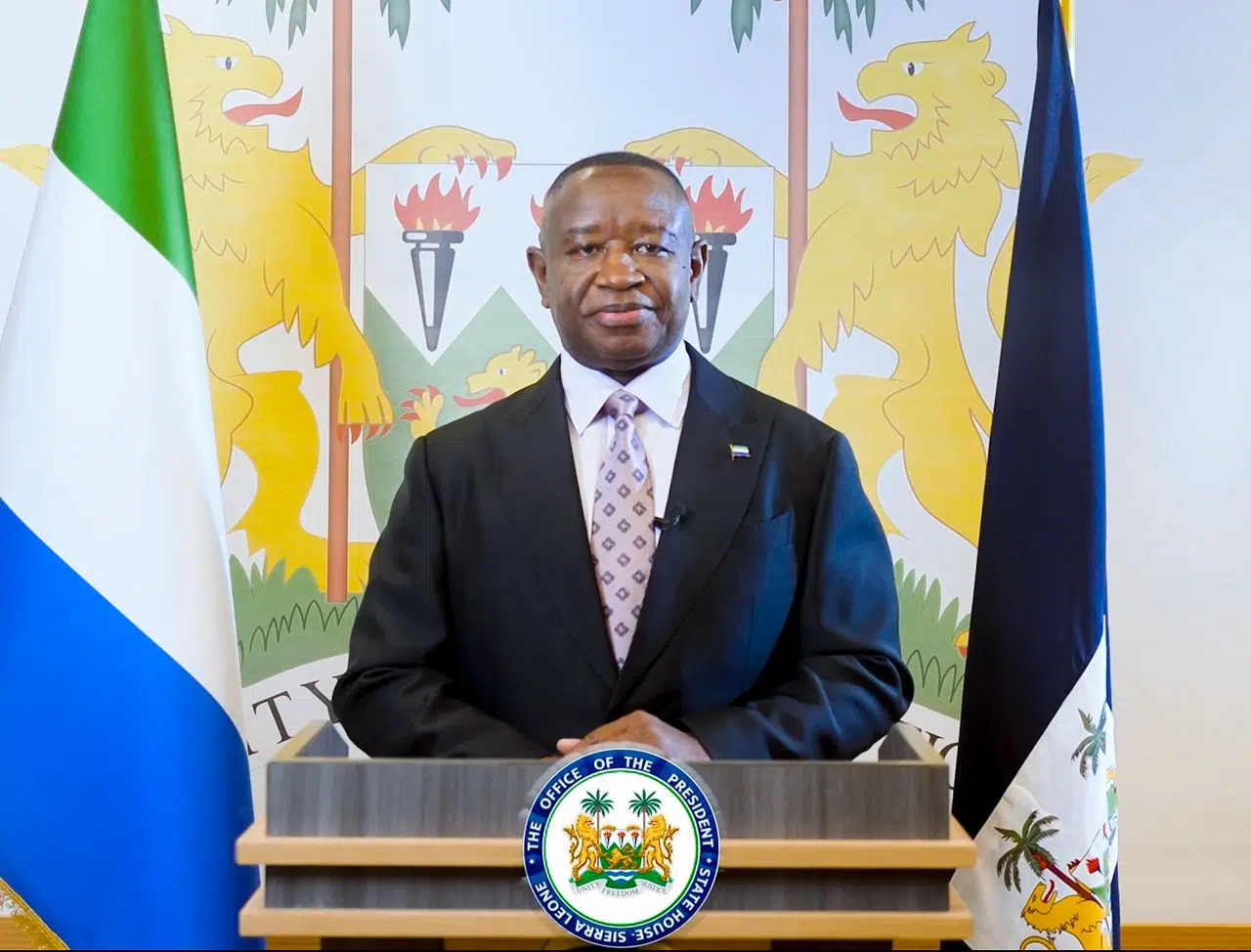
President Julius Maada Bio has outlined food security, economic stability, and institutional responsibility as the core pillars of Sierra Leone’s national agenda for 2026, declaring the year a “Year of Action” in his New Year’s Day national address delivered on Thursday.
Speaking against the backdrop of continued global economic pressures, the President acknowledged that many families entered the new year with uncertainty. However, he said the country is now more stable and better positioned to translate recent reforms into tangible improvements in people’s daily lives.
According to President Bio, the government’s priority in 2026 is no longer to make new promises, but to ensure that existing policies produce visible results. These include improved public service delivery, more affordable food, job creation, and timely government responses to citizens’ needs.
President Bio identified food security as the top priority under the Big Five Game Changers, stressing that the Feed Salone Programme remains central to national resilience. He argued that a nation unable to feed itself remains economically and socially vulnerable.
Under the programme, government plans for 2026 include expanding domestic food production and improving the movement of agricultural produce from farms to markets. The President said farmers would continue to receive support through better access to inputs, equipment, storage facilities, and transportation infrastructure, aimed at reducing exposure to high food prices and strengthening farmer confidence.
He also linked agriculture to employment creation, particularly for young people, noting that modern farming and agribusiness require skills, organization, and long-term commitment. According to him, Feed Salone is not only about food production but also about dignity, decent work, and national self-reliance.
On the broader economy, President Bio said his administration would continue to manage public finances cautiously in 2026, emphasizing the need to live within the country’s means and avoid short-term measures that could create deeper economic problems.
He acknowledged that some policy decisions would remain difficult in the short term but said they were necessary to safeguard future generations and prevent recurring national crises. Reversing recent economic reforms, he warned, would slow recovery and worsen living conditions.
The President added that economic improvement must be felt in everyday life, allowing families to plan more effectively, businesses to invest with confidence, and farmers to earn fair returns for their labour.
President Bio also addressed social challenges, particularly drug abuse among young people. He said the government would remain firm in enforcing laws against the production and sale of illegal drugs, including Kush, while strengthening prevention, treatment, and rehabilitation services for those seeking help.
Education and healthcare were reaffirmed as key priorities, with emphasis on improving education quality, skills development, primary healthcare, maternal and child health services, and access to essential medicines.
With political parties expected to begin preparations for the 2028 general elections, President Bio called on political actors to conduct their activities responsibly and within the law. He cautioned that political competition must not undermine peace, weaken state institutions, or disrupt public service delivery.
The President reiterated his government’s commitment to implementing the recommendations of the Tripartite Agreement, describing the reforms as critical to restoring confidence in the electoral process and rebuilding trust in the country’s democratic system.