

By: Saidu Ibrahim Kamara
Here in the Tonkolili District in northern Sierra Leone lies Kumrabai Ferry, a quiet village with a profound legacy. It was here, after more than a decade of brutal civil war, that the first true glimmer of peace took root. Yet, more than two decades on, the people of Kumrabai feel they’ve been abandoned by the very nation they helped to heal.
With no electricity, poor roads, unsafe drinking water, and no school of their own, residents of this historic community say they have been left to survive with little support from successive governments. Despite its central role in the country’s post-war peace process, Kumrabai has seen few, if any, of the rewards of that hard-earned peace.
Mohamed Sesay, a local stakeholder, recalls the momentous day peace negotiations took place in the village. He remembers how government troops and commanders of the Revolutionary United Front (RUF) met at Kumrabai Junction. The roadblocks that had paralyzed the region were dismantled, and an unprecedented dialogue began. “They entered the Kumrabai Ferry Junction Mosque and held long discussions. When they came out, they asked us if we wanted peace: we all said yes. And right there, they declared the end of the war,” he recounts.
That declaration brought an end to one of West Africa’s most harrowing conflicts, which claimed thousands of lives and left many others maimed and traumatized. For the villagers of Kumrabai, the memory of that day is etched into the soil beneath their feet. But the promises of development, recognition, and support never followed.
“Since the time the late President Ahmed Tejan Kabbah and his entourage left here, no president or minister has come to visit or ask about our welfare,” says Section Chief Pa Abdulai Kamara. He explains that the late President Kabbah, alongside leaders from RUF, ECOMOG, and UNAMSIL, had decreed that future presidents should honor the village by visiting and offering prayers. That commitment, he says, has been ignored.
Life in Kumrabai remains one of daily struggle. Maseray Tholley, a woman in her early 40s, outlines the hardship: “There is no hospital, no clean water to drink. We go to the river to fetch water for drinking and domestic use. And our children walk two miles to the next village, Masoko, just to attend school.”
The village is nearly cut off during the rainy season. The only road linking Kumrabai to Mile 91 is riddled with potholes and often becomes impassable. “It’s like a swimming pool,” says Mohamed Jackson, a resident of Mile 91. “Even bike riders can’t make it through during the rains.”
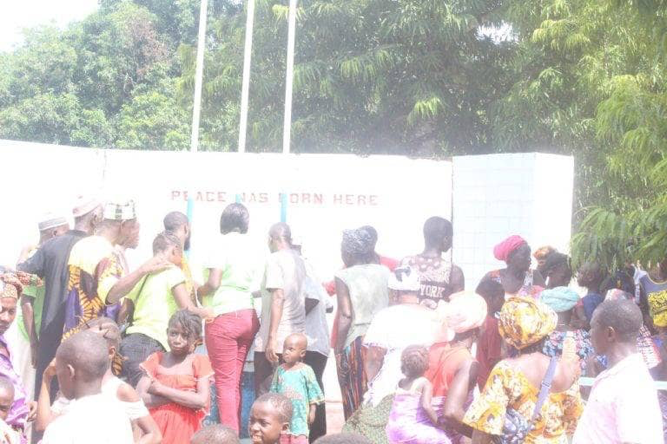
Despite these challenges, the village has not been entirely forgotten. The Media Reform Coordinating Group (MRCG), along with international partners, has been instrumental in spotlighting Kumrabai’s importance and helping to preserve its historical significance. Augustine James, MRCG’s Programmes Officer, says the group is implementing a project with the inscription “Peace Was Born Here,” in honor of Kumrabai’s role in ending the war.
“Kumrabai was chosen because of the significance of the monument. It’s a very symbolic place, sitting at the center of the village,” James notes. The project aims to tell the story of Kumrabai to the wider public, reminding Sierra Leoneans of the village’s pivotal role in the peace process.
James encourages citizens to visit the village, not only to experience its history firsthand, but to show solidarity with a community that gave the nation peace and continues to wait, quietly, for its share of that peace that was promised.
As the sun sets over the village’s crumbling roads and silent mosque, Kumrabai stands not just as a monument to the past, but as a reminder of the unfinished work of peace. Its people are not asking for monuments or medals. They are asking for the basics, water, schools, roads, and recognition.
This story was produced with support from the African Transitional Justice Legacy Fund (ATJLF), through the Media Reform Coordinating Group (MRCG), under the project ‘Engaging Media and Communities to Change the Narrative on Transitional Justice Issues in Sierra Leone.