

By: Aminata Sesay
Parliament has moved to address widespread examination malpractice, duplicate candidate registrations, and financial wastage in public examinations, following intense debates over irregularities in candidate data and school submissions.
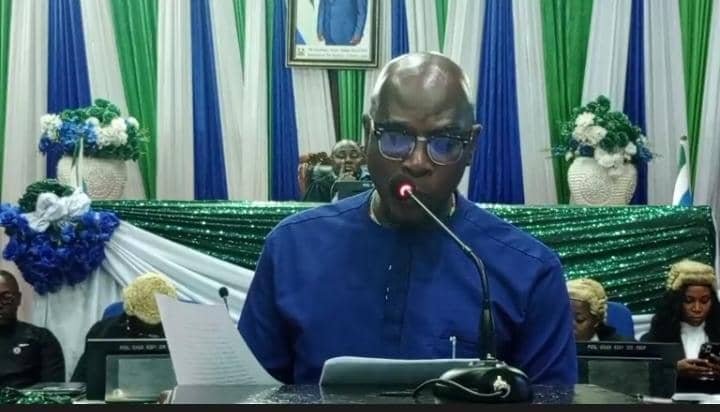
Presenting a detailed report to Parliament, the Minister of Basic and Senior Secondary Education announced stringent new measures aimed at restoring credibility to public examinations.
He disclosed that in 2026, a total of 219,173 candidates were uploaded nationwide for public examinations, a sharp increase from the 191,000 backlog recorded three years earlier. According to the Minister, the system has been severely burdened by duplicate registrations, unapproved candidates, and high levels of absenteeism.
The Minister revealed that more than 55,000 candidates were disqualified from sitting Mathematics alone, resulting in savings of approximately US$1.37 million, based on the government’s payment of about US$25 per candidate.
He further stated that in 2024 and 2025, over 60,000 registered candidates were absent, largely due to multiple registrations across different schools. Only about two percent of these absences were deemed genuine. “These losses cannot continue, especially at a time of declining donor support and limited public resources,” the Minister told lawmakers.
To address the situation, the Ministry has introduced a mandatory undertaking for school principals, proprietors, and board chairpersons. Under the new policy, school authorities must commit to keeping absenteeism below two percent annually, ensuring all registered candidates meet eligibility requirements, preventing duplicate registrations and certifying that students possess the required BECE credits
Failure to comply will attract severe sanctions, including repayment of examination fees, termination of employment, and possible prosecution by the Anti-Corruption Commission (ACC).
The Chairperson of the Parliamentary Committee on Basic and Senior Secondary Education commended the government for absorbing examination fees for vulnerable families, describing the initiative as unprecedented. “This government has demonstrated a commitment to value for money,” she said. “We must not allow politics to destroy our education system. These children belong to all of Sierra Leone.”
She warned that some school administrators deliberately upload unqualified candidates for personal gain, contributing to high absenteeism and the wastage of public funds.
She also called for nationwide sensitisation, particularly in rural areas, ahead of registration deadlines, urging the Ministry and Parliament to jointly educate school heads on compliance requirements.
Honourable AKK raised concerns over inconsistencies in candidate data, questioning the effectiveness of the annual school census and the verification of National Identification Numbers.
“How can figures rise from 219,000 to over 260,000 within three years?” he asked. “Something is clearly wrong in the system.” He also criticised the lack of clarity surrounding examination repetition policies and the continued operation of unapproved schools.
However, he acknowledged that the Minister’s position was now clear: *schools may submit candidates but will be held fully accountable for any irregularities.
In his closing remarks, the Speaker of Parliament, Rt. Hon. Solomon Segepoh Thomas, issued a stern warning to school administrators against registering unqualified candidates, noting that the Anti-Corruption Commission is closely monitoring developments.
“Nobody wants to be caught,” the Speaker said. “Only qualified students must be registered. If you know your candidates are not eligible, do not submit them.”
He condemned the operation of unrecognised schools running WASSCE classes without proper approval or examination codes, describing them as major contributors to systemic failures. He called on inspectors and education officers to immediately shut down such institutions.
Members from both sides of the House expressed strong support for the reforms, pledging to work closely with the Ministry to restore credibility to public examinations. “This is a defining moment,” one MP said. “Enough is enough.”
Parliament agreed that the new undertaking and enforcement mechanisms would help restore discipline, protect public funds, and ensure that only qualified students benefit from government-sponsored examinations.
The Minister concluded by reaffirming his commitment to raising educational standards nationwide. “Our goal is to take school-level education beyond where it has ever been,” he said. “Public examinations will no longer be a playground for fraud.”
With the reopening of the registration portal and stricter enforcement measures now in place, authorities are optimistic that malpractice and financial wastage will significantly decline in future examination cycles.