

By: Saidu Jalloh
The Ministry of Technical and Higher Education (MTHE) has held its second stakeholder consultation with Leh we Learn and Transforming Teaching, Education and Learning (T-TEL) to deepen collaboration on teacher education reform.
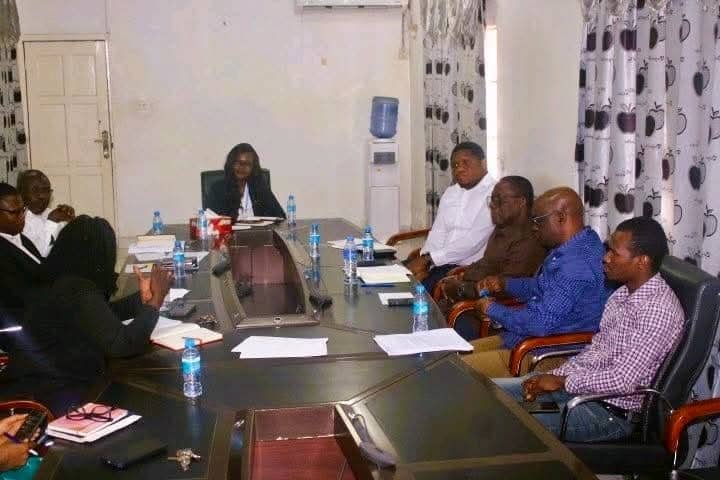
The meeting, which took place at the Ministry’s conference room in New England Ville, brought together senior officials, including Minister Dr. Haja Ramatulai Wurie, and representatives from Leh we Learn and T-TEL.
Minister Wurie commended the partners for their ongoing engagement and emphasized the importance of strengthening partnerships within Africa. She praised the research-driven design of the program and highlighted key priorities such as preparing teachers for emerging skills, digital literacy, and soft skills, while ensuring uniform standards across teacher training institutions. The Minister also stressed the need to enhance the technical and vocational education pathway, noting the growing number of students who qualify for higher education but lack placement opportunities.
Dr. Mohamed Barrie, Team Leader of Leh we Learn, explained that the consultation built on discussions initiated in July during a visit from the MasterCard Foundation. He noted that the proposed program would focus on strengthening teacher training institutions, as the quality of secondary education depends heavily on effective teacher preparation. Dr. Barrie further disclosed that the upcoming initiative would be locally led, flexible, and designed over a six-year period, with implementation expected to begin around July next year. He emphasized the program’s alignment with national priorities and coordination with existing education sector initiatives supported by the World Bank and the Global Partnership for Education (GPE).
Dr. Josephus Brimah, MTHE’s Chief Technical and Higher Education Officer, pointed out that training programs should not be conducted merely for formality but must be needs-driven and outcome-focused. He explained that such programs should fit within a framework for evaluating results and meet the standards set by the National Council for Technical and Vocational Education (NCTVE). Dr. Brimah added that even BSc Education programs, such as Mathematics or Chemistry, should adhere to these standards, as the participants are practicing teachers.
Sia Fasuluku, Acting Deputy Chief Technical and Higher Education Officer, welcomed the collaboration and identified key gaps in the sector. She highlighted the need for a pre-service teacher policy, enhanced support for early childhood teacher training, and inclusive strategies for children with disabilities. Ms. Fasuluku urged partners to strengthen teacher training institutions to ensure they can effectively train educators across all regions and disciplines.
Senior ministry officials reiterated the call for practical teacher preparation and robust quality assurance mechanisms. They emphasized the importance of developing a framework that ensures teacher training institutions meet national standards and produce graduates capable of addressing the evolving needs of classrooms.
Representatives from T-TEL outlined their immediate plan to conduct a nationwide assessment of teacher training institutions. They revealed that the assessment would evaluate existing programs, faculty capacity, learning environments, and practical training components. The findings, they said, would form the basis for a comprehensive program proposal to the MasterCard Foundation.