

By: Aminata Sesay
The Ministry of Technical and Higher Education (MTHE) is positioning Sierra Leone’s tertiary education sector for deeper reform and transformation following high-level engagement with the British High Commission in Freetown.
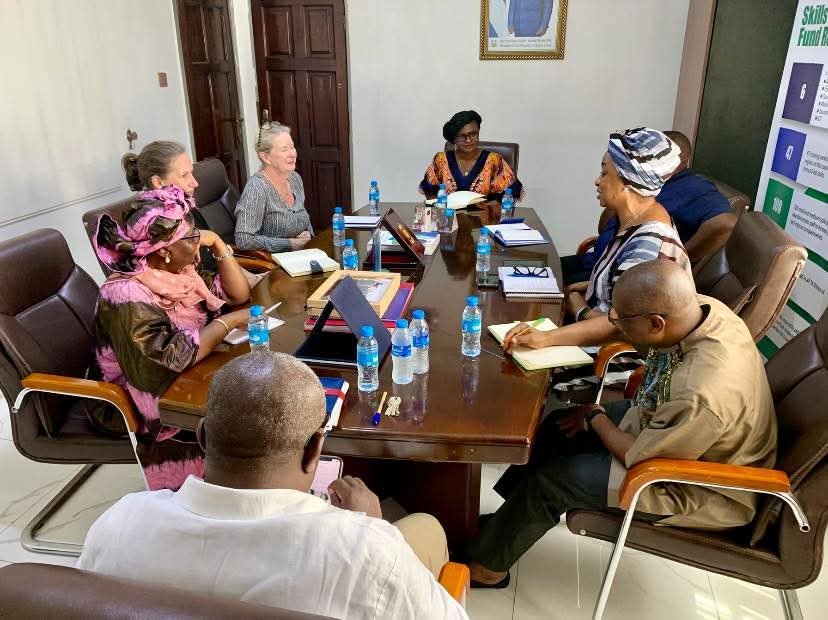
The strategic meeting brought together senior officials from MTHE and representatives of the British High Commission to reassess ongoing collaboration and identify priority areas that align with Government reform objectives and the United Kingdom’s evolving development framework.
At the heart of the discussions was a recognition that Sierra Leone’s higher education system must transition from traditional models toward innovation-driven, accountable, and financially sustainable institutions.
Deputy Chief Technical and Higher Education Officer, Sia Fasuluku, emphasized the need to recalibrate partnerships in line with the Government’s “Big Five” agenda. She noted that MTHE’s strategic direction and institutional performance frameworks are anchored in national priorities, and development support must reinforce that alignment.
Representing the British High Commission, Development Director Alexandra Maclean described the dialogue as part of the UK’s broader reassessment of its global development posture. She reaffirmed Sierra Leone’s importance as a partner, with continued emphasis on private sector growth, macroeconomic reform, and human capital development particularly in education and health.
Minister of Technical and Higher Education, Dr. Haja Ramatulai Wurie, outlined an ambitious reform agenda, signalling a shift toward stronger governance systems, innovation ecosystems, and sustainable financing mechanisms.
Key priorities include institutional diagnostics to assess governance, financial management, and operational performance. Redefining the university model to embed innovation and industrialisation, commercialise research, and strengthen industry linkages. Professionalising research administration to improve compliance, attract international funding, and reduce burdens on academics. Retaining skilled academics, addressing what she described as a “brain haemorrhage” undermining national development. Financial reform, including progress toward an online payment platform for tertiary institutions to enhance transparency and ring-fence funds for research, ICT, and infrastructure. Both parties agreed to deepen technical engagements to refine priority interventions and ensure that future collaboration supports systemic transformation within the higher education sector.
The engagement signals a shift toward a more results-oriented and reform-focused partnership aimed at strengthening Sierra Leone’s tertiary education institutions and aligning them more closely with national development ambitions.