

By: Mohamed Sahr
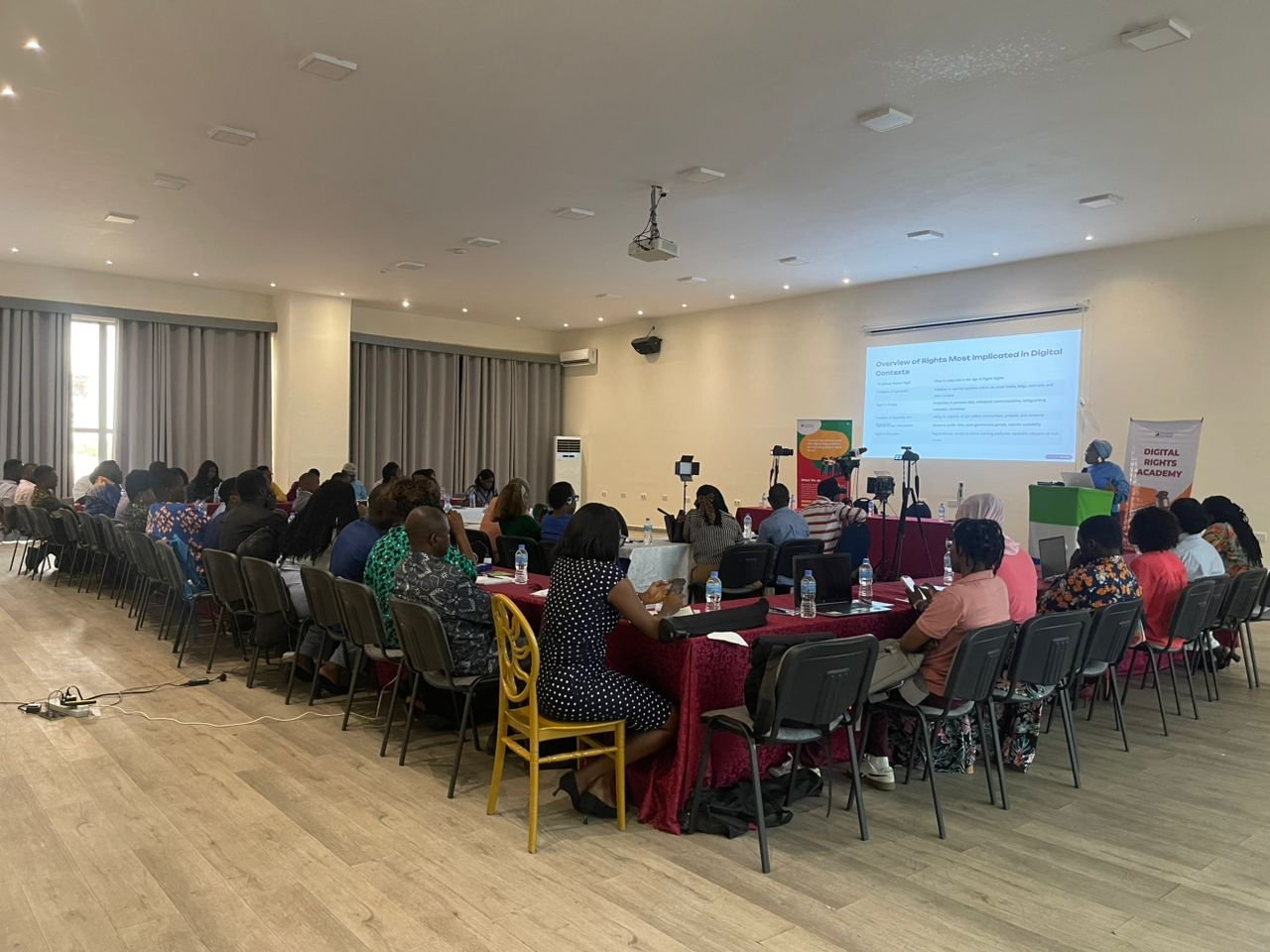
In a bid to address growing digital security risks within the media landscape, the Media Reform Coordinating Group Sierra Leone (MRCG-SL), in partnership with the Paradigm Initiative, convened a Digital Rights Academy for over 50 journalists on Monday, 23rd June 2025, at the New Brookfields Hotel in Freetown.
The training, which focused on digital rights and security challenges facing media practitioners, aimed to strengthen journalists’ understanding of digital threats, data protection, and secure communication practices within Sierra Leone’s evolving digital ecosystem.
Dr. Francis Sowa Esq., National Coordinator of MRCG-SL, emphasized the importance of equipping journalists with practical knowledge of digital rights and press freedom.
“This initiative provides not just theoretical knowledge, but hands-on training in tools such as encryption, data protection, and secure communication,” Dr. Sowa said. “We want journalists to immerse themselves in the core principles of digital rights, understand the threats they face, and explore the implications for press freedom.”
Dr. Sowa lauded Paradigm Initiative for its collaboration and expressed optimism about the growing partnership; stating that the key mandate of MRCG-SL is to build capacity through partnerships like this. He added that the outcome of this training shows strong potential for future cooperation.
Khadijah El-Usman, Senior Program Officer at Paradigm Initiative, provided an overview of the organization’s work across Africa, stressing the centrality of digital rights in upholding democracy.
“Access to digital rights means being able to express oneself freely and securely, without fear. Digital rights are not a privilege; they are fundamental human rights,” El-Usman stated.
She noted that the Digital Rights Academy is specifically designed for journalists, whose role in informing the public and holding authorities accountable is critical to democratic governance.
“This training is not just about frameworks and tools it’s about empowering journalists with practical digital strategies, so they can protect themselves and their sources,” she explained.
The comprehensive session covered key areas including: Introduction to Digital Rights, Digital Security and Securing Communications, Identifying and Responding to Digital Threats.
The event concluded with the drafting and signing of a joint communiqué, wherein participating journalists reaffirmed their commitment to advocating for digital rights in Sierra Leone and encouraging government to review Section 44 of the Cybersecurity and Crime Act 2021.
This initiative marks a significant step toward building a digitally secure and informed media environment in Sierra Leone, as journalists navigate an increasingly complex digital landscape