By: Mohamed M. Sesay
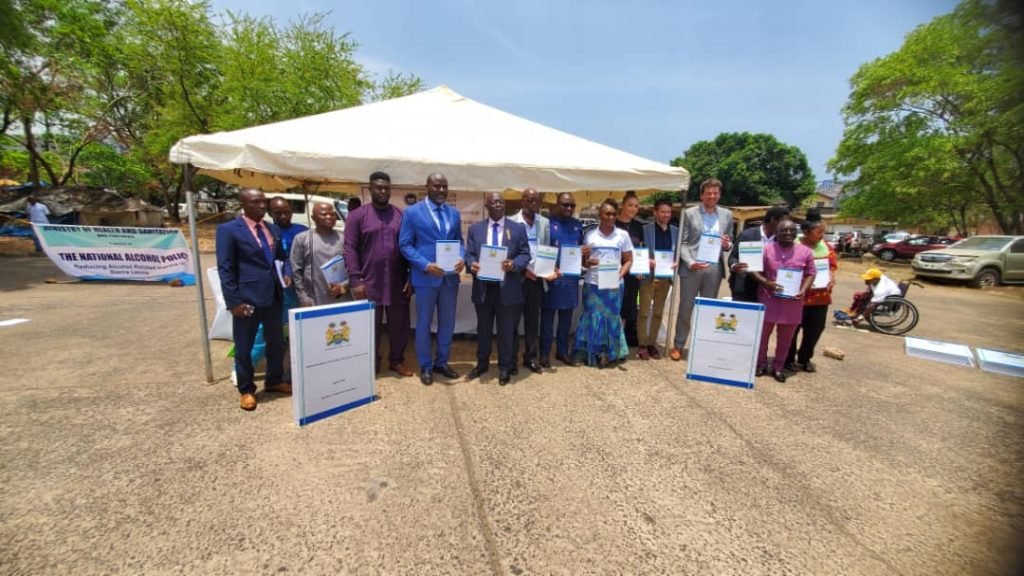
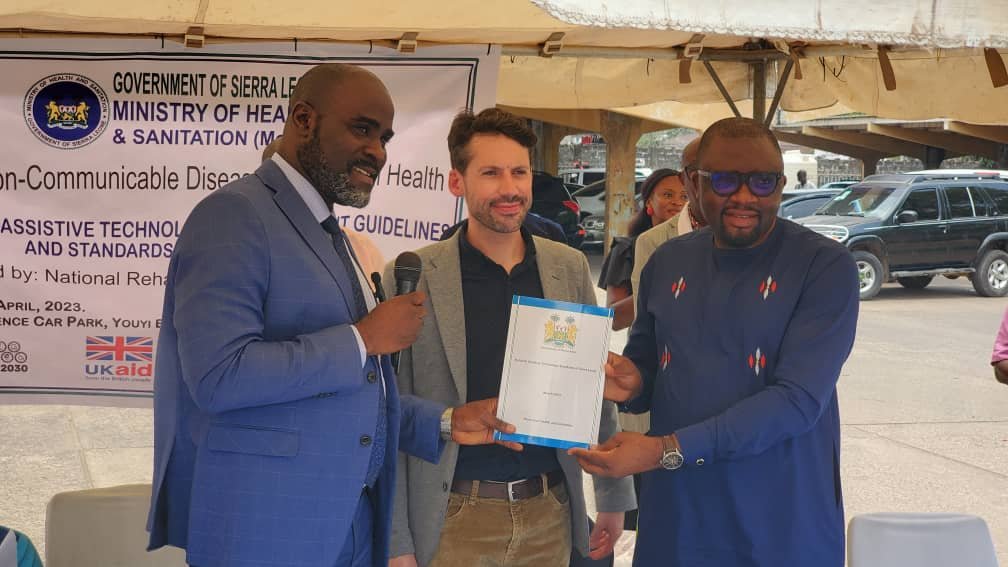
In order to address the multiple challenges faced by Persons Living with Disability and to mitigate the abuse of alcohol intake, the Ministry of Health and Sanitation together with its partners, has on Wednesday the 12th of April 2023, launched the National Assistive Technology Standards of Sierra Leone, the National Assistive Technology Procurement Guidelines of Sierra Leone, and the National Alcohol Policy of Sierra Leone.
In his keynote address, the Deputy Chief Medical Officer Dr Mustapha Kabba expressed that he felt delighted to give a keynote address at the launching of those policies. He said the Ministry of Health and Sanitation has positioned itself to provide good quality healthcare for all-inclusive Persons Living with Disabilities.
He added that even hospitals constructed and built in the country are now disability friendly. He expressed the importance of formulating such a document which would now provide Assistive Technology devices for Persons Living with Disabilities.
Dr Kabba disclosed that Sierra Leone is very peculiar with disabilities issues due to the war. He added that the launching of those three documents had given the ministry and its partners the vim and vigor to support Persons Living with Disabilities to receive the best medical attention they deserve. He said there are also social and psychological implications of the abuse of alcohol products which the document seeks to address. He emphasized that such regulatory mechanisms need to be in place in order to have proper guidelines in terms of controlling alcohol abuse in the country.
“We have proper consultative means to ensure the effective implementation of the guidelines. I want to assure all especially our partners that the Ministry of Health and Sanitation will do its level best to ensure the implementation of the documents”, he said.
A representative from the Clinton Health Access Initiative (CHAI) Silvester Suh, said Persons Living with Disabilities are faced with multiple challenges. He added that three billion people suffer from disabilities. He said they conducted a landscape assessment review together with MoHS in order to develop the guidelines launched. He recalled that in 2021, a strategy and policy were developed which was also launched by the Ministry of Health geared towards addressing abuse of alcohol. He said the Assistive Technology launched, would now provide socio-economic background for Persons Living with Disabilities.
Sierra Leone Union on Disability Issues (SLUDI) representative Cyprian A. Kabba, appreciated the authorities for putting such policies in place which geared towards ameliorating the lives of Persons Living with Disabilities. He said the lives of Persons Living with Disabilities have been very terrible without Assistive Technology. He, therefore, called on the government not to only make such products available but also to make them very accessible and affordable to Persons Living with Disabilities. He assured that SLUDI would be very supportive towards the implementation of the policies and guidelines.
The Executive Secretary of the National Commission for Persons with Disability Saa Lamin Kortequee intimated that product standards are developed in order to ensure standards, safety and quality requirements. He said the Assistive Technologies are not just meant for Persons Living with Disabilities as able-bodied men and women are also prone to disabilities which might warrant them to use the Assistive Technology. He commended that the policy spoke about 70 products with 30 selected products to be uniquely used in Sierra Leone taking into cognizance of affordability and accessibility. He added that all of the issues around disability speak about independent living which was the more reason the AT guidelines geared towards addressing.
He also called for adequate resources to be available in order to efficaciously enforce those policies. He reiterated the enforcement of the policy in order to ease the difficulties on Persons Living with Disabilities are faced. He expressed thanks and appreciation to the government and other development partners for developing such policies. He concluded by anticipating more policies that promote the Lives of Persons Living with Disabilities.