

By: Mohamed Sahr
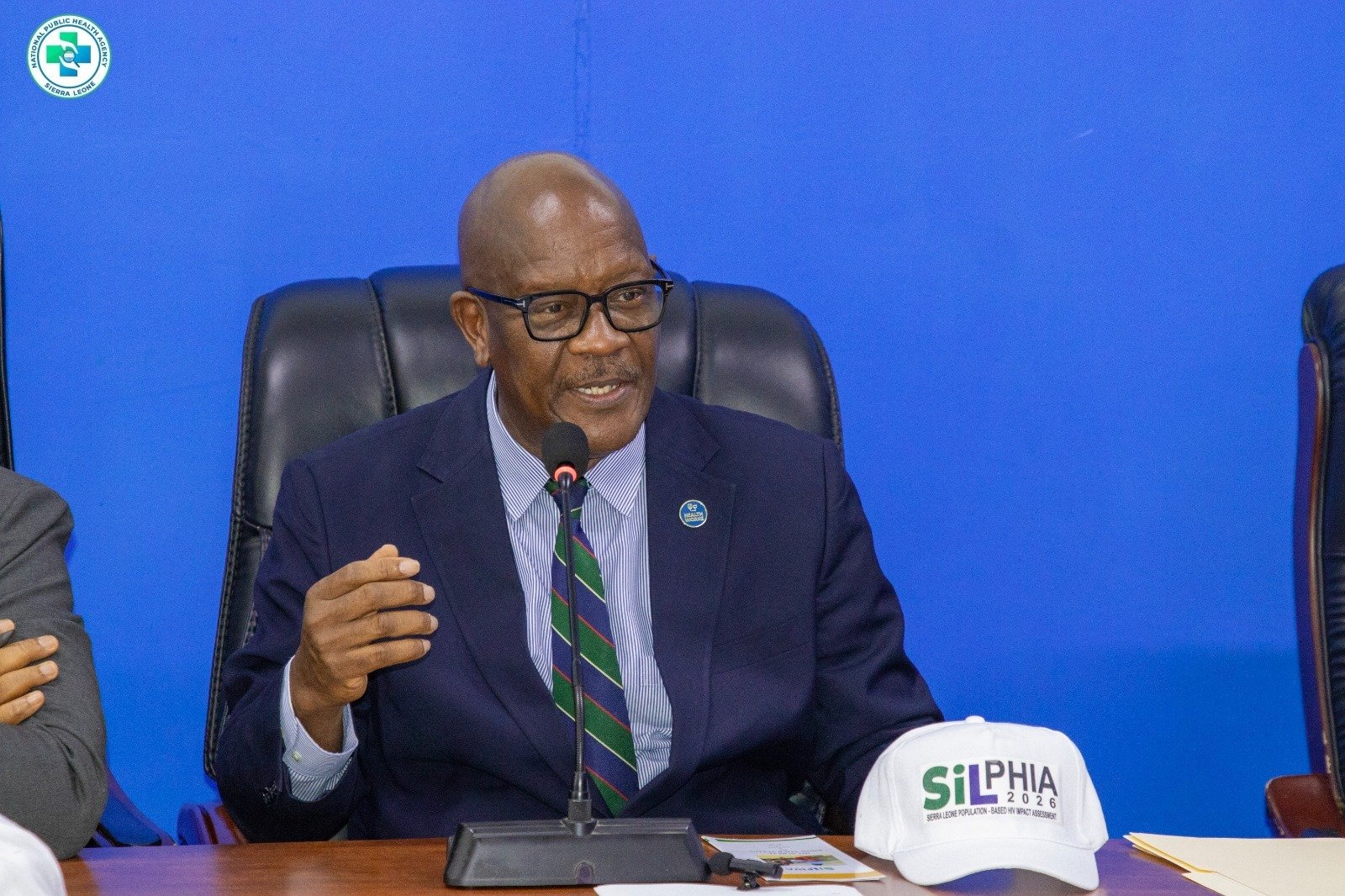
Minister of Health Dr. Austin Demby outlined significant progress across Sierra Leone’s health system, highlighting expanded medical training, improved energy supplies, new diagnostic capacity, and strengthened logistics as key components of the government’s drive toward universal health coverage.
Dr. Demby reported measurable gains over the past five years, noting that national vaccination coverage has remained high and that 11 hospitals now operate on‑site oxygen plants, a critical enhancement for neonatal, maternal, and critical‑care services.
The minister emphasized efforts to make health facilities energy-independent, with approximately 380 sites already transitioned. He set a target to reach 1,600–2,000 facilities by 2030, ensuring continuous operation of critical medical equipment.
A central focus of the ministry’s reforms is workforce development and specialist training. Dr. Demby stated that domestic medical graduates have increased from roughly 30 per year to 90 last year, with expectations of 250 graduates this year and 350 next year. A new medical-school building with capacity for 1,000 students, along with a West African board‑certified postgraduate training program, is designed to boost specialist retention and reduce reliance on overseas training. Currently, around 120–150 residents are enrolled in specialist programs across fields such as obstetrics, surgery, and psychiatry.
Infrastructure improvements include ongoing hospital renovations, commissioning of higher-capacity diagnostic equipment, and construction of new facilities. Dr. Demby cited a high-performance CT scanner at Connors Hospital and announced plans for a 300-bed, state-of-the-art hospital in the Western Area. Smaller projects include new 100-bed hospitals in Wayamba and Kipujo, as well as maternal and paediatric centres of excellence.
The ministry is modernizing emergency response and logistics. Ambulances are being integrated into a digital dispatch network with pre-positioned vehicles, trained crews, fuel, and hospital linkages. A new pharma-grade warehouse is under construction to improve storage of medicines and devices, addressing previous issues with degradation.
Dr. Demby also highlighted personnel reforms, including a digital recruitment portal that processed 9,000 applicants for 3,000 positions. Automated and manual screening is improving candidate vetting, and an upcoming field verification exercise will confirm that government payroll recipients are present and qualified.
Acknowledging financial constraints, the minister reported that per-capita health spending is approximately $46, with roughly $7 coming directly from the state, mostly absorbed by salaries. He urged measures to increase domestic health revenue, including targeted taxes and insurance schemes, while continuing to mobilize donor support.
Dr. Demby stressed that accountability and service delivery must go hand in hand: “We are building an efficient, effective system that shows impact,” he said, calling on partners and the public to sustain trust as the ministry scales reforms to improve access and quality for all Sierra Leoneans.
Finally, the minister confirmed a separate investigation into missing equipment, noting that 18 portable ultrasound machines were unaccounted for during stock reconciliation. He described the case as an anti-corruption matter under active investigation, reaffirmed a policy of “zero tolerance,” and appealed for public cooperation while authorities pursue recovery and accountability.