By: Mohamed Sahr
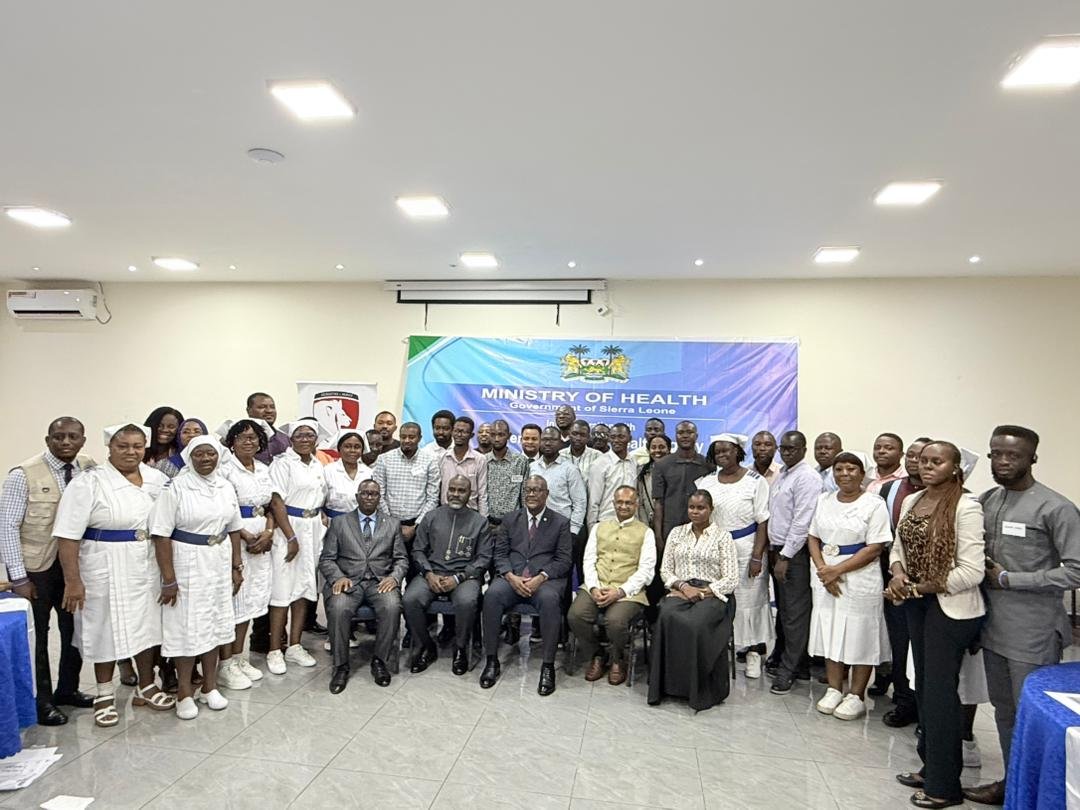
The Ministry of Health in partnership with Global Health Equity, on Tuesday, 10th March 2026, trained doctors, matrons, hospital administrators and hospital secretaries on hospital governance and leadership at the New Brookfields Hotel in Freetown.
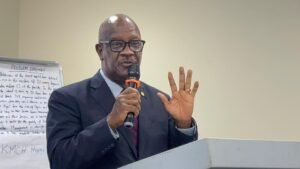
Speaking at the opening of the training, the Minister of Health, Dr. Austin Demby, described the initiative as a significant milestone toward improving the quality of healthcare services in Sierra Leone. He emphasized that the training would play a critical role in strengthening governance and leadership functions across government health facilities.
Dr. Demby reaffirmed the government’s commitment to improving healthcare delivery, in line with the vision of His Excellency President Julius Maada Bio to ensure that quality healthcare services are accessible to all Sierra Leoneans. He noted that the government’s “300 Days of Activism” campaign focuses on achieving zero maternal deaths, zero child deaths and zero-dose children across the country.
The Health Minister further stated that the Government of Sierra Leone has taken bold steps to provide affordable, accessible and quality healthcare services for every citizen, even as several foreign donors are reducing support to low-income countries around the world.
He urged healthcare workers to take responsibility in ensuring that the right services are delivered to promote quality healthcare across the country. Dr. Demby also pledged to eliminate ghost workers in the health sector and enforce stronger accountability measures to improve healthcare delivery nationwide.
Dr. Mustapha Kabba, Deputy Chief Medical Officer for Clinical Services, explained that about half of the hospital leadership across the country had converged for the intensive three-day training aimed at strengthening leadership and governance systems.
He added that participants would be monitored and evaluated at the end of the training to measure their progress. According to Dr. Kabba, the best-performing participants will travel to Rwanda to learn from the country’s progress in hospital governance and leadership.
“Hospitals with strong leadership are performing well, while those without effective leadership continue to struggle,” Dr. Kabba noted, adding that Sierra Leone intends to promote South-South collaboration by learning from countries that have made significant progress in health governance.
Professor Nobhojit Roy, Chair of the Centre for Leadership in Global Health Equity, said his organization focuses on training African health professionals using proven governance models while promoting collaboration among countries in the Global South.
He highlighted key thematic areas of the training, including the rollout of district health strategic plans and resource mobilization. Professor Roy expressed confidence that the Ministry of Health would begin to see results from the initiative within the next six months.
He also encouraged the Ministry to expand the training to the provinces through a “training of trainers” approach. “Leadership should exist at every level of the health system, not only at the top,” he said.
Dr. Hoody Lymon, Medical Superintendent of Kinharman Road Hospital, described the training as a major opportunity for healthcare administrators in Sierra Leone, particularly at a time when global health funding is shrinking.
He noted that the training addresses key challenges such as fiscal management within health facilities, adding that the current moment calls for innovation and strategic decision-making in the health sector.
Betsy I.D.S. Deen, Senior Matron at Princess Christian Maternity Hospital, said the training has been an eye-opener for healthcare leaders seeking to strengthen governance and leadership in their institutions.
She expressed confidence that participants would apply the knowledge gained in their respective facilities. According to her, improved leadership and governance in health facilities will ultimately benefit patients by enhancing the delivery of quality healthcare services.