

By: Saidu Jalloh
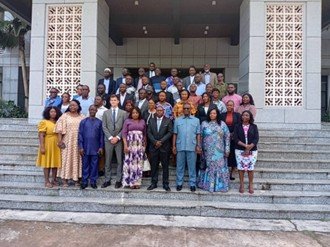
Ministry of Foreign Affairs and International Cooperation (MoFAIC) hosted a national stakeholders’ consultation on the Universal Periodic Review (UPR) process. The event brought together representatives from government ministries, civil society organizations (CSOs), development partners, and international bodies.
In his opening remarks, the Director General of MoFAIC, Mr. Wurie, warmly welcomed participants and emphasized that the consultation, supported by the International Communities Organisation (ICO), aimed to foster an inclusive dialogue on human rights issues.
He noted that the meeting focused on reviewing progress made in implementing recommendations from the last two UPR cycles. Mr. Wurie described the UPR as a peer review mechanism established by the United Nations Human Rights Council in 2006, which examines the human rights records of all UN member states every four to five years.
He highlighted that Sierra Leone has undergone three previous reviews in 2011, 2016, and 2021 each providing an opportunity to assess progress, identify gaps, and renew commitments to promoting and protecting human rights.
“This Ministry sincerely thanks ICO for signing the partnership agreement with us and for their effective collaboration and financial support in hosting this national consultation,” Mr. Wurie said. He added that the event’s theme, “Strengthening National Engagement with the UPR Process,” reflects Sierra Leone’s commitment to inclusive human rights reporting.
The Director General explained that the National Reporting Mechanism Secretariat within MoFAIC is responsible for coordinating reports to international treaty bodies. The ministry itself chairs the Inter-Ministerial Committee on Human Rights, ensuring that reports are prepared and submitted on time.
Mr. Wurie called on all Permanent Secretaries and heads of Ministries, Departments, and Agencies (MDAs) to support the reporting process by submitting relevant data and information to the committee, with the goal of finalizing and submitting Sierra Leone’s next national report by February 2026.
In closing, Mr. Wurie thanked all MDAs, CSOs, and international partners for their collaboration and commitment to advancing human rights in the country.
Mr. Charlie Grant, representing the International Communities Organisation (ICO), commended the participants for their active involvement and acknowledged the success of the capacity-building workshop held earlier on the same day.
“We have already received very positive feedback on its relevance and impact,” he said. “This consultation marks an important step in our collective efforts to strengthen human rights in Sierra Leone through the UPR process.”
Mr. Grant emphasized that the consultation provides a platform for Sierra Leoneans’ voices to be reflected in the national report, which is at the core of the UPR process.
“Your participation embodies the very essence of the UPR. It’s not just a reporting exercise but a tool for real and lasting change,” he noted, stressing that ICO’s role was to support from the sidelines while national stakeholders lead the process.
He concluded by expressing appreciation to Reverend Koroma, Director Conteh, and Mr. Koroma for their leadership, as well as to all attendees for their continued commitment.
Representing the Office of the Attorney General and Minister of Justice, Mr. Brima M. Lamin reaffirmed Sierra Leone’s strong commitment to the UPR, highlighting major human rights reforms since 2011.
He cited key legislative achievements, including the Prohibition of Child Marriage Act (2024), which criminalizes child marriage, imposing penalties of up to 15 years imprisonment; the Abolition of the Death Penalty Act (2021), which replaced capital punishment with life imprisonment; the Gender Equality and Women’s Empowerment Act (2022), which mandates at least 30% representation of women in public office; the Criminal Procedure Act (2024), which modernizes the justice system to ensure fair trials and standardized evidence procedures.
Mr. Lamin concluded by thanking participants for their valuable contributions to the consultation.
Also speaking, Madam Patricia Ndanema, Chairperson of the Human Rights Commission of Sierra Leone (HRCSL), reaffirmed the Commission’s role as a Grade A-status National Human Rights Institution (NHRI) in supporting both national and international reporting processes. She emphasized the importance of collaboration among government institutions, CSOs, and partners to strengthen national engagement in the UPR process and improve follow-up mechanisms for implementing recommendations.
In his closing remarks, Reverend Gibrilla Kargbo outlined the objectives of the consultation and provided an overview of the UPR process, commending all participants for their commitment to promoting human rights in Sierra Leone.