

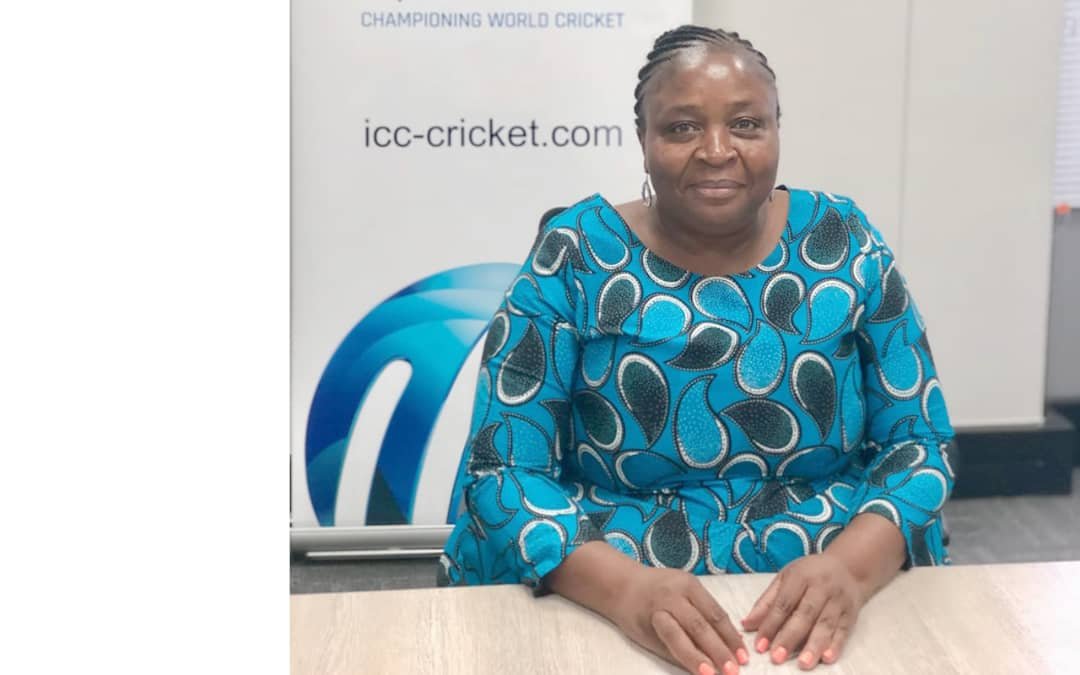
The ICC Regional Manager for Africa, Patricia Kambarami has described the governance structure of Cricket Sierra Leone as ‘huge progress in the last one year’.
She made this confession during her engagement with sports journalists on strides needed to spread the ideals of cricket in the four corners of the country on Tuesday at the Police Wives’ Multi-Purpose Conference Hall at Kingtom.
This was part of the 360 Framework of Cricket Sierra Leone programme, an engagement that is geared towards reviewing the organizational face of cricket in the country and making recommendations that would see significant change in the growth of the game.
Speaking, Manager Kambarami started off by thanking the press for following cricket and for reporting activities around same.
“Our task here is to speak with everybody about cricket in Sierra Leone, and not necessarily about the Sierra Leone Cricket Association,” she said.
On the span of its presence, Manager Kambarami noted that cricket has been playing in Sierra Leone for a very long time. “We want to see the number of those taking part in the game increase,” she added, stating that the Cricket Association is doing what is already expected of them.
During the plenary session, journalists were asked to comment on the status of cricket and what should be done to increase participation. The following highlights formed the core of their suggestions: providing standard equipment to help players do well, increase funding to bolster the extension of the base of the game, supporting projects on the construction of standard pitches and outfields (with Sussex and Fourah Bay College in mind), including cricket in the school curriculum, and promoting fan engagement.
In response, Manager Kambarami said Sierra Leone Government needs to include cricket in the school curriculum to help spread the game and to involve more young people.
Adding his voice, Justin Ligyalingi, the ICC Development Officer for Africa, said ICC does not set aside money for the development of cricket facilities. “We work with partners supporting cricket federations in the development of facilities,” he explained.
Away from the press, the ICC guests engaged school pupils, their parents, national female players, national male players, and cricketers from lower tiers to sound their opinions with respect to the growth of the game. Before leaving on Thursday, the guests will meet with government officials on strategic alignments.
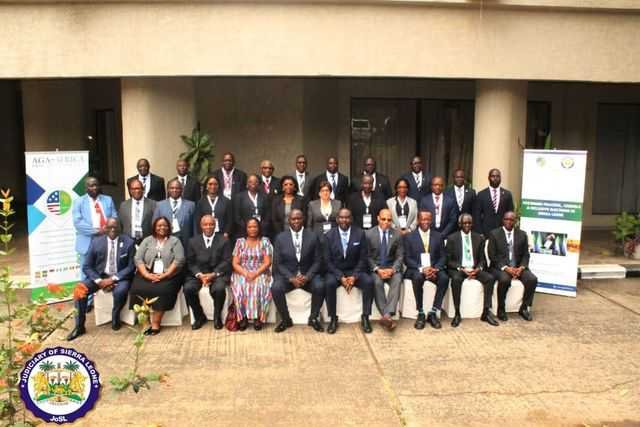
Sierra Leone’s Chief Justice, His Lordship Justice Desmond Babatunde Edwards, while welcoming his counterpart, the Hon. Chief Justice of Ghana-His Lordship Justice Anin Yeboah said their duty as Judges and the Judiciary during the forthcoming elections will be to uphold the rights of citizens to elect or be elected as a representative to hold a public or government position or right to participate directly in a democratic process.
According to him, elections are a specialized activity, and while they occur once in a while, they form the basis for getting a democratically elected government in power. The competitive and politically divisive nature of elections in a multi-democracy like Sierra Leone and its technical complexity makes the process of electing persons to political offices vulnerable to abuse, disputes, fraud and violence.
“There is always and invariably the need for an effective mechanism to prevent, mitigate, or resolve disputes that are likely to arise in every electoral process,” said Chief Justice Edwards, adding that the mechanism involves the use of Courts and the personnel of such Courts called Judges.
When Candidates are dissatisfied with results after the election, he continued, or offences are committed during the elections period it is the Judiciary and Judiciary alone that can come in to give validity and finality to the process through a process called Electoral Justice.
In his Keynote statement to declare the three days of training officially opened, he said, “as we prepare for another electoral cycle, electoral disputes and offences are likely to begin to come up again for adjudication.”
“While the disputes and petitions may be multifaceted, our roles as Judges in preserving that right to vote and in ensuring that electoral justice is adequately and promptly meted out still subsists,” Sierra Leone’s Chief Justice concluded.
On his part, the Hon. Chief Justice of Ghana, His Lordship Justice Anin Yeboah said elections can perpetrate violence and social unrest, adding that these are glaring because of the lack of effective leadership as well as divisive politics.
“The Judiciary can only come in when its jurisdiction is invoked to intervene to settle the issues brought before the Court,” said Chief Justice Yeboah, stressing that the role of the Judiciary in resolving electoral disputes and the interpretation of those laws is very critical to the entire electioneering process.
The three days training is organized by Attorney General Alliance Africa (AGA Africa Programme)in partnership with the Judiciary of Sierra Leone on the theme- ‘Fostering Peaceful, Credible and Inclusive Elections in Sierra Leone.’
“Through this workshop, the AGA-Africa Programme hopes to strengthen the Judiciary’s ability to handle electoral disputes and its ability to deliver…” said Markus Green, AGA Africa Programme Board Member.