By: Saidu Jalloh
The Government of Sierra Leone, in partnership with United Nations agencies, has committed US$3.5 million to strengthen district-level health systems following the signing of a Programme Document (ProDoc) for a UN Joint Flagship Initiative aimed at accelerating Universal Health Coverage (UHC).
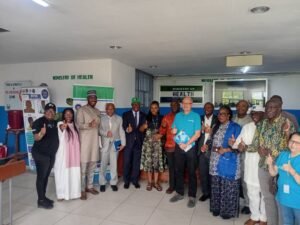
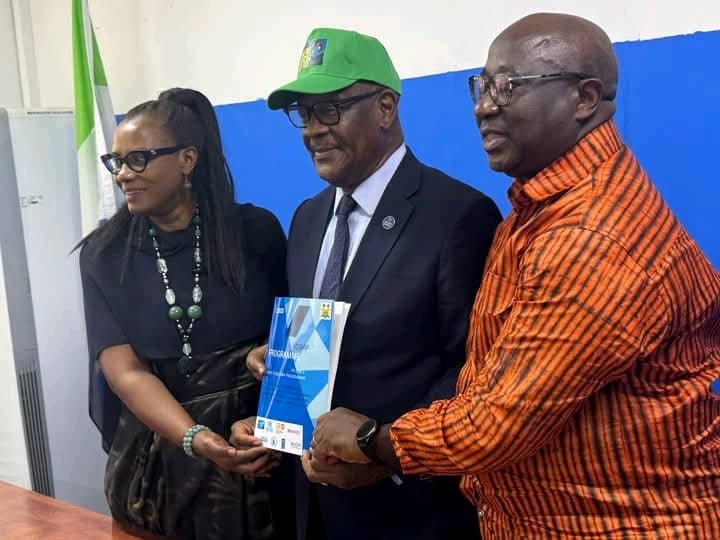
The agreement was signed on Friday, 12 December 2025, at the Ministry of Health Conference Room in Freetown, formalising the UN Joint Flagship Initiative under Pillar Two of the United Nations Sustainable Development Cooperation Framework (UNSDCF) 2025-2030. Moyamba District has been selected as the demonstration site for the initiative. The signing ceremony was facilitated by UNICEF.
Welcoming participants, the Permanent Secretary of the Ministry of Health described the initiative as a new model of alignment between the UN system and the ministry. He explained that Moyamba was deliberately selected because of its strategic location and demographic diversity, noting that the district reflects the social and health realities of all regions of the country. He added that the timing of the signing, coinciding with Universal Health Coverage Day, underscored the government’s commitment to inclusive and equitable health care.
Delivering the opening statement, UN Resident Coordinator to Sierra Leone, Seraphine Wakana, said the signing marked more than a formal agreement, describing it as a shift toward a new way of working together for health and human development. She noted that the flagship initiative is the first programme selected under Pillar Two of the 2025-2030 Cooperation Framework, which prioritises human capital development and access to essential services.
Ms Wakana explained that Moyamba District mirrors many of the challenges facing rural health systems nationwide, including gaps in service delivery and health outcomes below national averages. She cited a total fertility rate of 5.4 children per woman, compared to the national average of 4.2, under-five mortality of 135 per 1,000 live births against 122 nationally, as well as high levels of child stunting and adolescent pregnancy. She stressed that success in Moyamba would provide a scalable model for nationwide adoption.
She further explained that the initiative supports Sierra Leone’s Person-Centred Life-Stage Approach, launched in 2023, which shifts away from disease-specific interventions toward holistic care across the entire life cycle. Implementation will begin in selected demonstration sites, including Moyamba District Hospital, Moyamba Junction Community Health Centre, Rotawa Community Health Post, and Mokele Mother and Child Health Post, strengthening linkages between community- and hospital-based services.
According to the UN Resident Coordinator, eight UN agencies are co-investing approximately US$3.5 million into the district health system. She described the effort as a move away from fragmented projects toward co-funding, joint accountability and integrated results, in line with UN 2.0 reforms.
Speaking on behalf of the government, the Deputy Minister of Planning and Economic Development said the agreement represents a promise to the people of Moyamba that health services will respond to their needs at every stage of life. He reaffirmed the government’s commitment to guiding the initiative and commended development partners for their continued support toward building a healthier and more inclusive Sierra Leone.
Addressing the gathering, Minister of Health, Dr Austin Demby, explained that Universal Health Coverage means ensuring the health and wellbeing of all 8.5 million Sierra Leoneans are valued and addressed holistically. He said the life-stage approach will enable health workers to assess patients beyond a single diagnosis, responding instead to their full range of health needs.
Dr Demby outlined how the approach follows individuals from pregnancy through childhood, adolescence, adulthood and old age, ensuring continuity of care. He emphasised the importance of real-time data and analytics in driving effective decision-making, revealing that the ministry is working with partners to establish a national health data hub. He also highlighted recent investments in digital connectivity, including Starlink, to improve communication between district health offices and the central ministry.
Clarifying the scope of the initiative, the minister stressed that Moyamba is not merely a pilot district but a demonstration site, noting that the life-stage approach is already being rolled out across all 16 districts. Lessons from Moyamba, he said, will inform and strengthen national implementation.
Closing the ceremony, the Chief Medical Officer described the initiative as the culmination of years of planning and coordination. He underscored the importance of pooled financing, strong partnerships with the Ministry of Finance, UN agencies and the private sector, as well as data-driven planning to achieve national goals of zero maternal deaths, zero child deaths and zero unvaccinated children. He called on Moyamba District to serve as a pacesetter, assuring continued national support.
The event also featured a presentation by UNICEF Representative Rudolf Schwenk, who highlighted UNICEF’s ongoing contributions to strengthening Sierra Leone’s health system. The ceremony concluded with the formal signing of the Programme Document by UN agencies and the Ministry of Health, officially launching a new chapter of people-centred, integrated health service delivery in Sierra Leone.