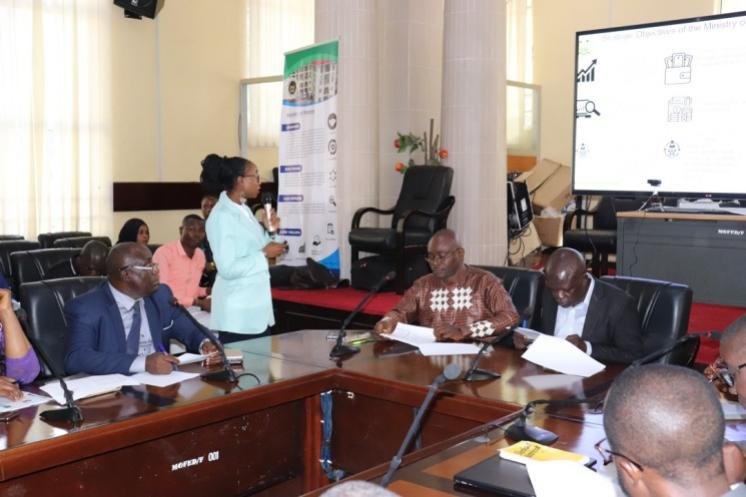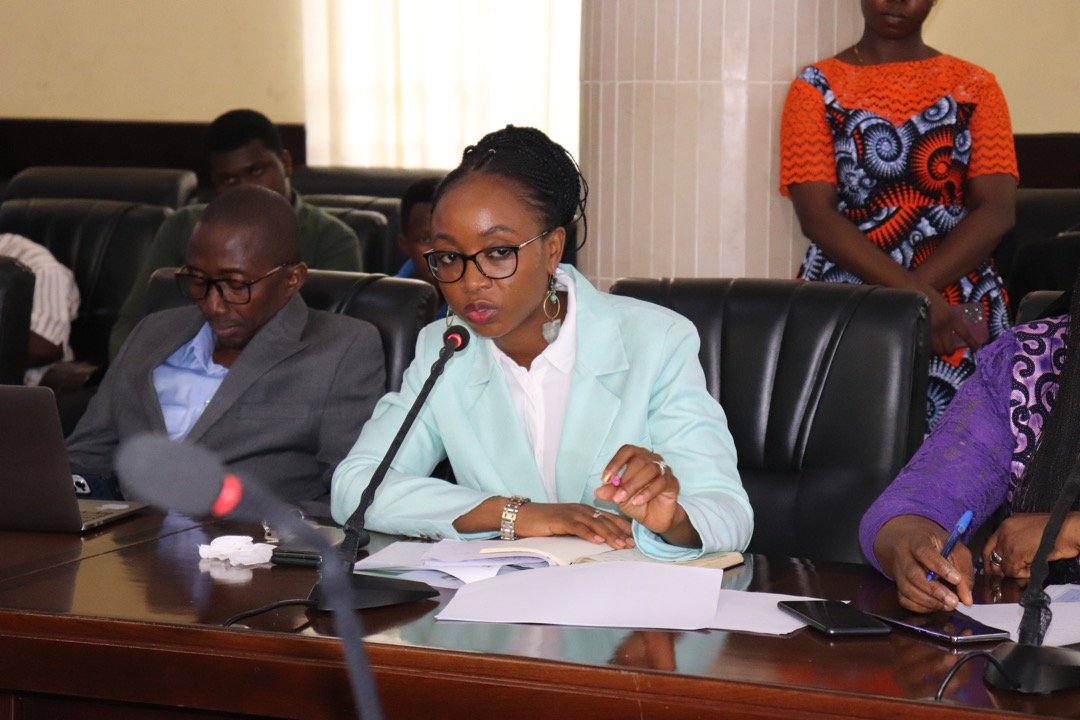
Members of the District Budget Oversight Committees (DBOCs), Civil Societies Organizations (CSOs), and Non-State Actors (NSA) members have unanimously agreed to approve the proposed sum of 128,281.9 million new Leones as a proposed budget for the Ministry of Finance for the Fiscal year 2023.
This happened on Thursday, 29th September 2022, in the FY 2023 ongoing bilateral budget discussions at the Ministry in Freetown.
Presenting the budget for 2023, Director of Research and Delivery Division Dr. Yakama Jones stated that the overview of the 2023 budget is to achieve the strategic objectives of the Ministry of Finance, which are to increase Domestic revenue mobilization from 12.3% of GDP in 2017 to 20% of GDP by 2024, improve expenditure management and control, strengthen fiscal risk management and fiduciary oversight of MDAs, SOEs, and the public sector projects, to improve public debt management and to improve on the processes of budget preparations, execution, and payment system.
As part of the key achievements in 2021, she noted that the Ministry of Finance in 2022 has increased domestic revenue from 12.3% in 2017 to 15.5% in 2021, improved expenditure management and control, Strengthen Fiscal Risk Management and Oversight of State- Owned Enterprises, Strengthen Research Capacity to Support Policy Formulation, Improve Public Debt Management, improve Budget Preparation and Execution, Strengthen the Ministry Administrative capacity, strengthen Fiscal Decentralization and Improve the implementation and Coordination of Donor funded projects.
She further explained that amidst all the achievements made by the Ministry, there are funding issues, Extra- Budgetary Requests from MDAs, and External Dependencies.
She pointed out some of the strategies put together to deliver in 2023 the Automation of processes and leveraging of technology, implementation of forward-looking public financial management reforms, and prudent debt management, research, and evidence-based policymaking.
The chairman of the programmes, Jespa S. Komba, DBOC’s Kono district commended the Ministry of Finance for the presentation but also raised concern that the Ministry went over the allocated ceiling.
In response to the concerns raised, the Acting Deputy Director of Budget, Jacob Sensie explained that the budget has two aspects, the recurrent captures the figures of the allowances and rents whilst the domestic capital deals with monitoring.
He clarified that the Ministry of Finance is not overspending as suggested by the DBOCs but rather spends its budget to support other MDAs to pay international dues, consultants hired by other ministries, etc.
Director of DMST, Simion Jonjo explained that based on the activities going on in the division expenditure on IT equipment and platforms is very expensive which had warranted the ministry to spread its cost on IT over a mid-term period for the development of a purpose building (data centre), and other related IT activities of which some are in an advance stage whilst others are in progress.
He noted that the development of the DFMST directorate and a purpose building (data center) was also created to support the IFMIS systems and payroll.