

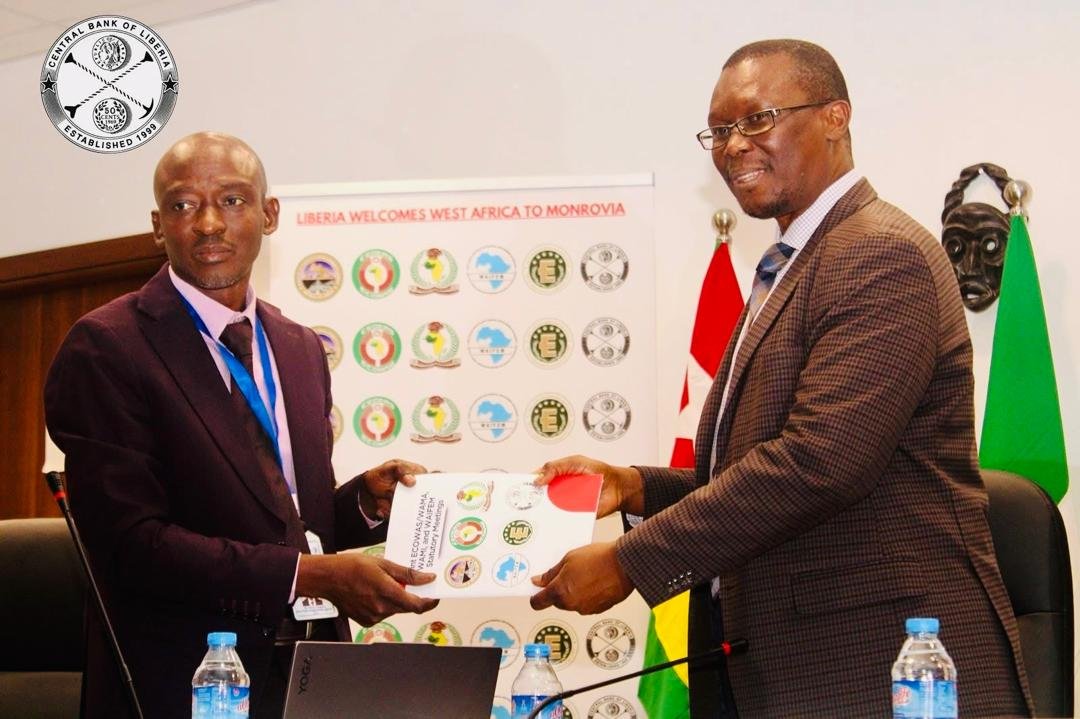
After five days of extensive deliberations, the 58th Meeting of the Technical Committee of the West African Monetary Zone (WAMZ) concluded on 8 February 2026 in Monrovia, Liberia, having commenced on 4 February 2026.
The meeting brought together senior technical experts from the central banks and ministries of finance of WAMZ Member States The Gambia, Ghana, Guinea, Liberia, Nigeria, and Sierra Leone as well as representatives of regional institutions.
It will be recalled that the West African Monetary Institute (WAMI) began operations in 2001 with the core mandate of undertaking the technical groundwork for the establishment of a monetary union and the eventual launch of a single currency, the Eco. Over the years, WAMI has conducted regular multilateral macroeconomic convergence assessments to monitor Member States’ performance against agreed fiscal and monetary criteria; developed and updated policy frameworks to harmonise monetary, fiscal, and structural policies; and implemented initiatives to integrate financial and payment systems across the Zone.
Delivering the welcome address, Hon. Dehpue Y. Zuo, Deputy Minister, Department of Economic Management, Ministry of Finance and Development Planning of Liberia, reminded delegates that the ambitious agenda to launch the Eco is guided by the Roadmap adopted by Heads of State and Government in 2021, as well as the Supplementary Act on Macroeconomic and Financial Stability.
He called on Member States to continue implementing sound macroeconomic and structural policies, strengthen cooperation to achieve the collective aspiration of launching the single currency by 2027, and support Liberia during its tenure as Chair of the WAMZ Technical Committee.
The outgoing Chairman of the Technical Committee, Matthew Dingie, Financial Secretary of the Ministry of Finance, expressed appreciation to Member States of the WAMZ, as well as the Director-General and staff of WAMI, for their cooperation and support during his tenure.
He noted that the global economic environment in 2025 remained challenging, characterised by persistent policy uncertainty, rising protectionist trade measures, and increasing fragmentation of global economic activity, all of which continued to weigh on growth.
Mr. Dingie highlighted that real GDP growth in the WAMZ was estimated at 5.0 percent in the first half of 2025, an improvement from 3.7 percent recorded during the same period in 2024. He also observed an overall improvement in Member States’ performance in meeting the convergence criteria, despite the difficult global economic conditions.
On recent developments in Sierra Leone, the Financial Secretary stated that the economy has remained resilient, recording broad-based growth, easing inflation, and improved fiscal performance. He cited the decline in the public debt-to-GDP ratio, supported by sound macroeconomic policies and reforms, as well as continued exchange rate stability and an improved current account position, despite pressures on foreign exchange reserves.
He noted that Sierra Leone met two out of the four primary convergence criteria the fiscal deficit and central bank financing of the fiscal deficit compared to only one criterion met in the first half of 2024.
Central bank financing of the fiscal deficit declined to 8.1 percent of the previous year’s tax revenue in the first half of 2025, from 21.3 percent in 2024, thereby meeting the 10 percent ceiling. This reflected gains from fiscal consolidation and improved monetary-fiscal policy coordination. The fiscal deficit also met the convergence criterion, falling to 1.8 percent of GDP in the first half of 2025, from 1.9 percent in the corresponding period of 2024, remaining below the 3.0 percent threshold.
According to Mr. Dingie, performance on the secondary convergence criteria remained strong, with continued compliance in respect of the public debt-to-GDP ratio and exchange rate variation benchmarks.
Presenting his report, the Director-General of WAMI, Dr. Abdulsalam Sikiru Abidemi, disclosed that as at end-June 2025, no WAMZ Member State met all four primary convergence criteria. The Gambia, Ghana, and Nigeria met all criteria except the inflation target, while Guinea and Sierra Leone each met two criteria, and Liberia met one.
Several technical presentations informed the deliberations, including the WAMZ Macroeconomic Developments and Convergence Report (end-June 2025); legal issues relating to the realisation of the ECOWAS Monetary Union; the WAMI Work Programme and Budget for the 2026 Financial Year; and reports on West African debt and capital markets integration and payment systems within the WAMZ.
In addition, the various colleges under the WAMZ framework the College of Supervisors of the WAMZ (CSWAMZ), the College of Supervisors of Non-Bank Financial Institutions (CSNBFI), and the College of Insurance Supervisors of the WAMZ (CISWAMZ) presented reports on their respective activities for consideration.
Following the conclusion of the 58th Meeting of the WAMZ Technical Committee, the Chief Economist of the Ministry of Finance, Mr. Alimamy Bangura, will serve as Chairman of the Joint Technical Committee of the Economic and Monetary Affairs Committee of the West African Monetary Agency (WAMA) and the Macroeconomic Policy Technical Committee of the ECOWAS Commission, scheduled for 9-11 February 2026.
The Director of the Macro-Fiscal Policy Division, Dr. Samuel Bonzu, and the Acting Director of the Research and Delivery Division, Mr. Alhaji Abu Komeh, are also representing the Ministry of Finance in the ongoing technical discussions.