

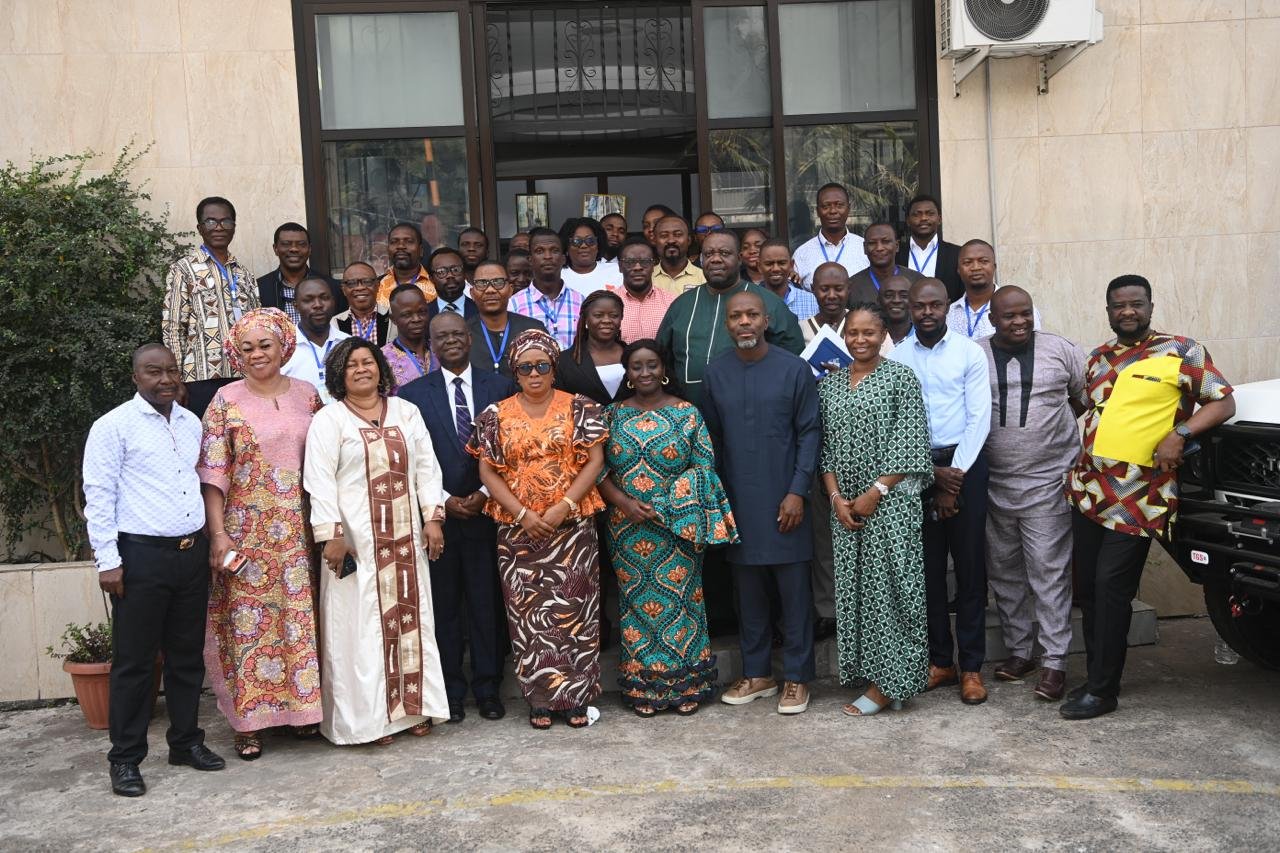
The Minister of Environment and Climate Change, Jiwoh E. Abdulai, has engaged national stakeholders on the outcome of regional consultations regarding the review of Sierra Leone’s forestry and wildlife legislation.
The engagement took place during a preparatory meeting held on Thursday, 26 February 2026, at the Food and Agriculture Organization of the United Nations (FAO) Head Office in Freetown.
Convened by the Ministry of Environment and Climate Change, the national-level meeting brought together key ministries, departments, agencies, and relevant authorities to review sections of the Forest Act relating to institutional coordination. Discussions emphasised the importance of strengthening intersectoral collaboration to address the various drivers affecting the sustainable management of forests.
The outcomes of the meeting will inform a final validation workshop scheduled to take place in the coming months in Freetown. The workshop will review the consolidated findings and agree on the major amendments to be incorporated into the revised Forest Act.
In his statement, Minister Jiwoh E. Abdulai explained that the preparatory meeting was intended to consolidate findings from nationwide stakeholder consultations, technical assessments, and expert reviews. He noted that the process provides an opportunity to examine both the strengths and gaps within the existing legal framework, including the Forestry Act of 1988 and the Wildlife Conservation Act of 1972.
According to the Minister, while the existing Acts have served the country for many years, they do not sufficiently address emerging issues such as climate resilience, carbon markets, ecosystem restoration, community forestry, and benefit-sharing mechanisms.
He expressed hope that the revised legislation will be forward-looking, flexible, and aligned with international environmental standards and commitments. He further called on stakeholders to adopt a sincere, inclusive, transparent, and evidence-based approach throughout the review process.
Minister Abdulai emphasised that law reform is not merely about amending legal text but about shaping the country’s future direction. He stressed that the revised Forestry and Wildlife Conservation Acts should stand as progressive, enforceable, and people-centred instruments that protect Sierra Leone’s natural heritage while promoting responsible economic growth.
The review of the 1988 Forestry Act and the 1972 Wildlife Conservation Act is being undertaken under the Support for Sustainable Forestry in Sierra Leone Project. The initiative is funded by the European Union and receives technical support from the Food and Agriculture Organization of the United Nations (FAO).
The project aims to strengthen the Government of Sierra Leone’s capacity, data systems, and methodologies for measuring and reporting on forest resources and land-use change at both national and subnational levels.
The Consultant, Roland S.V. Wright, stated that both the Forestry Act of 1988 and the Wildlife Conservation Act of 1972 are outdated and not aligned with modern trends and development priorities. He explained that the review process included a comprehensive desk review of Sierra Leone’s legislation, a comparative analysis of similar laws within the sub-region, as well as institutional and regional consultations. These efforts resulted in the development of a working document to guide discussions ahead of the national validation exercise.
The meeting was attended by representatives from universities, civil society organisations, the Environment Protection Agency, the National Protected Area Authority, and the Ministries of Finance, Lands, Agriculture, and Mines, among other MDAs.
Key issues discussed included legal and policy, formalising family land ownership, demarcating protected areas and strengthening by-laws,
Enforcement: Increasing fines for environmental offences, establishing a trust fund for reforestation, employing community members as forest rangers and tree planters.
Conservation and Livelihoods: promoting carbon trading, supporting alternative livelihoods and expanding public awareness programmes.
Capacity Building: providing training and logistical support and establishing regular dialogue platforms between government and communities.
Biodiversity: Conducting surveys on endangered species and integrating traditional and modern conservation methods.
The review process is expected to culminate in strengthened legislation capable of addressing current environmental challenges while supporting sustainable development in Sierra Leone.