

By: Aminata Sesay
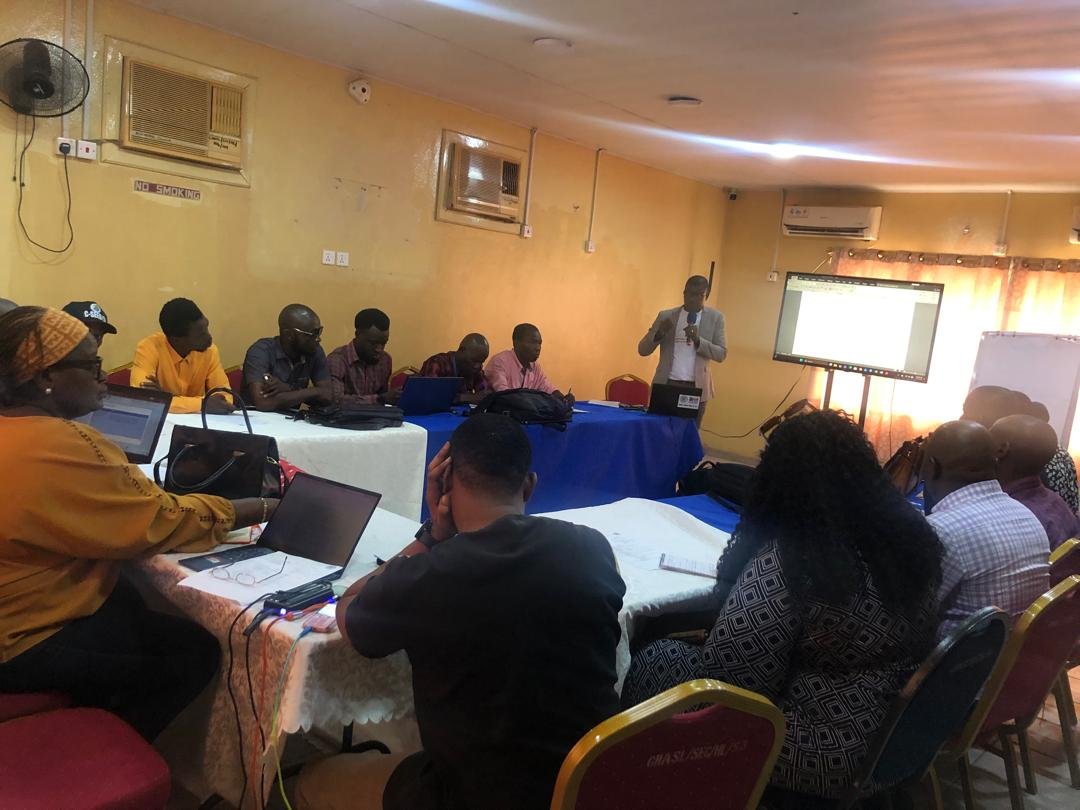
The Conservation Society of Sierra Leone (CSSL) on Tuesday organized a sensitization meeting for members of the national network of civil society organizations (CSOs) on the REDD+ process, aimed at strengthening forest and biodiversity conservation across the country.
The one-day engagement was held at the conference room of CHASL in Freetown and brought together CSO representatives from various parts of Sierra Leone.
Speaking at the event, Edward Momodu Sesay, Head of Programmes at CSSL, highlighted the serious environmental threats facing the country, including rapid deforestation and biodiversity loss, particularly in protected areas such as the Western Area Peninsula National Park.
“Our forests are disappearing before our eyes, and this trajectory will negatively affect our development and livelihoods,” he said. “We are here to reflect on our journey, identify gaps, and strengthen our collective understanding so that we can speak with one voice when engaging communities and stakeholders.”
He emphasized that effective conservation requires a proper understanding of policies and processes, especially at the community level, where many people depend heavily on natural resources for their livelihoods.
“If communities do not understand conservation, they may see it as a threat to their survival. However, conservation is about sustaining resources for present and future generations,” Sesay added.
Abdul K. Dumbuya, Communications Manager at CSSL, explained that the meeting was designed to equip CSOs with accurate and up-to-date information about the REDD+ readiness process.
“Our role is to provide members with the right knowledge so they can deliver accurate messages to their communities,” he said. “Misinformation about REDD+ can lead to confusion and resistance. That is why awareness-raising and capacity building are critical at this stage.”
He noted that REDD+ operates in phases and that Sierra Leone is currently in the readiness phase, which focuses on strengthening institutional and technical capacity before full implementation begins.
Dumbuya also stressed the importance of establishing a functional governance structure for the national CSO network to ensure sustainability beyond the project period.
Ansumana Babar Turay, Chairman of the REDD+ National Technical Committee, underscored the need for strong and sustainable structures among non-state actors, including CSOs, local communities, and the private sector.
He urged participants to ensure that networks formed under the REDD+ process remain active even after project funding concludes.
“We must ensure that these structures do not collapse once projects are completed,” he said. “CSOs play a vital role in communicating REDD+ messages, especially to communities that may not have access to formal education.”
Turay also encouraged stakeholders to simplify technical concepts when engaging grassroots communities, explaining that REDD+ essentially aims to reduce deforestation and forest degradation through regulated and sustainable forest management.
Participants discussed key challenges, shared experiences, and explored strategies to improve community engagement, advocacy, and coordination in forest governance.
The engagement forms part of Sierra Leone’s broader efforts to prepare for effective participation in the REDD+ mechanism, which seeks to reduce greenhouse gas emissions from deforestation and forest degradation while promoting sustainable development.
Organizers expressed optimism that the meeting would strengthen collaboration among CSOs and enhance their role in supporting government and community-led conservation initiatives nationwide.