By: Problyn J. Alpha
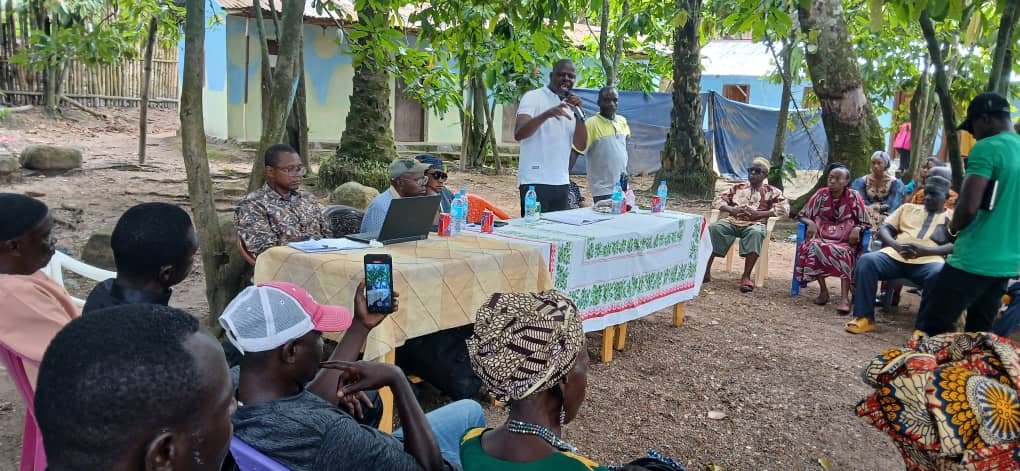
Dr. Chernor M.B. Jalloh, a barrister at law with C&J Partners, briefed members of the Marginalized Affected Property Owners (MAPO), including Aiah Fengai and 73 others, Morie Momoh and 14 others, and Sia Janet Bayoh and 9 others, on the Court of Appeal’s ruling on October 16, 2025. The meeting, held at Number Nine Area in Tankoro Chiefdom, Koidu City, was a follow-up to the protracted lawsuit between the aforementioned litigants, Octea and Koidu Holdings.
In his address, Dr. Jalloh provided a retrospective overview of how the litigants, former residents of Tankoro Chiefdom in Kono District, had instructed C&J Partners to file a summons against Octea and Koidu Holdings. The lawsuit centered on the alleged deprivation of property, the failure to honor a seven-man agreement, and the community development mining lease agreement. The plaintiffs also cited issues including the loss of property and income, environmental pollution, and the damaging effects of mining activities, particularly the blasting operations that caused cracks in the litigants’ homes. Additionally, the failure of the company to adequately compensate the plaintiffs for their lost property, crops, and for failing to properly resettle them under the Resettlement Agreement with the people of Sierra Leone and the government, was a key aspect of the lawsuit.
Dr. Jalloh explained that the lawsuit began in Kenema in 2019, but was later transferred to the Makeni High Court. In 2022, Justice Unisa, following an objection by Koidu Holdings and Octea, ruled that the plaintiffs had no right to sue the companies. However, the court’s decision gave the plaintiffs the right to appeal, which eventually led to a ruling in favor of MAPO and the others by the Court of Appeal in Freetown. The Court of Appeal ruled that the affected property owners had the right to sue Octea and Koidu Holdings for the harm and damage caused to their properties, and that the matter deserved to be heard in court.
Dr. Jalloh revealed that three judges presided over the appeal Justice Riginal Fyn, Justice Suilaman Bah, and Justice Wright. The Court ruled that the litigants had the legal standing to sue Koidu Holdings and Octea. The case was referred to the Chief Justice, who would assign a judge to hear the matter. The Court also ordered Koidu Holdings and Octea to bear the costs of the litigation from the beginning of the lawsuit to the point where the case was objected.
In addition, the Court ordered the freezing of assets belonging to Koidu Holdings and Octea to prevent the companies from removing their assets from the country. The companies were prohibited from leasing, selling, renting, or disposing of their assets until the matter was resolved in court.
Dr. Jalloh further informed the litigants that the Chief Justice had already assigned the case to the resident judge in Kono District, who would be responsible for hearing the complaints of the affected parties in the district. Dr. Jalloh urged the plaintiffs to gather all necessary evidence to present to the court.
The lawsuit against Koidu Holdings and Octea includes claims of failure to resettle the affected people.
Failure to compensate for lost crops. Damage to property caused by blasting activities, particularly affecting those who declined resettlement. Deprivation of access to adequate water due to underground mining. Lack of access to schools, hospitals, and basic amenities in the resettled areas.
Non-availability of legal property rights documents for resettled communities.
Dr. Jalloh concluded by explaining that the case was initially dismissed because Octea and Koidu Holdings argued that only the chiefs, who are the custodians of the land, had the right to sue, not the individuals. However, the Court of Appeal ruled against this argument, granting the affected property owners the right to pursue their claims.
In closing, the chairman of MAPO, Prince Boima, along with Chairlady Sia Janet Bayoh and Pa Fengai, expressed their gratitude to C&J Partners and the Network Movement for Justice and Development (NMJD) for their continued support. They thanked the organizations for their steadfastness and support over the years, which had brought the case to this point of success. The MAPO leaders encouraged the litigants to remain law-abiding and focused on winning the case.