By: Aminata Turay
A decade after their joint battle against the Ebola epidemic, Sierra Leone and China have reaffirmed their partnership with new commitments to enhance health systems and expand public health collaboration.
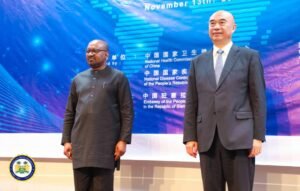
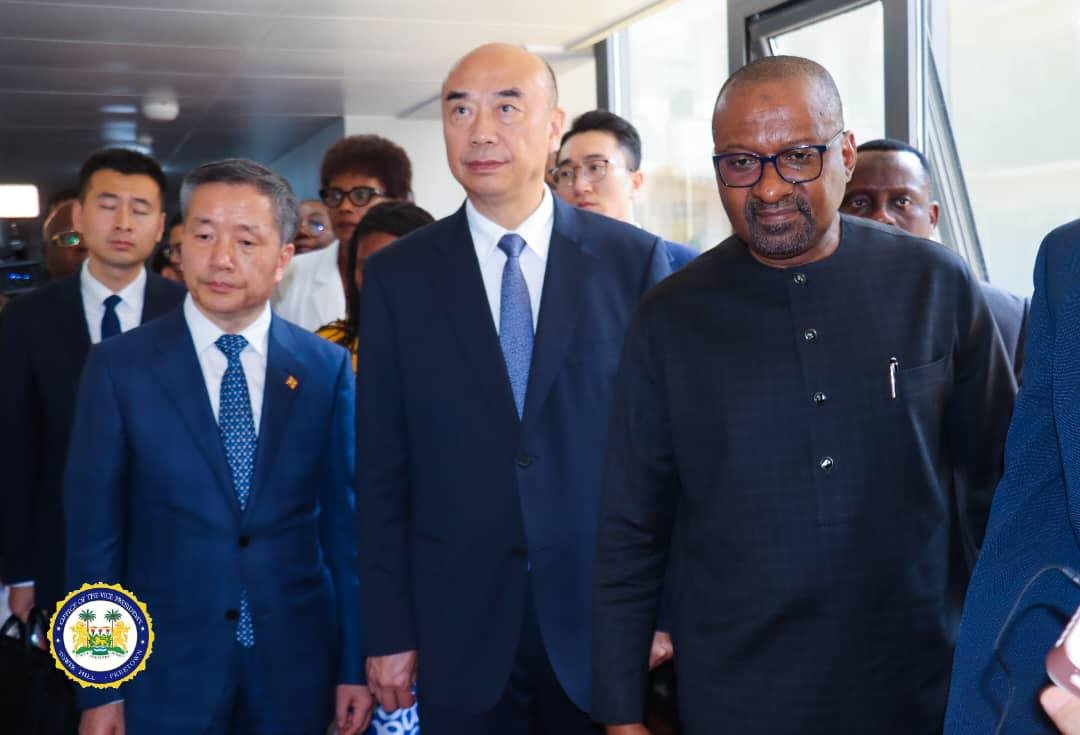
At a ceremony held at the Foreign Service Academy in Freetown, Vice President Dr. Mohamed Juldeh Jalloh described the event as “not just a reflection on our past struggles, but a celebration of resilience and partnership that continues to save lives.”
Dr. Jalloh acknowledged that the 2014 Ebola outbreak, one of the darkest periods in Sierra Leone’s history, underscored the need to build robust, long-term health infrastructure. “Preparedness is not an event, it is a system,” he said, highlighting that post-Ebola reforms had empowered Sierra Leone to diagnose over ten epidemic-prone diseases within its borders.
The Vice President also credited China’s early and decisive role during the outbreak, noting that Beijing’s support “came at a time when Sierra Leone was at its most vulnerable.”
He pointed to the transformation of emergency interventions into sustainable health systems, with institutions such as the China-Sierra Leone Friendship Hospital and the Infectious Disease Prevention and Control Center now playing integral roles in the country’s national health preparedness network.
“Our cooperation with China has evolved from crisis response to building long-term resilience,” Dr. Jalloh said, underscoring that Sierra Leone’s growing laboratory and surveillance capacities are part of that ongoing legacy.
Chinese Vice Premier Mr. Liu Guozhong, in his remarks, stated that the success of the Ebola response marked the beginning of a new era in China-Sierra Leone health relations. “For over fifty years, our medical teams have worked hand in hand with Sierra Leonean colleagues to safeguard the lives and health of your people,” he said.
Mr. Liu also announced a series of new initiatives under the China-Africa Health Partnership, including the establishment of a Chinese Medicine Center, a biosafety laboratory, and expanded use of telemedicine and artificial intelligence in healthcare.
“Standing on a new historical starting point, China is ready to deepen cooperation in public health and contribute to a shared future for health,” he added.
Acting Minister of Health, Dr. Charles Senessie, hailed the partnership as “one built on mutual trust, respect, and shared purpose.” He recalled China’s swift deployment of medical experts during the 2014 Ebola crisis and its continued investment in Sierra Leone’s health sector.
“These facilities, from the Jui biosafety lab to the Tropical Disease Prevention Center, are monuments to our determination and friendship,” Dr. Senessie said. He also praised Chinese medical teams for training local professionals and supporting disease surveillance efforts, adding, “Together, we are building a legacy of health, resilience, and shared prosperity that will endure for generations.”