

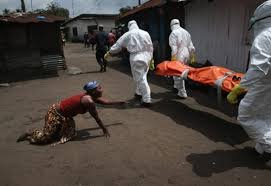
Photo Credit: Sierra Leone Telegraph
By: Mohamed Sahr
Claim:
A certain man of God once claimed in 2014 at the heat of the deadly Ebola virus scourge that ‘bathing with hot salt water can prevent/cure Ebola virus’.
Verdict:
This claim, according to Africa CDC, WHO, BBC Africa News and other local medical experts, proved that the viral statement was false. Also, personal investigation showed that “people who bathed with the salt water ended up contacting the virus”.
Background
The Ebola Virus Disease (EVD) outbreak that struck West Africa, particularly Sierra Leone, in 2014 had catastrophic consequences that went far beyond the immediate loss of life.
The impacts of this outbreak, saw nearly 29,000 reported cases and over 11,000 deaths across Guinea, Liberia, and Sierra Leone.
The disease was identified in 1976, in almost simultaneous outbreaks in Zaire (now the Democratic Republic of the Congo (DRC)) and Sudan (now South Sudan).
Between 1979 and 1994, no human cases or outbreaks were detected. However, since 1994, outbreaks have been recognised with increasing frequency.
The outbreak left behind damning consequences, ranging from physical, social, and economic disruptions, particularly, on the affected nations.
What’s Ebola Virus (EVD)?
According to Gov. UK 2025 publication, the Ebola disease (EBOD) is a severe disease caused by orthoebolaviruses, members of the filoviridae family, which occurs in humans and other primates.
Until 2014, outbreaks of EBOD were primarily reported from remote villages close to tropical rainforests in Central and West Africa. Most confirmed cases were reported from the DRC, Gabon, the Republic of the Congo, Sudan and Uganda. In 2014, an EBOD outbreak was reported for the first time in West Africa, involving Guinea, Liberia and Sierra Leone.
The Impacts of the Ebola Virus on Sierra Leone
Study indicated that one of the most immediate and dire consequences of the Ebola outbreak was the loss of healthcare workers.
In Sierra Leone, nearly 7% of Sierra Leone’s healthcare workforce succumbed to the disease, while other workers were either sidelined due to fear of infection or incapacitated by illness. This massive loss significantly disrupted the already fragile healthcare systems in the affected countries.
The collapse of basic health services, including maternal and child healthcare, was particularly stark. As hospitals and clinics struggled to manage the Ebola crisis, other critical health services were sidelined, leading to an increase in preventable deaths from other diseases such as malaria, pneumonia, and malnutrition.
Apart from the negative effects of the virus on the country’s health system, the socio-economic repercussions of the Ebola outbreak were profound. The epidemic crippled the economies of the affected countries, causing widespread poverty and unemployment.
For instance, businesses, especially in the informal sector, experienced sharp declines in revenues. With quarantine measures, border closures, and travel restrictions, local markets were severely affected, leading to significant disruptions in trade and income generation.
The outbreak also led to a drastic increase in food insecurity, as farming communities were hit hard by the loss of labor and the disruption of agricultural activities. Additionally, school closures, along with disruptions to education services, further deepened the social challenges faced by these communities.
Lessons learned from the EVD
Lessons learned from the Ebola and COVID-19 crises should drive reforms that can help African countries better manage future disease outbreaks and mitigate their social and economic impacts. By improving resource mobilization, healthcare workforce capacity, and governance structures, Africa can enhance its resilience to future public health challenges.
While the Ebola outbreak in West Africa particularly Sierra Leone exposed significant vulnerabilities in public health systems, it also painted the importance of strengthening healthcare infrastructure, governance, and public health preparedness across the continent.
Post-Ebola Deaths
More than 3,000 deaths were recorded in the aftermath of the 2014–2016 Ebola outbreak in Sierra Leone. These lives were lost due to the overwhelming of the healthcare system and the disruption of vital health services for other conditions, leading to indirect deaths. While official figures report nearly 4,000 deaths from Ebola, the true number may be higher, and thousands of other lives were affected by the inability to access care for malaria, vaccinations, and other life-saving services.
Personal experience: Yei Haja fell sick of Ebola despite bathing with the ‘hot salt water’
My grandmother, Yei Haja (not her real name), was working as a trained health worker in Kenema one of the epicentres during the early phase of the Ebola outbreak. Unfortunately, she contracted the virus despite her professional experience and knowledge.
Yei Haja fell ill, she, like many others, had been exposed to widespread misinformation about how to prevent or cure the disease. One particular myth that was circulating at the time claimed that bathing with hot salt water could cure Ebola.
Believing in this hoax, she decided to follow the advice and bathe with hot salt water that Sunday morning.
This experience highlights the danger of misinformation, particularly during a public health crisis. The claim that “bathing with hot salt water cures Ebola” was false and misleading. In reality, only proper medical treatment can cure Ebola, and any alternative methods like the salt water bath were not effective.
The rumour took hold for two main reasons. First, it originated from a trusted religious leader someone people believed had their best interests at heart. Second, it spread faster than official health messages, filling the gap left by slow and fragmented communication. See:
https://africacdc.org/news-item/can-africa-get-better-at-fighting-epidemics-and-infodemics/
Verification:
Due to the widespread circulation the man of God’s statement received, including the pain his comment brought upon people, including my late grandma, it is but necessary to fact-check the viral claim in the bid to set the record straight for the general public.
Desktop Research Findings:
Emerging infectious diseases are a critical issue in contemporary global environmental health. The 2014/2015 Ebola epidemic in West Africa has become the large most widespread outbreak of the disease to date.
Among its various impacts, the epidemic triggered a proliferation of emergent ethnomedical cultural responses.
With the appearance of cases in Nigeria, information about these practices quickly spread through social media and other communication channels into neighboring Cameroon as people attempted to assuage their uncertainty and significant fear of the disease.
See:https://onlinelibrary.wiley.com/doi/abs/10.1002/9781118786949.ch8
Additionally, the Africa Centre for Disease Control and Prevention (Africa CDC) in its website revealed thus: “In 2014, as the Ebola outbreak swept through Sierra Leone, fear spread even faster than the virus itself. One dangerous rumour claimed that bathing in hot saltwater could prevent Ebola infection. Families, acting on this hearsay, bathed their children in scalding water some suffering burns believing they were protecting them from the deadly disease.
Notwithstanding, the World Health Organization (WHO) via its official Facebook page, and Twitter now X post debunked this misinformation stating that “Bathing with salt and warm water, drinking water with salt does NOT cure Ebola.

In addition, the BBC Africa News, equally underscored the post made by the World Health Organization regarding the falsity of the claim made that bathing with hot salt water cures Ebola, adding that – the viral statement made by the Nigerian pastor was a vehemently false.
Dr. Mustapha Kabba vehemently debunked the viral claim
Dr. Mustapha Kabba, the Deputy Chief Medical Officer for Clinical Affairs at the Ministry of Health, in one of the press conferences held at Ministry of Health headquarter at Youyi building Freetown, addressed a viral claim that suggested bathing with hot salt water could cure Ebola.
He firmly debunked the claim, explaining that no medical expert has ever recommended such a treatment. Dr. Kabba pointed out that during the Ebola outbreak, there was a lot of misinformation circulating, and unfortunately, many people believed in these false remedies.
He stressed that the claim was entirely false and misleading, and there was no scientific basis for it.
Conclusion:
It is clearly evident that the findings from my investigation conducted, both online and in-person, strongly indicated that the viral claim, noting that “Bathing with hot salt water prevents contacting Ebola virus” – is vehemently false.
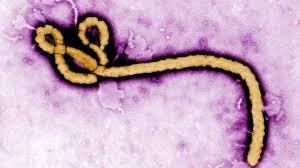
Photo Credit: CDC