Africa faces a widening annual water and sanitation financing gap of more than $30 billion, part of a global shortfall of $130 billion, jeopardizing the world’s ability to achieve universal access to climate-resilient WASH services by 2030.
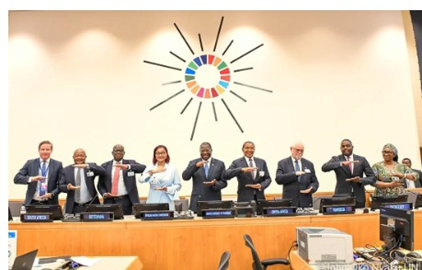
This urgent concern dominated discussions in Madrid in October 2025, where nearly 50 ministers convened for the 2025 Sector Ministers’ Meeting, organized by the Sanitation and Water for All (SWA) partnership.
African delegates used the platform to shape global guidelines ahead of COP30 and the UN 2026 Water Conference.
Their inputs helped define the High-Level Leaders Compact also known as the Madrid Commitment to Action, outlining five priorities African governments must accelerate to close persistent WASH and climate-resilience gaps.
Political and institutional integration
SWA stresses that African nations must embed water, sanitation, hygiene, and climate action directly into national development strategies and adaptation plans.
UNEP data reveals slow progress: in 2018, 71% of African countries ranked in the medium-low to very low categories for integrated water resources management (IWRM). By 2024, none of Africa’s sub-regions were on track to meet the “Very High” SDG 6.5 IWRM target.
Experts warn that fragmented governance will continue to stall progress unless ministers drive high-level political and institutional alignment.
Inclusive and rights-based services
Despite improvements, UNICEF and WHO estimate that 1 in 4 people in Sub-Saharan Africa lacks safely managed drinking water, while 2 in 5 lack safely managed sanitation.
Women, girls, Indigenous groups, persons with disabilities, and displaced communities remain disproportionately affected. SWA recommends investments driven by high-quality, disaggregated data to precisely target underserved populations and ensure transparent, equitable delivery.
Resilient systems and risk management
Climate change continues to deepen Africa’s vulnerability. A 2025 SAPA study links drought-driven water scarcity to rising displacement, with 2 million East Africans already forced to move. Earth.org projects up to 700 million people could be displaced by 2030 due to worsening environmental shocks.
The Compact calls for governments to adopt climate-risk assessments in planning and expand nature-based solutions and ecosystem restoration to address the environmental degradation driving these crises.
Sustainable and innovative financing
The World Bank notes that public-private partnerships contribute only 3% of Africa’s water-sector investment. Unlocking financing requires stronger investor incentives, de-risking tools, and better-prepared project pipelines. SWA says green and blue bonds, results-based financing, and structured PPPs will be essential to mobilize both domestic and global funding.
Political leadership and accountability
Poor sanitation and inadequate water access cost Sub-Saharan Africa an estimated 5% of GDP annually. The Compact warns that fragmented policies and weak coordination continue to undercut progress. Ministers have therefore pledged to work with SWA to strengthen mutual accountability frameworks that align national and global monitoring, including SDG 6 indicators.
So far, 29 countries, more than half from Africa, including Sierra Leone, Kenya, Liberia, Nigeria, Ethiopia, and The Gambia have endorsed the Madrid Compact.
SWA urges more governments to join, stressing that water security, sanitation, and climate resilience are essential for public health, economic development, and environmental stability.
For 15 years, SWA has united governments, civil society, and development partners in advancing the human rights to water and sanitation. The partnership insists that meeting Africa’s 2030 targets now depends on ministers’ willingness to act boldly on all five fronts.