

By: Saidu Jalloh
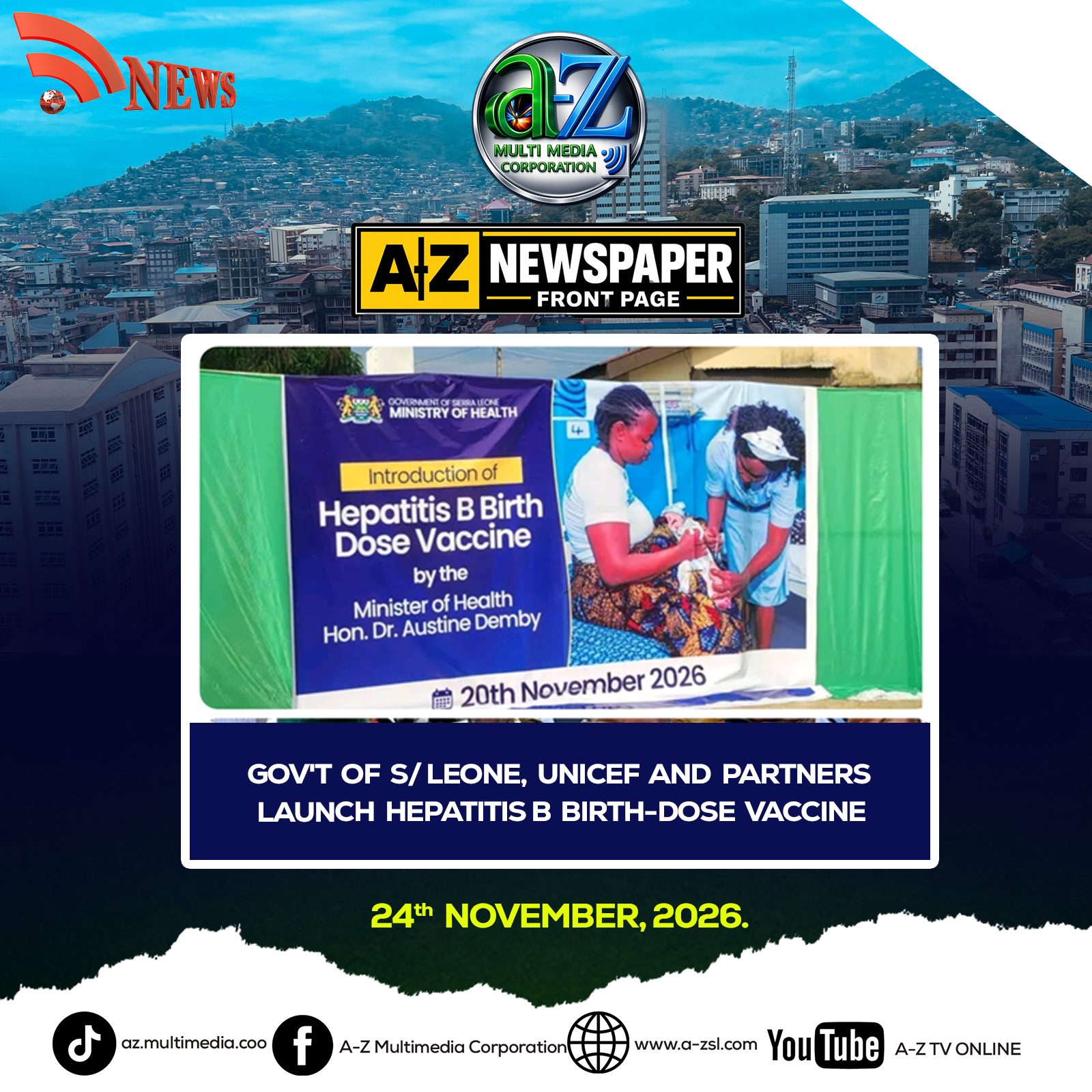
The Government of Sierra Leone, in collaboration with UNICEF, the World Health Organization (WHO), Gavi, the Vaccine Alliance, and other development partners, has launched the Hepatitis B birth-dose vaccine into the country’s routine immunization programme to prevent mother-to-child transmission of the disease and protect newborns.
The launch marks an important milestone in the country’s efforts to strengthen child healthcare, reduce the burden of viral hepatitis and improve access to life-saving immunization services.
Speaking at the ceremony, United Nations Resident Coordinator in Sierra Leone, Ms. Seraphine Wakana, congratulated the Government, particularly the Ministry of Health, for its leadership and commitment to safeguarding maternal and child health.
She said the introduction of the vaccine was not merely about launching another immunization intervention but expanding protection for newborns and saving lives.
According to her, administering the Hepatitis B birth-dose vaccine within 24 hours of birth, as recommended by WHO, is one of the most effective ways to prevent mother-to-child transmission and provide lifelong protection against the disease.
She described the intervention as a smart investment that would reduce future illnesses, healthcare costs and avoidable deaths, while contributing to the achievement of Sustainable Development Goal 3 on good health and well-being.
Ms. Wakana acknowledged progress made by Sierra Leone in reducing maternal and child mortality, expanding access to healthcare, improving health infrastructure and strengthening the health workforce. However, she urged the Government to sustain these efforts through increased investment in the health sector and stronger universal health coverage.
She also called for equitable access to healthcare for vulnerable populations, particularly women, children, young people, persons with disabilities and communities in hard-to-reach areas.
Welcoming the commissioning of eight government water ambulances at the same ceremony, she said the vessels would improve healthcare access for people living in geographically isolated and riverine communities.
She noted that the occasion was particularly significant as it coincided with World Children’s Day, reminding stakeholders that every child has the right not only to survive but also to thrive.
The UN Resident Coordinator further commended UNICEF for its support in vaccine procurement, cold-chain strengthening, healthcare worker training, community engagement and improvements to health data systems.
She also recognized the contributions of Gavi, WHO, civil society organizations, community leaders, faith-based institutions, the private sector and families, noting that their collective involvement would be essential in ensuring that no child is left behind.
She reaffirmed the United Nations’ commitment to supporting the Government and people of Sierra Leone in advancing President Julius Maada Bio’s Triple Zero Vision, strengthening health systems and accelerating progress towards the Sustainable Development Goals.
Meanwhile, Dr. Sulaiman Lakoh highlighted the burden of Hepatitis B in Sierra Leone, explaining that findings from various studies had revealed significant infection rates among different population groups.
He recalled that a study conducted in 1996 among children aged between 11 and 12 years found that 17 out of every 100 children were infected with Hepatitis B.
He also cited studies involving pregnant women, healthcare workers and people living with HIV, which indicated considerable levels of infection.
According to him, a systematic review of available research estimated that approximately 14 out of every 100 people in Sierra Leone were affected by Hepatitis B.
He explained that the World Health Organization had advised the Ministry of Health to undertake a more comprehensive assessment of the disease’s prevalence, leading to collaboration with the China Centre for Disease Control and Prevention to conduct a nationally representative survey.
Dr. Lakoh said the survey similarly indicated that nearly 14 per cent of Sierra Leone’s population was affected by Hepatitis B, underscoring the need for stronger prevention and treatment interventions.
He described the liver as a vital organ responsible for producing essential substances, defending the body against infections and storing important nutrients, warning that Hepatitis B could cause serious long-term damage.
He identified mother-to-child transmission as a major route through which the virus spreads, explaining that many infected individuals acquire the disease during childhood.
Dr. Lakoh said preventing newborns from contracting the virus was therefore critical to protecting future generations and reducing the long-term burden on families and the country’s healthcare system.
He further explained that although Sierra Leone introduced the Hepatitis B vaccine into its Expanded Programme on Immunization (EPI) in 2007, the existing vaccination arrangement did not adequately protect newborns against infection acquired from their mothers during delivery.
He said the introduction of the birth-dose vaccine would complement the existing immunization programme by addressing this gap and strengthening efforts to prevent mother-to-child transmission.
He also highlighted the Ministry of Health’s introduction of the Triple Elimination Strategy in October 2024, which provides for pregnant women to be tested for HIV, Hepatitis B and syphilis.
According to him, the initiative has been expanded to more than 1,000 of the country’s approximately 1,600 health facilities, allowing for improved identification of infections among pregnant women.
However, he identified a remaining gap in the provision of antiviral medication to pregnant women who test positive for Hepatitis B.
He called for stronger collaboration with the Africa Centres for Disease Control and Prevention and other development partners to ensure that infected mothers receive appropriate treatment to reduce the risk of transmitting the virus to their babies.
Also speaking, Desmond Maada Kangbai, Programme Manager of the Expanded Programme on Immunization, explained that the decision to introduce the Hepatitis B birth-dose vaccine followed a review of health data presented by Dr. Lakoh and his team in 2022.
He said the Ministry considered it necessary to introduce the vaccine into the routine immunization schedule to improve protection for children and make vaccination more accessible.
Kangbai explained that the Ministry subsequently worked with Gavi, UNICEF, WHO and civil society organizations to develop and submit a comprehensive application to Gavi, which was approved, paving the way for the introduction of the vaccine.
He said the initiative reflected the collective efforts of the Government and its development partners to strengthen routine immunization and protect children against preventable diseases.
The introduction of the Hepatitis B birth-dose vaccine is expected to strengthen Sierra Leone’s immunization programme, improve protection for newborns and contribute to the country’s broader efforts to eliminate mother-to-child transmission of viral hepatitis.