

By: Aminata Sesay
The Ministry of Planning and Economic Development (MoPED) has reviewed development proposals from government institutions targeting vulnerable communities under the ECOWAS Fund for Regional Stabilization and Development (FRSD).
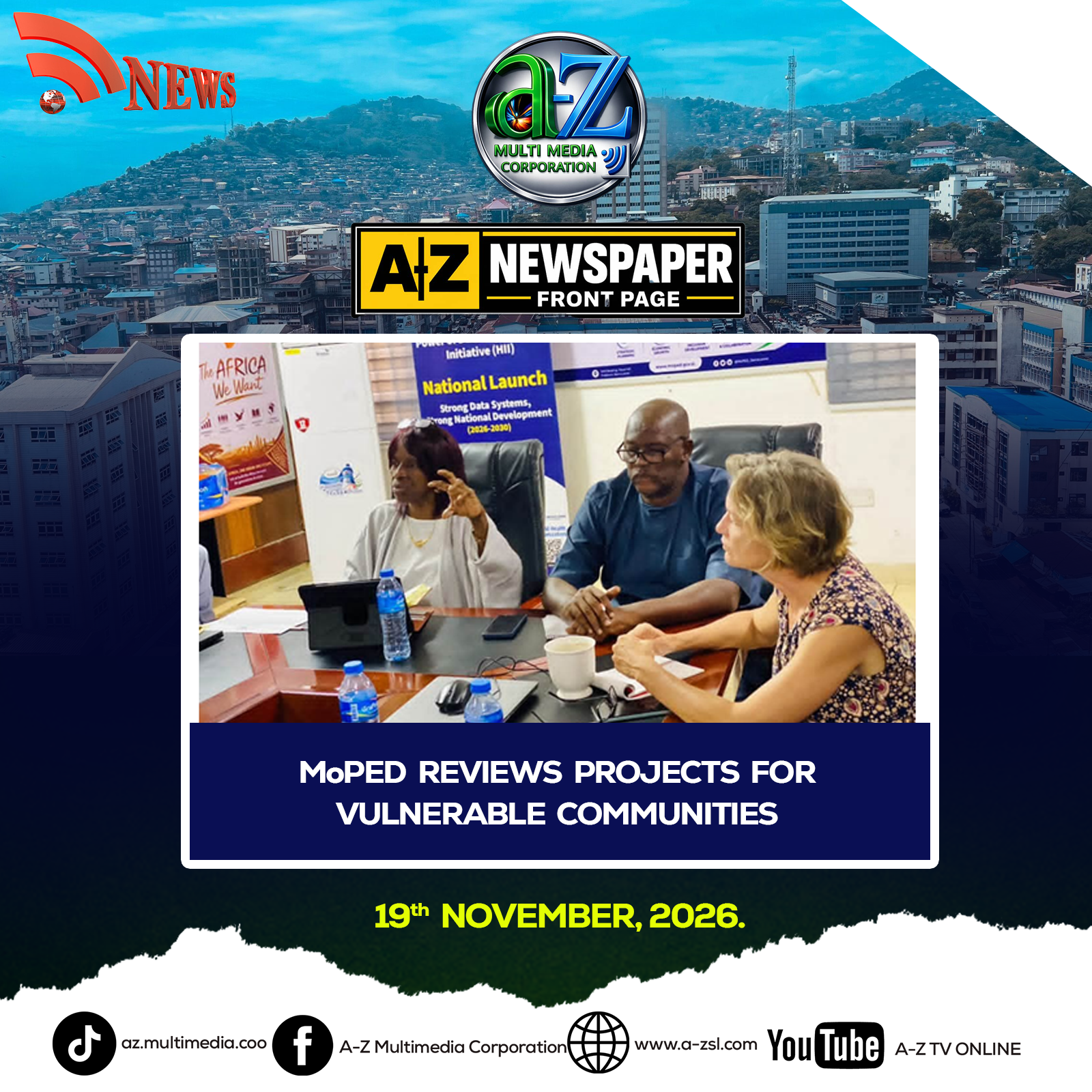
The proposals were presented at the third meeting of the National Authorizing Committee (NAC), held on Monday, 16 November 2026, at the Ministry’s Conference Room in Freetown. They cover youth empowerment, technical and vocational education, agriculture, healthcare, social protection, renewable energy and customary justice.
The meeting was chaired by the Minister of Planning and Economic Development, Kenyeh Barlay, who emphasised the need to prioritize practical, well-costed projects capable of delivering measurable benefits to vulnerable populations.
She identified Kono, Kailahun and Pujehun as initial target districts based on vulnerability assessments and the presence of development partners, while encouraging further consideration of other communities without spreading available resources too thinly.
Minister Barlay highlighted agriculture, technical and vocational education and training (TVET), mental health and drug rehabilitation as priority areas. She also urged ministries to consolidate related interventions where necessary, noting that the programme’s minimum allocation of approximately €1 million per project requires proposals of sufficient scale and impact.
FRSD technical consultant Veerle Van Waesberghe encouraged ministries to focus on projects with the greatest potential impact, while fellow consultant Steffen Horn outlined the assessment criteria, including alignment with government priorities, community needs, implementation capacity, sustainability and cost efficiency.
He stressed that proposals must demonstrate a significant infrastructure component, with clear cost breakdowns showing infrastructure and operational expenses, as well as plans for staffing and maintaining facilities beyond the funding period.
Among the proposals, the Ministry of Technical and Higher Education presented plans to expand vocational training for young people in border communities, establish renewable energy and clean cooking training hubs, and improve electricity supply at Kono University of Science and Technology through a proposed solar mini-grid.
The vocational training initiative targets out-of-school young people, particularly young women and persons with disabilities, offering practical skills in sewing, carpentry and electrical installation. It also incorporates the Dual Apprenticeship Policy, which provides for 70 per cent practical training and 30 per cent theoretical instruction.
The Ministry of Basic and Senior Secondary Education also presented proposals to expand technical education at secondary-school level and increase girls’ participation in Science, Technology, Engineering and Mathematics (STEM), particularly in Kono.
Meanwhile, the Ministry of Social Welfare proposed interventions targeting drug rehabilitation, survivors of sexual and gender-based violence, children in street situations and the prevention of child marriage. The proposals include improved rehabilitation facilities, psychosocial support, vocational training, family reintegration and livelihood opportunities.
The Ministry of Gender and Children’s Affairs also outlined plans to support survivors of sexual and gender-based violence through counselling, case management, financial inclusion and skills development, with particular attention to adolescent girls whose education has been disrupted.
In another presentation, the Ministry of Local Government and Community Affairs proposed professionalizing Paramount Chiefs’ courts through improved facilities, legal training, accountability and stronger human rights protections in customary justice administration.
The Ministry of Youth Affairs also presented proposals on aquaculture and integrated youth farming, including fish farming, poultry production and vegetable cultivation, aimed at equipping young people with productive skills and income-generating opportunities.
Discussions further highlighted the need for coordination among ministries, avoiding duplication of existing programmes and identifying credible implementing partners.
Civil society representative Charles Kobai recommended developing visual prototypes of proposed interventions to help ministries understand infrastructure and equipment requirements and identify models that could be replicated in other communities.
In their concluding remarks, the FRSD technical consultants said the proposals would undergo preliminary screening before ministries proceed with detailed submissions. They also pledged to provide assessment criteria and standard proposal templates to guide the revision process.
The meeting forms part of Sierra Leone’s efforts to identify strategic investments under the ECOWAS Fund for Regional Stabilization and Development, with a focus on improving livelihoods, expanding opportunities for young people and strengthening essential services in vulnerable communities.