

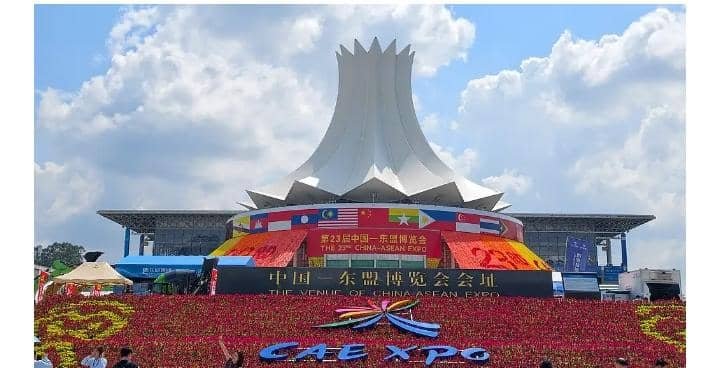
China and Southeast Asian countries are strengthening economic cooperation through expanding trade, infrastructure development and people-to-people exchanges, as their partnership continues to evolve from traditional trade relations towards deeper regional economic integration.
A notable example is the growing availability of fresh Thai durians in the Chinese market. With the China-Laos Railway serving as a vital transportation link, Thai durians and other agricultural products are now transported more efficiently through improved cold-chain logistics. Reduced transit times and transportation costs have reportedly lowered the retail prices of Thai durians in China by an estimated 30 to 40 per cent, benefiting Chinese consumers while creating new opportunities for Thai farmers and related businesses.

Five years after establishing their Comprehensive Strategic Partnership, China and the Association of Southeast Asian Nations (ASEAN) have continued to strengthen cooperation through a broad range of economic, infrastructural and institutional initiatives.
The ongoing partnership is expected to gain further momentum as Chinese Premier Li Qiang visits Thailand from November 13 to 15 before attending the 29th China-ASEAN Summit in the Philippines from November 15 to 16. The engagements are expected to provide opportunities to strengthen bilateral relations and advance regional economic cooperation.
China-Thailand relations remain a significant example of the growing China-ASEAN partnership. The two neighbouring countries have continued to align their development priorities through trade, infrastructure investment and people-to-people exchanges, delivering economic and social benefits to their populations.
For 13 consecutive years, China has remained Thailand’s largest trading partner and its leading export market for agricultural products. Their bilateral trade covers several sectors, including electronics, machinery and equipment, automobiles and auto parts, rubber, fruits and processed foods.
According to data from China’s General Administration of Customs, bilateral trade reached US$153.26 billion in 2025, representing a 14.4 per cent increase compared to the previous year. The growth reflects the resilience and expanding scope of economic relations between the two countries.
Over the past nine years, the China International Import Expo has also provided a platform for Thai businesses to introduce their products to Chinese consumers. Traditional Thai beverages, fragrances and other distinctive products have gained increasing recognition, while more Thai companies are establishing a presence in the Chinese market.
People-to-people relations have equally strengthened, with both countries signing a mutual visa exemption agreement for ordinary passport holders. The agreement has made cross-border travel easier, creating more opportunities for tourism, business engagements and cultural exchanges.
During a meeting with Thai Prime Minister Anutin Charnvirakul on Friday, Premier Li reaffirmed China’s commitment to working with Thailand to strengthen the alignment of their development strategies, promote high-quality Belt and Road cooperation and advance key projects, including the China-Thailand railway. He also called for accelerated consultations on a new five-year plan for economic and trade cooperation.
Meanwhile, this year marks the fifth anniversary of the China-ASEAN Comprehensive Strategic Partnership. Over the period, cooperation has expanded beyond conventional trade in goods to include joint industrial development and emerging sectors, contributing to economic growth across the region.
Trade figures demonstrate the remarkable progress made in the relationship. According to China’s Ministry of Commerce, China-ASEAN trade stood at approximately US$7.96 billion in 1991. By 2025, the figure had increased to US$1.05 trillion, representing approximately 131 times its original value and an average annual growth rate of 15.4 per cent.
Major infrastructure projects have also played an important role in strengthening regional connectivity and generating long-term economic benefits.
In Indonesia, the Jakarta-Bandung High-Speed Railway has recorded more than 18 million passenger trips since its launch in 2023, according to China Railway International Co., Ltd. The railway has contributed to tourism development and economic activities along its route.
Similarly, the China-Laos 500-kilovolt power interconnection project commenced operations in April, increasing the two-way electricity transmission capacity between the two countries from 50,000 kilowatts to 1.5 million kilowatts, approximately 30 times the capacity of previous transmission lines.
According to China Southern Power Grid Co., Ltd., the project is expected to facilitate the annual transmission of approximately three billion kilowatt-hours of clean electricity, further strengthening energy cooperation between the two countries.
In addition, the upgrade of the China-ASEAN Free Trade Area (CAFTA) to version 3.0 is creating new opportunities for regional economic cooperation. Beyond traditional tariff reductions and market access, the upgraded framework focuses on harmonising trade rules, coordinating standards and expanding institutional cooperation.
It also introduces nine emerging areas of collaboration, including the digital economy, providing a stronger institutional foundation for trade and investment across the region.
The upcoming 33rd APEC Economic Leaders’ Meeting is also expected to provide another platform for regional economies to promote openness, economic integration and international cooperation.
ASEAN Secretary-General Kao Kim Hourn highlighted the close relationship between ASEAN and the Asia-Pacific Economic Cooperation (APEC) framework, noting that seven of ASEAN’s 11 member states are also members of APEC.
With the Asia-Pacific remaining a major driver of global economic growth, he emphasised the importance of maintaining openness and strengthening regional cooperation in an interview with China Media Group.
Similarly, Dong Bin, Executive President of the Sino-International Entrepreneurs Federation, said deeper China-ASEAN cooperation, linked with broader Asia-Pacific economic initiatives, could prevent regional collaboration from becoming restricted to a limited group of countries.
He noted that progress achieved through subregional cooperation could create wider economic benefits for the entire Asia-Pacific region.
Overall, the expanding China-ASEAN partnership demonstrates how trade, infrastructure connectivity, energy cooperation and institutional reforms are contributing to deeper regional integration, creating new opportunities for businesses, strengthening economic relations and delivering shared benefits across Southeast Asia and the wider Asia-Pacific region.