

By: Mohamed J. Bangura
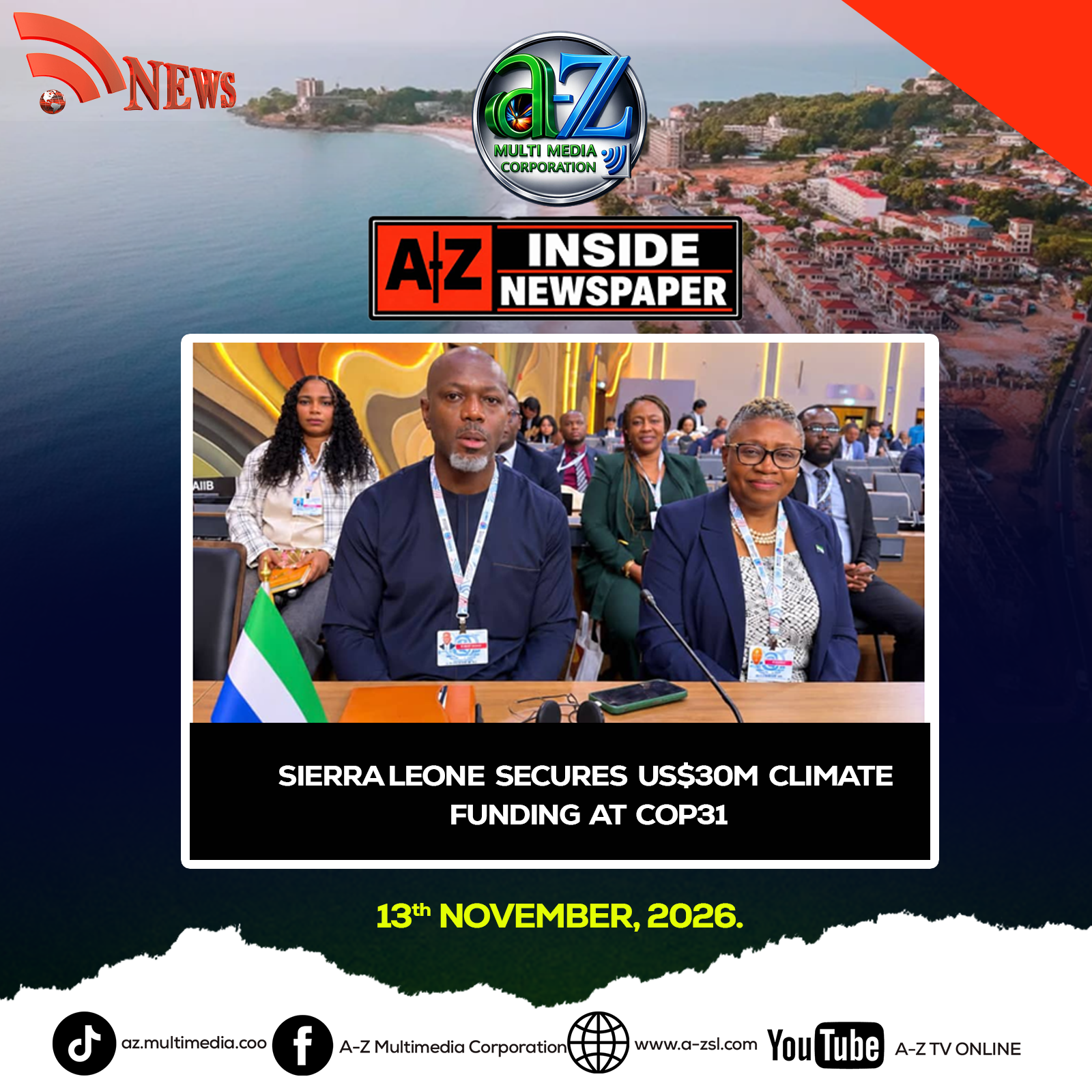
Sierra Leone has secured US$30 million in climate investment support under the Climate Investment Funds (CIF) Accelerating Resilience Investments and Innovations for Sustainable Economies (ARISE) Programme, in a development expected to strengthen the country’s capacity to address climate change and promote sustainable economic growth.
The announcement was made on Thursday, 12 November 2026, during the ongoing 31st Conference of the Parties (COP31) in Antalya, Türkiye. The Ministry of Environment described the development as a significant opportunity to tackle the country’s growing climate challenges and strengthen resilience among vulnerable communities.
The investment is expected to support initiatives aimed at protecting vulnerable communities, safeguarding livelihoods, improving food and water security, and developing climate-resilient infrastructure.
Minister of Environment, Jiwoh Emmanuel Abdulai, welcomed Sierra Leone’s recognition as a front-runner country under the ARISE Programme, describing it as recognition of the government’s commitment to climate adaptation and resilience.
He emphasised the importance of investing in communities and developing practical solutions to address the effects of climate change on livelihoods, infrastructure and the environment.
Sierra Leone remains highly vulnerable to climate-related threats, including coastal erosion, flooding, unpredictable rainfall and declining agricultural productivity.
Along the coastline, rising sea levels and erosion continue to threaten coastal settlements, while changing rainfall patterns affect farmers’ planting seasons, crop yields and food security.
In Freetown, heavy rainfall, coupled with inadequate drainage systems, has increased the risk of flooding, property damage and other environmental hazards.
The US$30 million investment is therefore expected to provide an opportunity to strengthen national capacity to respond to these challenges and protect communities whose livelihoods depend largely on natural resources.
Key areas requiring climate resilience interventions include coastal protection, improved drainage systems, climate-smart agriculture, reliable water infrastructure, early-warning systems and targeted support for communities most affected by environmental changes.
Beyond environmental protection, the investment is also expected to contribute to sustainable economic development by strengthening livelihoods and helping communities adapt to the growing effects of climate change.
However, details regarding the financing arrangements, specific project allocations, implementation timelines and access mechanisms are yet to be outlined. These will be important in determining how the investment is translated into tangible benefits for citizens.
Transparency, accountability and effective monitoring will also be essential to ensure that the resources are properly utilized and achieve their intended objectives.
Local communities, particularly farmers, fishermen, women and young people, will need to be actively involved in identifying priorities and implementing interventions that address their specific climate-related challenges.
The development marks an important milestone in Sierra Leone’s engagement with international climate financing and presents an opportunity to advance national efforts towards environmental protection and sustainable economic growth.
Ultimately, the success of the US$30 million investment will depend on its impact on ordinary citizens, particularly through improved agricultural productivity, stronger protection against flooding and coastal erosion, and more resilient livelihoods for communities most affected by climate change.