

By: Aminata Sesay
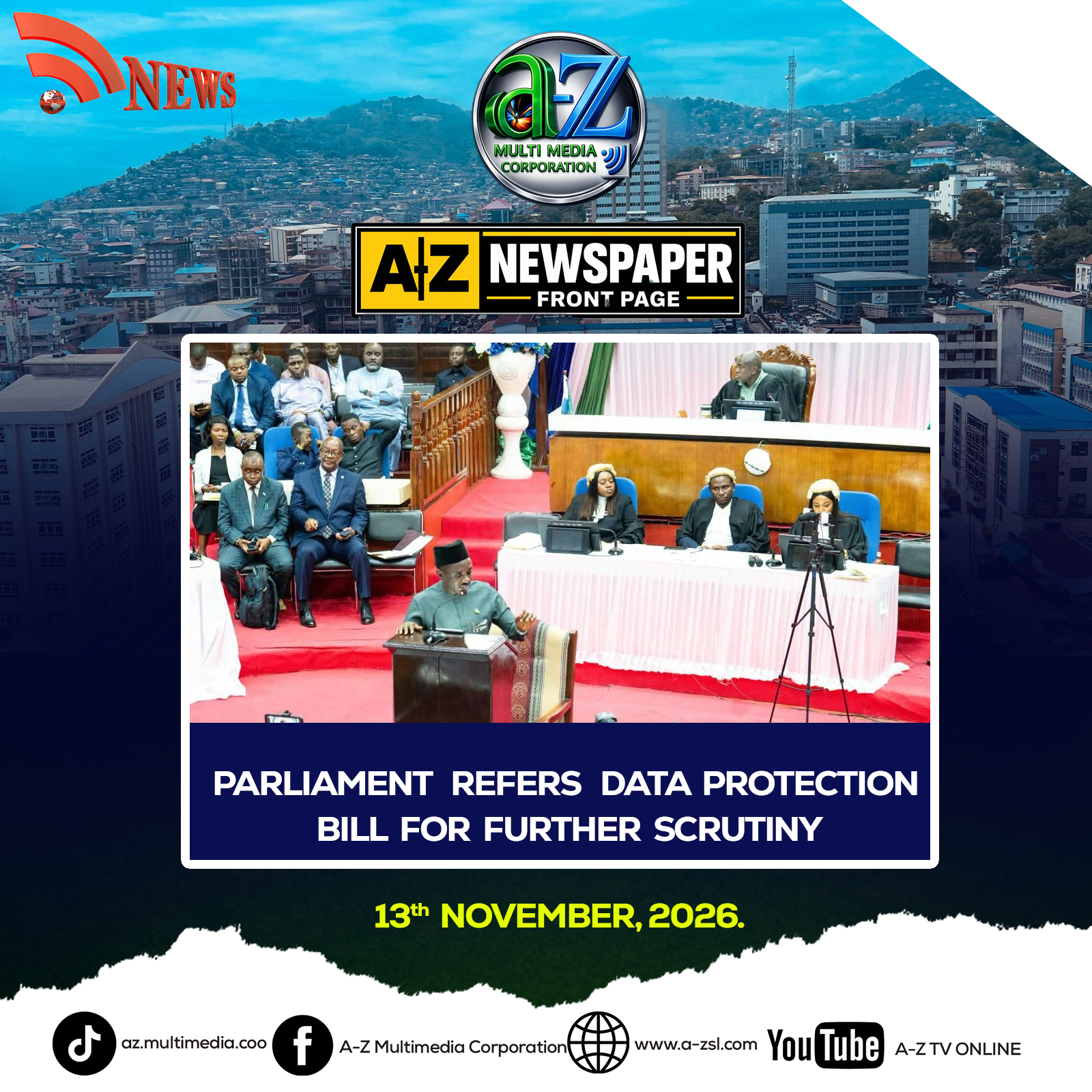
Parliament has referred the Data Protection and Right to Access Information Bill, 2026, to the Committee Stage following a debate in which Members of Parliament raised concerns about citizens’ privacy, access to public information, regulatory independence and safeguards against the misuse of personal data.
The debate featured calls for stronger protection of personal information and improved access to public records, alongside concerns that broad exemptions and inadequate oversight could undermine the rights the proposed legislation seeks to protect.
Introducing the Bill, Minister of Information and Civic Education, Chernoh Bah, said the proposed legislation seeks to establish a modern legal framework for protecting personal information while strengthening citizens’ right to access information held by public institutions.
He explained that the increasing use of digital transactions, online services, artificial intelligence and data-driven business operations had made it necessary to strengthen the country’s legal and institutional arrangements for managing information.
The Minister said citizens should have greater control over their personal information, including protection against its unlawful collection, use or disclosure. He also emphasised the importance of public trust, institutional accountability and adequate resources to ensure the effective implementation of the legislation.
Hon. Hindolo Ngavao welcomed the proposed protections, particularly measures aimed at safeguarding citizens’ privacy and addressing identity theft and cybercrime.
He cited cases of impersonation and fraudulent activities, noting that personal information could be exploited to commit criminal offences. He also raised concerns about access to personal devices, arguing that authorities should follow appropriate legal procedures before inspecting individuals’ phones and other private information.
Hon. Abdul Karim Kamara called for stronger regulation of mobile network operators, particularly regarding SIM card registration, number recycling and mobile money transactions.
He warned that the sale of SIM cards on the streets and inadequate identity verification procedures could expose citizens to fraud. He also highlighted the risks associated with recycled telephone numbers, explaining that new subscribers could face investigations over activities carried out by previous users of those numbers.
He further called for improved data backup systems at the National Civil Registration Authority (NCRA) and the deployment of mobile registration teams to rural communities to improve access to national identity services.
Chairperson of the Committee on Human Rights, Hon. Unpha Sorie Koroma, questioned the proposed arrangement to place data protection and access to information under a single regulatory authority.
He warned that combining the two responsibilities could create conflicts, particularly where data protection provisions might be used to restrict access to information that is in the public interest.
He called for clear safeguards to prevent public institutions from unnecessarily withholding information under the guise of protecting personal data. He also emphasised the need for enforceable deadlines for responding to information requests, effective complaint mechanisms, whistleblower protection and appropriate compensation for individuals whose rights are violated.
Koroma further urged Parliament to ensure adequate protection for sensitive information relating to children, persons with disabilities, victims of sexual and gender-based violence, and individuals receiving medical or mental health services.
He also cautioned against unrestricted access to citizens’ personal information by security agencies, calling for clear legal safeguards and independent oversight.
Opposition Leader Hon. Abdul Kargbo acknowledged the importance of the Bill but expressed concerns about provisions that could weaken the protections it seeks to establish.
He particularly questioned Clause 3, which provides exemptions relating to national security, public interest, crime prevention and investigations. He warned that broadly defined exemptions could give authorities excessive discretion in accessing or processing personal information.
Kargbo also raised concerns about ministerial powers under Clause 5 and the proposed composition of the regulatory board under Clause 17, particularly the Minister’s role in nominating representatives from civil society and the private sector.
He further questioned the discretionary nature of the proposed internal appeal mechanism and called for clearer provisions on penalties rather than leaving important details entirely to regulations.
Despite his concerns, the Opposition Leader acknowledged provisions intended to promote transparency in public spending, protect personal and financial information, and provide remedies for individuals affected by data misuse.
Hon. Bashiru Silikie also raised concerns about the appointment and vetting of members of the proposed regulatory board. He called for clearly defined requirements regarding qualifications, competence and integrity to ensure that appointed members could effectively discharge their responsibilities.
Responding to the concerns raised, Minister Bah thanked Members of Parliament for their contributions and expressed his willingness to work with the Legislative Committee to incorporate reasonable recommendations into the Bill.
On concerns about the proposed dual mandate, he explained that the authority would not become the direct custodian of information but would regulate how institutions collect, store, manage and disclose it.
He said the arrangement was intended to strike a balance between citizens’ right to know and the need to protect personal and sensitive information, adding that similar regulatory structures existed in at least 20 countries.
The Minister also outlined the proposed leadership structure, which would include a Director-General responsible for professional management, a Chief Information Officer overseeing access to information, and a Data Protection Commissioner responsible for data protection.
He acknowledged concerns about aspects of the appointment process and maintained that the proposed framework was not intended to give the Minister excessive control over the authority.
Bah also welcomed suggestions for wider consultation and stronger safeguards in nominating civil society representatives, noting that there was no single state-recognized civil society body representing all organizations.
Meanwhile, Speaker of Parliament, Hon. Segepoh Solomon Thomas, urged ministers to maintain close coordination with chairpersons of parliamentary committees responsible for their respective ministries to promote effective engagement and scrutiny of government business.
Following the debate, Parliament referred the Bill to the Committee Stage for further examination. Lawmakers are expected to scrutinize its provisions and consider proposed amendments before it returns to the House for further legislative consideration.
Once enacted, the proposed legislation is expected to establish a framework for protecting citizens’ personal information while strengthening transparency and access to public records. The Bill has not yet been passed into law.