

By: Aminata Sesay
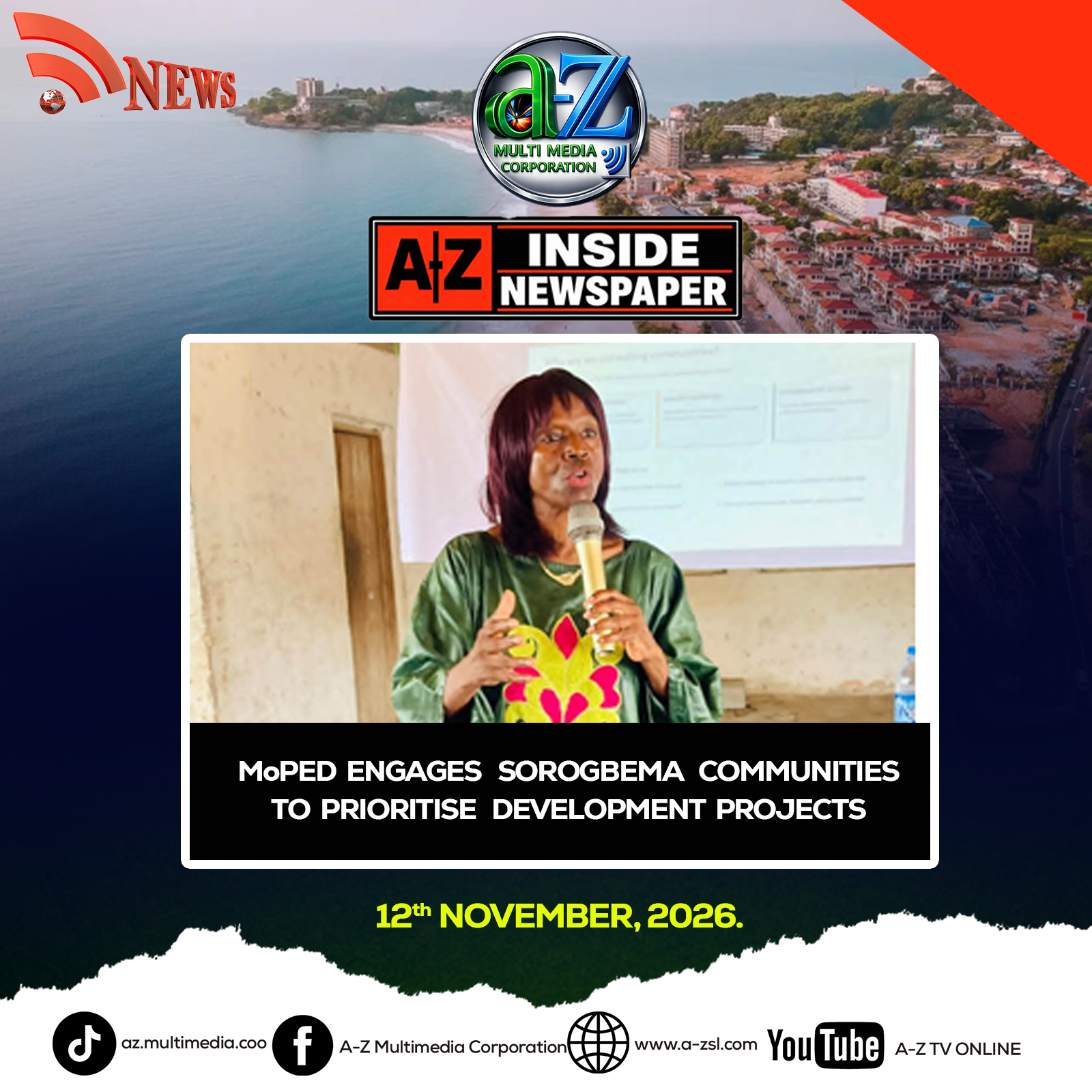
The Ministry of Planning and Economic Development (MoPED) has engaged residents of Sorogbema Chiefdom in a participatory planning exercise to identify and prioritize development projects that address local needs, improve livelihoods and create economic opportunities.
The consultation, held in Fairo, the chiefdom headquarters town, brought together traditional leaders, local council representatives, government officials, women, youth and other community stakeholders to identify key interventions for inclusion in the Sorogbema Chiefdom Development Plan.
The initiative, undertaken in collaboration with the Ministry of Local Government and Community Affairs (MLGCA), with support from the United Nations Department of Economic and Social Affairs (UNDESA), follows an earlier pre-engagement meeting held in Jendema on 12 September 2026.
Addressing participants, the Minister of Planning and Economic Development, Hon. Kenyeh Barlay, emphasised that development plans must reflect the actual needs and aspirations of the communities they are intended to serve. She encouraged residents to actively participate in identifying priorities and take ownership of the planning process.
The Deputy Development Secretary, Mr. Usman Cherry Conteh, who led the MoPED delegation, urged stakeholders to propose practical and achievable projects that address the chiefdom’s development challenges while aligning with the Government’s Big Five Game Changers and the Medium-Term National Development Plan.
He stressed the importance of moving beyond general discussions of community challenges to identifying specific interventions capable of delivering measurable benefits. He also highlighted the need for community commitment to ensure the successful implementation of the proposed projects.
Providing technical guidance, Mr. Joseph Samah, Deputy Director of Planning Policy and Research at MoPED, explained that the proposed interventions would fall into two broad categories: social projects and developmental projects.
He noted that social projects would focus on addressing essential needs and improving access to basic services, while developmental projects would concentrate on income generation and expanding economic opportunities. He encouraged participants to consider both immediate community needs and productive investments that could generate revenue to support further development initiatives.
The consultation also received contributions from traditional and local government authorities. Paramount Chief Mustapha J. Massaquiol of Zoker II Section welcomed the initiative, highlighting the importance of identifying local development priorities and making effective use of available resources and opportunities.
Similarly, the Acting Deputy Chief Administrator of Pujehun District Council, Sama Kailondo Banya, encouraged stakeholders to work collectively in identifying priorities that would improve living conditions across the chiefdom.
Baimba Komeh, Assistant District Officer of MLGCA in Pujehun, underscored the importance of community participation, noting that ownership should extend beyond identifying development priorities to actively supporting and taking responsibility for project implementation.
Following the presentations, participants were divided into groups to discuss, propose and rank potential development interventions. The exercise allowed representatives from different communities and interest groups to share their perspectives and collectively identify the projects they considered most urgent.
The programme was chaired by Baindu Tshombe, District Planning Officer for Pujehun District.
The consultation forms part of MoPED’s broader efforts to strengthen decentralized and inclusive development planning by ensuring that priorities identified at community and chiefdom levels are reflected in district and national development frameworks.
Through the Sorogbema Chiefdom Development Plan, the Ministry aims to establish a structured framework for addressing local development needs, strengthening community ownership and directing investments towards sustainable livelihoods and improved living conditions.