

By: Mamajah Jalloh
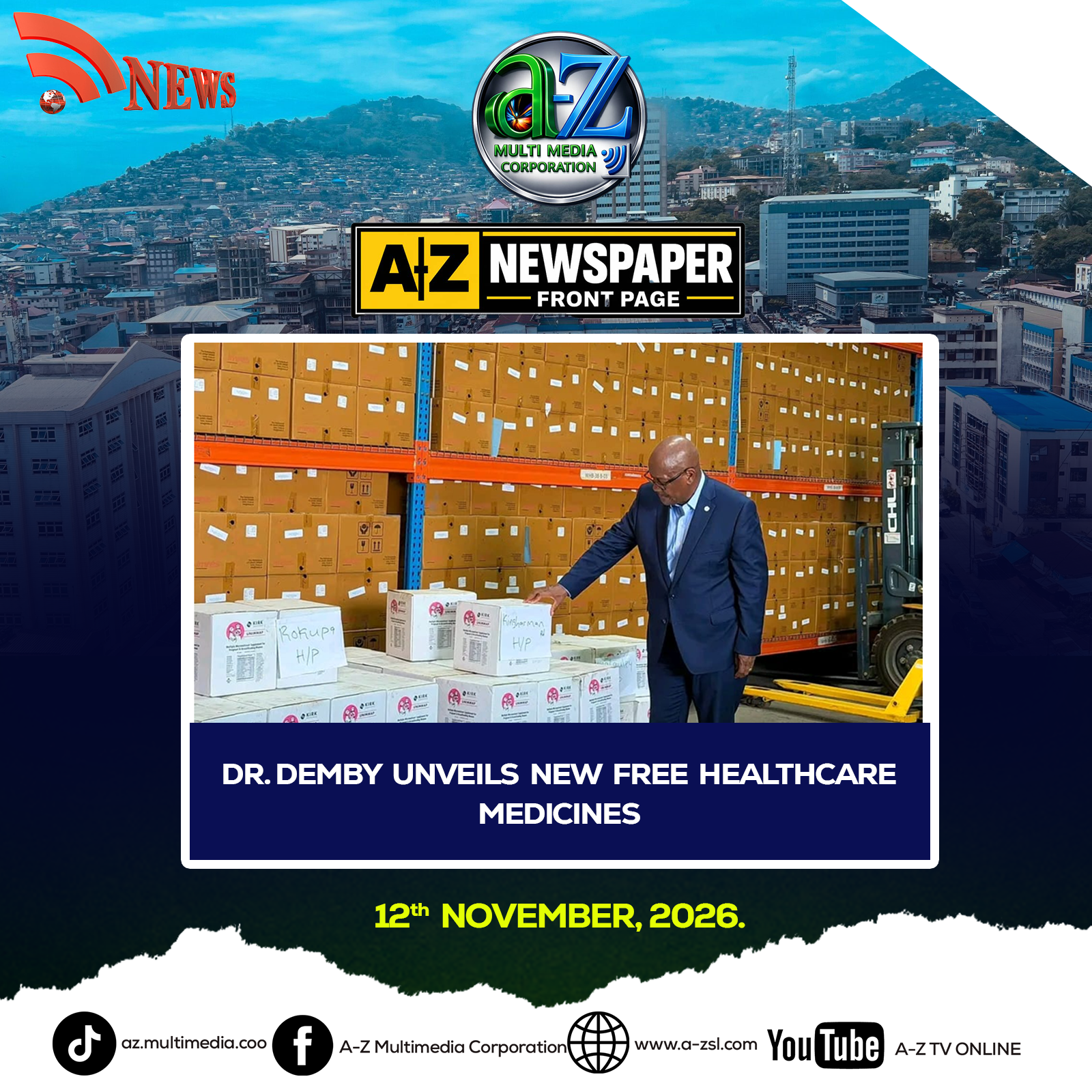
The Minister of Health and Sanitation, Dr. Austin Demby, on Wednesday, 11 November 2026, unveiled a new consignment of medicines and medical supplies under the Free Health Care Initiative, aimed at strengthening healthcare delivery and improving access to essential medicines for women and children across Sierra Leone.
Speaking at the unveiling, Dr. Demby assured the public that the medicines would not remain in warehouses in Freetown but would be distributed to hospitals, health centres and community health posts across the country, particularly facilities where women deliver babies and mothers seek treatment for their sick children.
He emphasised that behind every consignment of medicines is a life that could be saved, noting that pregnant women would be able to deliver safely when essential medicines are available, newborns would receive timely treatment during the critical first hours of life, while children suffering from malaria, pneumonia and diarrhoea could access prompt treatment.
The Minister stressed that under the Free Health Care Initiative, these essential services are provided free of charge at the point of delivery, ensuring that families do not have to choose between paying for healthcare and providing food for their households.
He explained that the latest delivery comes as the country enters the final phase of the Ministry’s 300 Days of Activism, a campaign launched in March to end preventable maternal and child deaths and reach every zero-dose child.
According to him, health workers and communities are making significant efforts to achieve these targets, but their ability to save lives depends heavily on the consistent availability of essential medicines and medical supplies.
Dr. Demby further acknowledged the support of the Foreign, Commonwealth and Development Office (FCDO), UNICEF Sierra Leone and other development partners, who have supported the Free Health Care Initiative since its introduction in 2010.
He said medicines procured through global supply networks are sourced from suppliers prequalified by the World Health Organization (WHO), ensuring that products delivered to health facilities meet required standards of safety, quality and value for money.
However, the Minister warned that significant funding gaps continue to threaten the sustainability of the initiative. He disclosed that the latest national quantification exercise estimated the country’s annual requirement for essential medicines at approximately US$48.7 million, while only about US$2.4 million is currently available, leaving a funding shortfall of more than US$46 million.
He cautioned that every funding shortfall increases the risk of essential medicines becoming unavailable at health facilities, potentially putting the lives of pregnant women, newborns and children at risk.
The Minister expressed appreciation to the Government of Sierra Leone, FCDO, UNICEF and other development partners for their continued support, while urging stakeholders to sustain their commitment beyond the 300 Days of Activism campaign.
Reaffirming the importance of protecting mothers and children, the Ministry emphasised: “Every pregnancy counts. Every child counts.