

By: Mamajah Jalloh
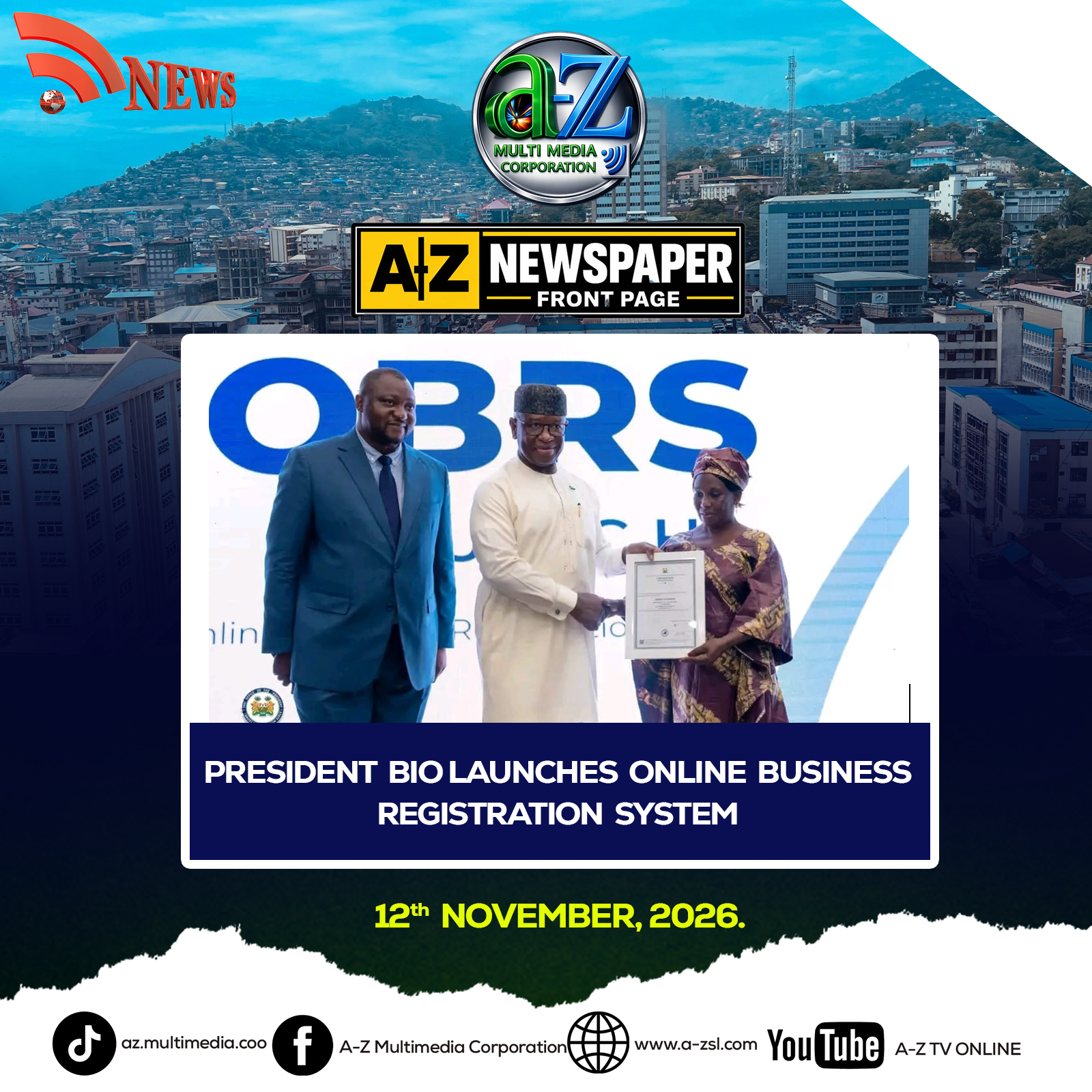
President Julius Maada Bio on Tuesday, 10 November 2026, officially launched the Online Business Registration System (OBRS) at the Miatta Civic Centre in Freetown, in a move aimed at simplifying business registration and reducing bureaucratic hurdles for entrepreneurs and investors across Sierra Leone.
Speaking at the launch, President Bio said the digital platform would make it easier for individuals to register businesses online, regardless of their location. He noted that the initiative would create opportunities for citizens, attract investment and support the growth of small businesses into successful enterprises.
The new system is expected to make business registration more accessible by allowing entrepreneurs and investors, including Sierra Leoneans living abroad, to complete the process without making repeated physical visits to government offices.
Through the platform, applicants can search for and reserve business names, create accounts, complete and submit registration forms, upload identification and other supporting documents, make payments and track the progress of their applications online.
The system is operated through the National Investment Board (NIB), the institution responsible for promoting and facilitating domestic and foreign investment in Sierra Leone. Its introduction forms part of the country’s broader digital transformation agenda, particularly efforts to modernize public service delivery, reduce administrative bottlenecks and create a more enabling environment for private-sector development.
For small and medium-sized enterprises (SMEs), which play a significant role in the country’s economy, the simplified registration process could help address some of the administrative challenges associated with formalizing business operations. Formal registration can also enhance business credibility and improve access to financial services, investment opportunities, commercial partnerships and public procurement.
However, the success of the initiative will depend largely on the efficiency and reliability of the platform, its accessibility to people with limited digital literacy and the availability of adequate technical support from relevant institutions.
Beyond introducing another government digital platform, the launch represents an effort to transform how citizens and investors interact with public institutions when establishing and formalizing businesses in Sierra Leone.
The effectiveness of the system will ultimately be measured by whether it delivers a faster, more transparent and accessible registration process for entrepreneurs across the country.
The real test, therefore, is not simply whether Sierra Leoneans can register their businesses online, but whether the system can translate its promise of convenience into a practical reality for ordinary business owners nationwide.