

By: Audrey Raymonda John
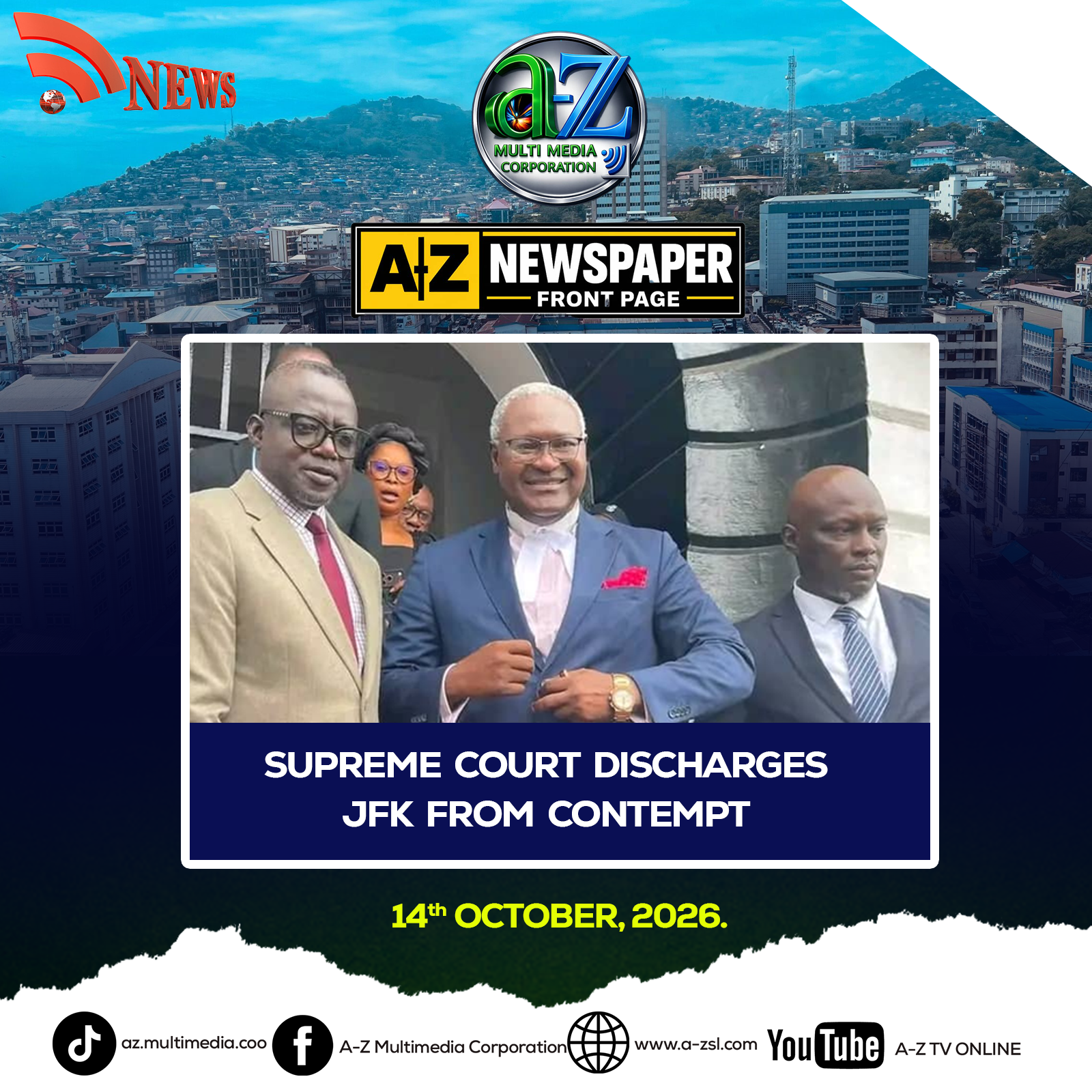
Joseph Fitzgerald Kamara, popularly known as JFK, has been discharged from contempt proceedings by the Supreme Court of Sierra Leone after tendering an apology to the Court over the incident that led to his detention.
The decision was announced on Tuesday, October 13, 2026, by Chief Justice Komba Kamanda, who accepted the apology on behalf of the Court.
Kamara, lead counsel for the plaintiffs in the ongoing constitutional amendment case before the Supreme Court, had been detained over contempt charges arising from proceedings connected to the matter.
During Tuesday’s proceedings, Kamara expressed remorse and apologized to the Court. His colleague, lawyer Borbor Kabba, also pleaded with the Chief Justice and the other Justices to accept the apology and discharge him from the contempt proceedings.
Kabba urged the Court to temper justice with mercy, emphasizing the importance of maintaining a cordial relationship between the Bench and the Bar.
He conveyed an unreserved apology for the incident, expressed regret over what had occurred and appealed to the Justices to consider Kamara’s remorse.
“We humbly plead with Your Lordships for the release of lawyer Kamara from detention in view of the unreserved apology being tendered and the remorse expressed for the contempt committed,” Kabba submitted.
He further stressed that mutual respect and cooperation between lawyers and judges were essential to the administration of justice, urging the Court to grant the request in the interest of justice.
In his address, Chief Justice Komba Kamanda urged lawyers, government representatives and members of the public to exercise restraint in discussing the constitutional amendment case while it remains before the Supreme Court.
He emphasized that the Constitution is the supreme legal foundation of the state and its democratic institutions, adding that the Court was prepared to discharge its constitutional responsibility in the interest of justice and the people of Sierra Leone.
“We are quite aware of the enormity of the task, but we are ready, able, and willing, as we have always been, to interpret the Constitution in the interest of justice and the people of Sierra Leone,” Chief Justice Kamanda stated.
He noted that constitutional matters transcend individual interests, affecting the state, the nation and every Sierra Leonean.
The Chief Justice warned against public statements capable of undermining the integrity of the Supreme Court while the matter is under judicial consideration.
“Now that the Court is seized of this matter and is hearing it, we will not accept people going out to make statements that are bound to undermine the integrity of the Supreme Court,” he warned.
However, he clarified that the warning was not intended to discourage public interest in constitutional affairs. Rather, he urged citizens to remain informed while avoiding comments that could prejudice the proceedings or interfere with the administration of justice.
He said the warning applied equally to lawyers representing the plaintiffs and defendants, government representatives and members of the public.
Chief Justice Kamanda further reminded the parties that the Supreme Court has the constitutional authority to interpret the Constitution and deliver its findings. He urged all stakeholders to exercise patience and allow the Court to perform its duties without unnecessary interference.
He disclosed that timelines had been established for the parties to comply with and assured that the Court intended to adhere strictly to those deadlines to ensure the matter was heard expeditiously.
Describing the case as one of significant national importance, he assured the public that it would receive the urgency and careful consideration it deserved.
The Chief Justice also cautioned lawyers and other stakeholders against making media statements that could damage the image of the judiciary or erode public confidence in the institution.
He stressed that respect for court decisions and state institutions was essential to maintaining peace, order and the rule of law.
“We should respect the decision because if institutions do not exist in any state, then there will be chaos, and nobody wants that,” he said.
Turning to the conduct of legal practitioners, Chief Justice Kamanda commended counsel representing both sides for their conduct during the proceedings and encouraged them to maintain the same level of professionalism as the case continued.
He reminded lawyers that, as ministers of justice, they owed a duty not only to their clients but also to the Court and the broader administration of justice.
“Your duty is to make sure that any matter before the Court is dealt with in accordance with the law. You help in doing that as a lawyer by presenting your arguments and submissions. That is the best a lawyer should do,” he stated.
He cautioned legal practitioners against conduct that could bring the administration of justice into disrepute, stressing that their responsibility was to assist the Court through lawful arguments and submissions.
The Chief Justice further emphasized that respect for judicial officers extended to every level of the judiciary, including the Magistrates’ Courts, the High Court, the Court of Appeal and the Supreme Court.
He urged lawyers to uphold the authority and dignity of the courts while exercising restraint over their emotions and personal sentiments during proceedings.
At the conclusion of the proceedings, Chief Justice Kamanda, on behalf of the Court, accepted the apology tendered by Kamara and supported by Kabba. The Court subsequently discharged Kamara from the contempt proceedings.
The decision brings the contempt proceedings against the lead counsel for the plaintiffs to an end, while the substantive constitutional amendment case remains before the Supreme Court for determination.