

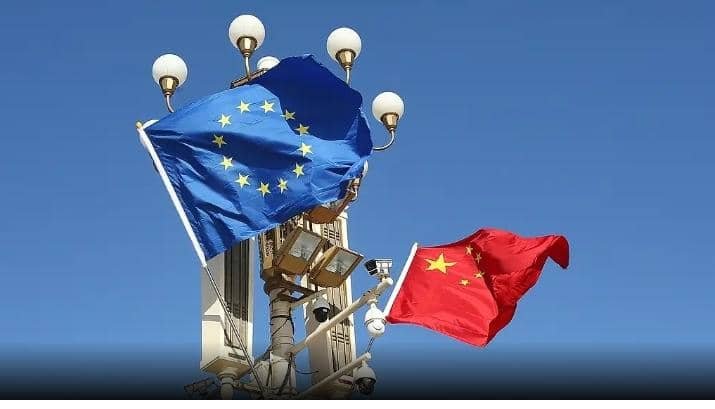
The latest China-European Union (EU) trade talks have highlighted opportunities to strengthen economic cooperation, address trade disputes and support a more stable global trading system.
Takeaway 1: Progress on Tariffs and Rare Earth Exports
Tariffs and rare earth export licensing remain key areas of concern in China-EU trade relations. However, the talks have opened up opportunities for adjustments and improved cooperation.
According to Jiang, the fast-track mechanism for processing export licences for rare earths and permanent magnets supplied to the EU is particularly important to European countries, which have previously called for urgent progress in this area.
China’s position during the discussions, Jiang explained, reflects its stated commitment to maintaining stable economic and trade relations with the EU while working towards a more balanced partnership.
Takeaway 2: China Says It Can Help Address Europe’s Economic Challenges
Wang Wentao, China’s Minister of Commerce, who represented the country during the consultations, stated that “China is not the source of Europe’s problems but a partner in solving them.”
The statement emphasises China’s position that stronger trade cooperation would benefit both sides rather than undermine Europe’s economic interests.
In recent years, however, concerns about China’s economic influence have grown in some European countries, particularly over the EU’s reported trade deficit in goods with China, estimated at €360 billion.
Jiang cautioned against interpreting this figure without examining the broader economic relationship. He argued that the calculation includes goods manufactured in China by European companies and subsequently sold in Europe, meaning some of the trade reflects the activities of European businesses.
He also noted that the goods trade deficit does not account for the EU’s surplus in trade in services with China. According to Jiang, considering goods alone presents an incomplete picture of the overall economic relationship.
He warned that portraying China as a threat could have negative consequences for both sides.
“Presenting interdependence as damage to European sovereignty and security is a classic case of extreme politicization and securitization of economic and trade issues,” Jiang said.
He added that such an approach could increase trade costs, disrupt industrial supply chains, weaken bilateral trust and ultimately harm the economic well-being of all parties.
Takeaway 3: Cooperation Could Strengthen Global Trade
Beyond addressing bilateral concerns, China and the EU could use their economic relationship to contribute to a more stable international trading system.
Jiang observed that both economies are strongly oriented towards exports and have the potential to complement each other through closer cooperation.
He also pointed to the joint statement issued following the consultations, noting that many of its agreements are framed within the principles of the World Trade Organization (WTO).
This, he suggested, demonstrates an opportunity for both sides to support fair-trade principles, strengthen confidence in multilateral trade institutions and improve global trade governance.
“I believe it is important to translate the valuable experience and the approaches used to resolve problems between China and the EU into principles that can promote the governance of the global trading system,” Jiang said.
Overall, the discussions highlight three major areas: progress on trade-related concerns, the importance of examining trade imbalances in their wider economic context, and the potential for China-EU cooperation to support global trade stability. The extent to which these opportunities translate into concrete outcomes will depend on the implementation of agreements and both sides’ willingness to address outstanding differences.