

By: Isatu Yollah Bangura
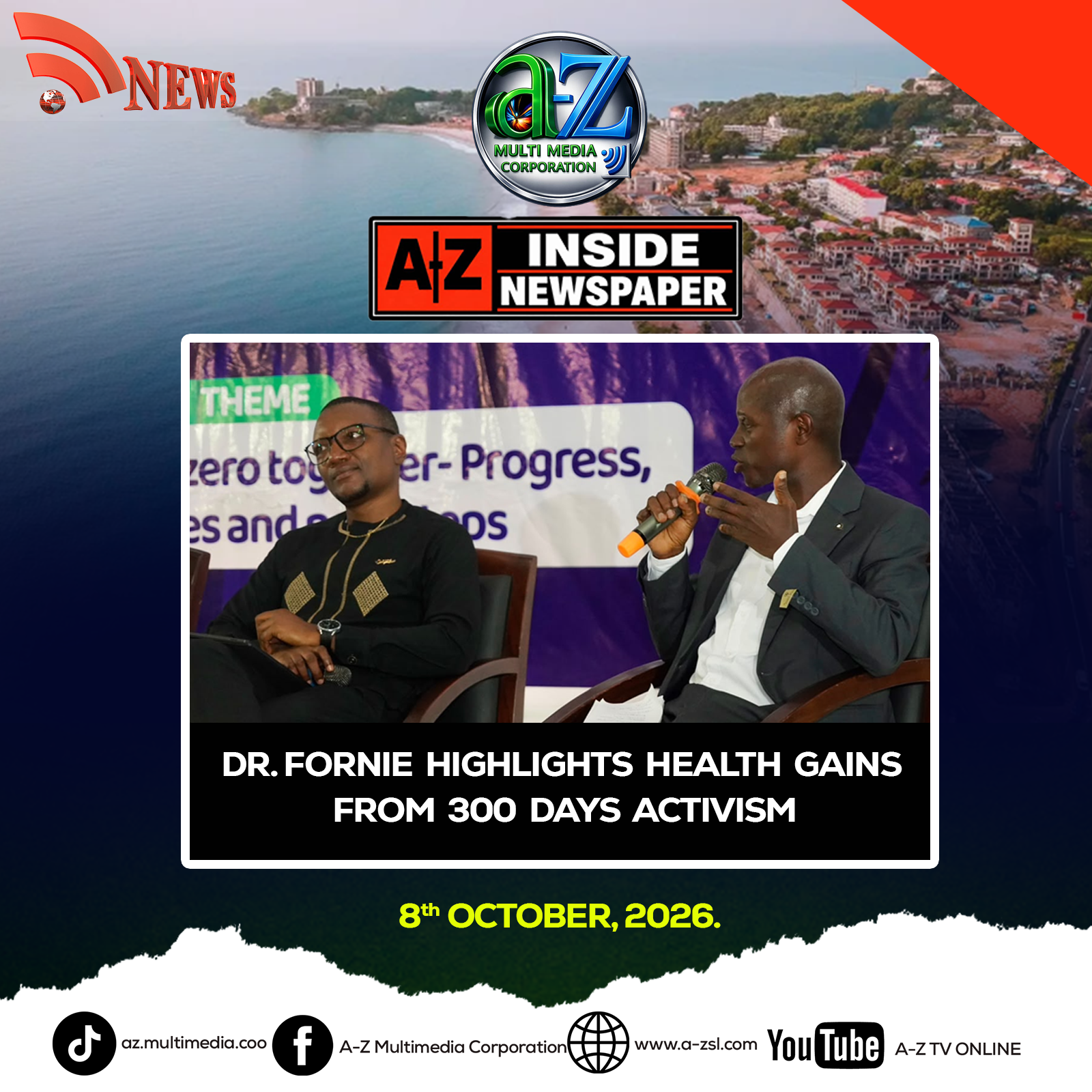
Dr. Steven Fornie has highlighted key lessons and health interventions undertaken during the 300 Days of Activism campaign, particularly efforts to improve healthcare delivery and reach hard-to-access communities across the country.
Speaking on the campaign, Dr. Fornie noted that some districts face significant geographical challenges, including mountainous terrain, valleys, rivers, muddy roads and other difficult conditions that can hinder access to healthcare services. He also identified local beliefs, cultural practices and rumours as factors that influence healthcare delivery and community engagement.
According to him, the 300 Days of Activism has changed the approach of district health teams, shifting their focus from simply identifying challenges to finding practical solutions within their communities.
He explained that health officials are now encouraged to assess the challenges they face and determine what can be addressed locally before escalating issues to the national level.
Dr. Fornie also highlighted the importance of mentorship and regular engagement with senior health authorities. He said weekly reviews and guidance from senior officials have strengthened the capacity of district health teams and improved collaboration between district and national-level health authorities.
Speaking about interventions in Koinadugu District, Dr. Fornie said the campaign focused on reaching pregnant women and other vulnerable groups in hard-to-reach communities. He said health teams registered pregnant women, conducted outreach services and deployed mobile teams to remote communities, including providing ultrasound services where possible.
He further stressed the importance of strengthening referral systems and communication, noting that collaboration with the media is essential to ensuring that health messages and information reach communities effectively.
Dr. Fornie identified improved access to health facilities, stronger referral mechanisms and increased public trust in the health system as important measures for reducing maternal and child deaths.
He said strengthening hospitals and ensuring the availability of surgical services when needed would help save lives, particularly in emergency cases. He also stressed the importance of maintaining adequate blood supplies, especially for patients suffering from severe malaria and other conditions requiring blood transfusion.
The doctor further explained that outreach teams have adopted targeted strategies to reach remote communities, including spending more time in hard-to-reach areas and deploying mobile health teams to provide essential services.
He noted that monitoring key indicators, including early antenatal care attendance and child deaths, remains essential for identifying areas requiring urgent intervention.
Dr. Fornie concluded by emphasizing the need for continued teamwork, community engagement, effective referral systems, reliable data and strengthened health facilities to sustain the gains made through the 300 Days of Activism.