

By: Amara Kargbo
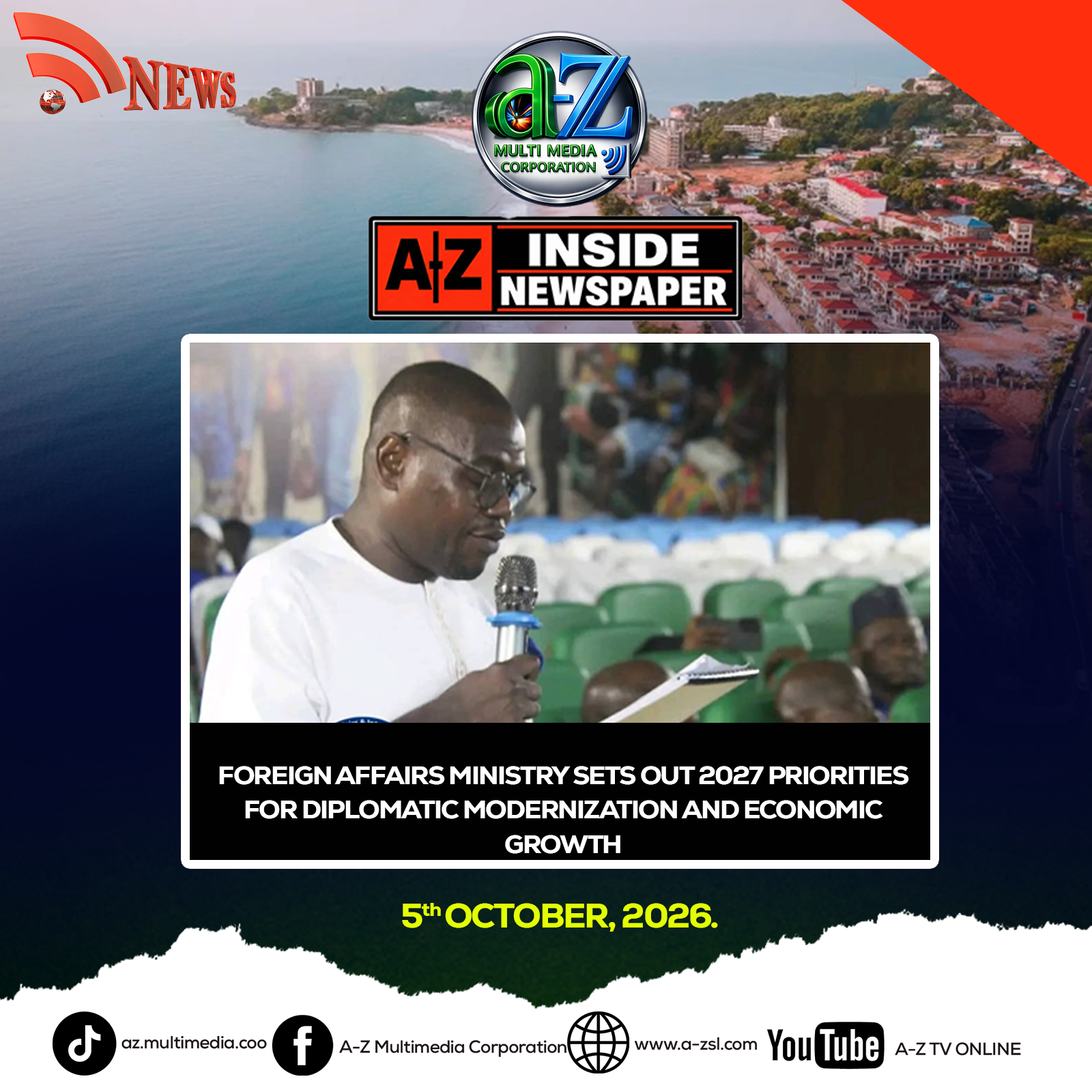
The Ministry of Foreign Affairs and International Cooperation has outlined an ambitious programme to modernize Sierra Leone’s diplomatic service, strengthen consular assistance, advance economic diplomacy and reinforce public accountability under its proposed 2027 budget.
The priorities emerged during the ministry’s 2027 bilateral budget discussion, which brought together representatives from the Ministry of Finance, Ministry of Planning and Economic Development, District Budget Oversight Committees, civil society organizations, non-state actors and the media. The engagement provided an opportunity to examine the ministry’s financial requirements, assess institutional challenges and identify strategic interventions to improve diplomatic performance and service delivery.
The Director of Budget, Tasima Jah, opened the session by welcoming participants and emphasizing the significance of the budget process in evaluating government programmes, financial commitments and development priorities. Acting Director General of the Ministry of Foreign Affairs, Franklyn B. Fawundu, described the annual engagement as an important expression of the government’s commitment to transparency, accountability and responsible public financial management.
He stressed that technical institutions, district oversight structures, civil society organizations and the media had an essential role in scrutinizing public expenditure and monitoring the implementation of government programmes.
According to figures presented during the discussions, the ministry operates 28 diplomatic missions and consulates. Mr. Fawundu disclosed that delays in releasing operational funds have constrained several diplomatic missions’ ability to meet routine expenses, raising concerns about the sustainability and efficiency of overseas operations. He also highlighted the condition of government-owned chancelleries and official residences, some of which require substantial rehabilitation and maintenance. In response, the ministry intends to strengthen financial planning, accelerate digital transformation and improve coordination with relevant government institutions to address longstanding operational difficulties and ensure more effective use of public resources.
Modernization of diplomatic services through digital technology constitutes a central pillar of the proposed 2027 Budget. Director of Administration and Finance Emmanuel M. Sandi said the Ministry intends to move away from cumbersome paper-based procedures towards integrated digital systems capable of tracking service delivery, revenue collection and institutional performance. Under the proposed reforms, citizens would be able to access selected consular services electronically, including appointment scheduling and document authentication, thereby reducing unnecessary physical visits and improving administrative efficiency.
The proposed transformation also encompasses stronger digital record-keeping, performance dashboards, service-level agreements and key performance indicators for the ministry’s headquarters and overseas missions. Mr Sandi explained that these mechanisms would provide a clearer basis for measuring institutional performance, identifying operational weaknesses and holding responsible officials accountable for agreed commitments. The initiative reflects the ministry’s intention to establish a more responsive, transparent and results-oriented diplomatic service.
Economic diplomacy is equally prominent in the ministry’s proposed priorities, with overseas missions expected to assume a more proactive role in identifying commercial opportunities, attracting investment and strengthening international trade relations. Officials said diplomatic representation should extend beyond traditional political engagement to include practical efforts to connect prospective investors with relevant institutions in Sierra Leone. To advance this objective, the ministry plans to deepen collaboration with the National Investment Board, Ministry of Trade and other ministries, departments and agencies responsible for economic development.
Mr. Sandi said ambassadors and diplomatic officers would be expected to contribute more actively to identifying investment prospects, facilitating business relationships and promoting Sierra Leone as a destination for productive investment. The ministry also proposed strengthening commercial networks around selected diplomatic missions, particularly in locations with substantial economic activity. Dubai and Guangzhou were cited as examples of strategic locations where appropriate diplomatic representation could help expand trade, attract investment and improve assistance to Sierra Leonean citizens. Director General maintained that the value of overseas missions should increasingly be demonstrated through tangible economic contributions and effective consular services.
Alongside investment promotion, the ministry intends to improve the registration and identification of Sierra Leoneans living abroad through databases containing relevant demographic and professional information. Mr Sandi said reliable information about citizens overseas would strengthen the government’s capacity to respond to emergencies while helping identify specialized skills and expertise that could support national development. Such measures would also provide a more organised framework for engaging the diaspora and recognizing its potential contribution to the country’s economic and social progress.
The proposed reforms further include stronger emergency response arrangements, evacuation procedures and assistance for citizens affected by armed conflict or other crises abroad. Referring to previous situations in which Sierra Leoneans required assistance overseas; Mr. Sandi said the experiences should inform more systematic emergency preparedness and response planning. The ministry also intends to expand communication with citizens through town-hall meetings, social media platforms and direct engagement between overseas communities and diplomatic missions, with the aim of improving access to information and strengthening public confidence in consular services.
Providing an update on the proposed Foreign Service Bill, Director of Legal Affairs Patrick Hassan Morlai Koroma said the legislation had been published in the Gazette, with a second publication expected before its submission to Parliament. He indicated that the ministry hoped the bill would be laid before Parliament in October, subject to the parliamentary timetable, as part of efforts to advance the legislative process before the end of the year.
The proposed legislation is intended to professionalize Sierra Leone’s Foreign Service by establishing clearer career progression, strengthening training and promotion arrangements, and reinforcing accountability among ambassadors, heads of missions and other diplomatic officials. It is also expected to align diplomatic responsibilities more closely with public financial management standards and institutional obligations.
The rehabilitation of diplomatic infrastructure remains another significant consideration within the proposed budget. Officials acknowledged that several overseas missions require substantial maintenance and that outstanding payments for completed or ongoing works have contributed to delays in project delivery. The ministry intends to prioritize future investments according to strategic diplomatic, economic and consular needs, ensuring that Sierra Leone’s diplomatic facilities reflect the country’s standing while providing appropriate working conditions for personnel and effective services for citizens.
To translate its proposed reforms into measurable outcomes, the ministry plans to introduce stronger performance management arrangements covering headquarters and overseas missions. These would incorporate key performance indicators, standard operating procedures, attendance monitoring, service delivery standards and periodic performance reviews.
The Director said the framework would create verifiable records of institutional activities, facilitate objective assessments of performance and establish a clearer link between public expenditure and results. The ministry emphasized that any increase in financial support must be accompanied by prudent resource management, transparent reporting and demonstrable improvements in service delivery.
The ministry also stressed that its proposed 2027 budget should not be viewed exclusively as a request for increased government funding but as an opportunity to strengthen institutional efficiency and expand its contribution to national revenue generation. Mr. Sandi said improved consular services, more effective economic diplomacy and investment facilitation could unlock additional revenue opportunities. Digital systems would further enhance the ministry’s ability to monitor income generated by diplomatic missions and ensure accurate, transparent reporting of receipts.
At the conclusion of the engagement, participants moved for the ministry’s proposed budget to be adopted, subject to the agreed priorities and deliverables. Mr. Fawundu said the ministry was keen to ensure that the principal commitments identified during the discussions were incorporated into its 2027 implementation programme, providing a practical basis for monitoring progress and assessing results.
Ultimately, the proposed budget seeks to reposition Sierra Leone’s Foreign Service as a modern, professionally managed and performance-driven institution capable of safeguarding citizens abroad, advancing national interests, strengthening international partnerships and creating opportunities for trade and investment. Its success, however, will depend on adequate and timely funding, sustained inter-institutional cooperation, disciplined implementation, and an unwavering commitment to public accountability.