

By: Aminata Sesay
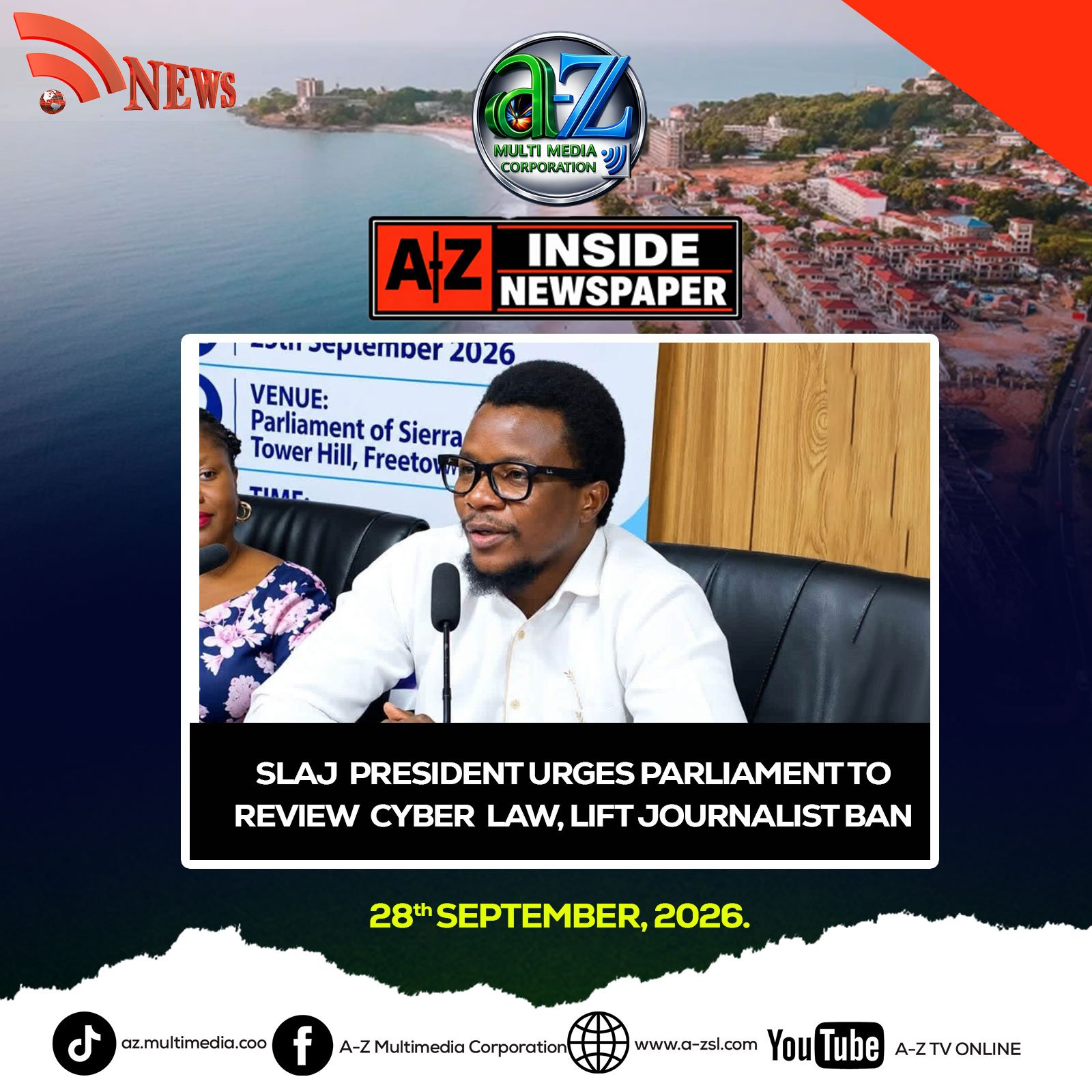
President of the Sierra Leone Association of Journalists (SLAJ), Manika Kamara, has called on Parliament to review provisions of the Cyber Security and Crime Act and reconsider the ban imposed on parliamentary journalist Melvin Tejan Mansaray.
Manika made the call on Friday, September 25, during the Parliamentary Press Gallery-Sierra Leone (PPG-SL) Extraordinary Annual General Meeting in Freetown, which was convened to consider and adopt a revised constitution for the Gallery.
Addressing journalists and other stakeholders, Manika said Parliament had a responsibility to create an enabling environment for journalists to carry out their work independently and professionally.
He specifically raised concerns about Clause 44(2) of the Cyber Security and Crime Act, which he described as “not media-friendly” and “not progressive.”
Manika argued that journalists should not face criminal liability simply for contacting individuals by telephone or text message while seeking information or clarification for news reports.
“Our responsibility is to inform members of the public with facts. So it should not be a crime for us to call or send a text message to anybody soliciting information,” he said.
He urged Parliament to consider the concerns raised by journalists, stressing that the media should be regarded as a partner in national development.
“The media is the fourth arm of government. We are not a mouthpiece of the government, neither the opposition. We are only representing the people of Sierra Leone,” Manika said.
The SLAJ President also appealed to the Speaker and parliamentary leadership to reconsider the ban imposed on Mansaray, which he said had lasted for more than a year.
According to Manika, Mansaray had appeared before a parliamentary committee investigating the matter and tendered an apology, but the committee’s report and final decision had not been made public.
He therefore called for the ban to be lifted to enable Mansaray to resume reporting from Parliament.
“It’s over one year since that apology was tendered. We are yet to see the committee’s report, neither hear the final decision of that committee,” he said.
Manika said restrictions on journalists’ access to Parliament could affect media freedom and public accountability.
He also linked Mansaray’s continued ban to Sierra Leone’s position in the World Press Freedom Index, saying the issue had contributed to a decline in the country’s ranking. He urged authorities to give the matter greater attention ahead of the next World Press Freedom Index.
Beyond the specific concerns, Manika reminded members of the Parliamentary Press Gallery of their responsibility to report Parliament independently and hold public officials accountable.
He stressed that the Gallery should not be treated as an extension of Parliament’s Public Relations Unit, noting that parliamentary journalists should report proceedings to the public and provide analysis where appropriate.
“You are not here to promote Parliament, but you are here to report Parliament activities within Parliament,” he told the journalists.
He also urged journalists to maintain professional boundaries in their relationships with lawmakers, warning that familiarity with politicians should not compromise journalistic integrity.
The Extraordinary AGM also considered the review and adoption of the PPG-SL constitution. Manika urged members to ensure that the revised document provides clear provisions on leadership tenure and eligibility for elective positions, while promoting inclusivity and gender representation.
He said the constitution should serve as a long-term framework for the Gallery’s operations and encouraged members to carefully consider its provisions before adoption.
The meeting brought together current and former parliamentary journalists and representatives of media organizations to deliberate on the proposed constitutional framework and issues affecting parliamentary journalism.