

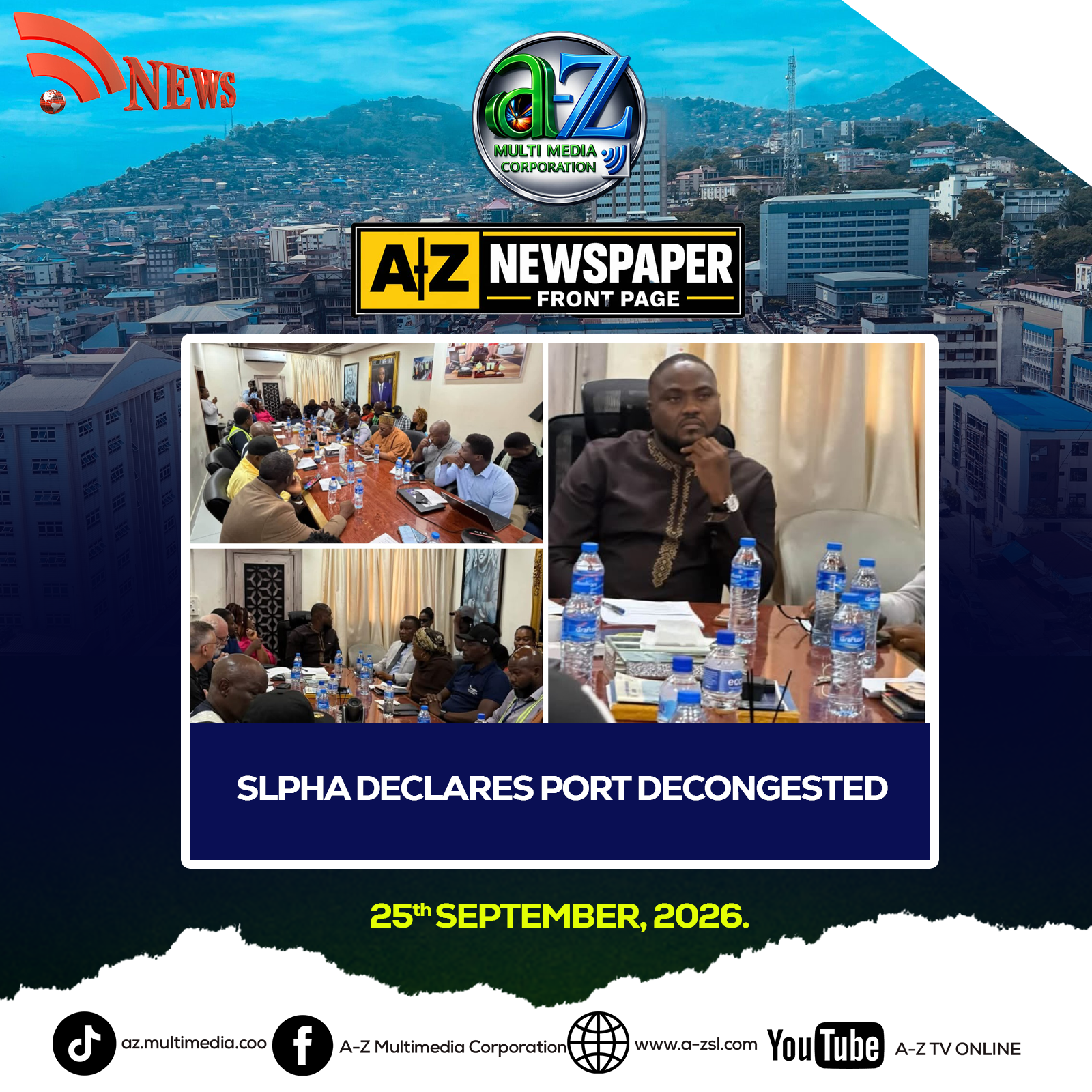
The Sierra Leone Ports and Harbours Authority (SLPHA) has declared the Queen Elizabeth II Quay in Cline Town, Freetown, decongested following recent measures to improve cargo clearance and port operations.
The declaration was made by SLPHA Director General Yankuba Askia Bio during a stakeholders and media engagement held at the Port Conference Hall in Cline Town.
Mr. Bio said collaborative efforts involving Freetown Terminal Limited (FTL), Nectar Sierra Leone Bulk Terminal (NSBT), government agencies and other port stakeholders had contributed to reducing delays and improving cargo movement at the port.
He called on importers and other stakeholders whose goods are awaiting clearance to complete the necessary clearance processes and remove their consignments from the quay.
The Director General disclosed that the Freetown Port has been operating on a 24-hour basis since the beginning of 2026 to facilitate the continuous movement and handling of cargo.
He also said the Queen Elizabeth II Quay had been removed from the list of congested ports in Africa following improvements in port operations, cargo handling and efficiency.
Mr. Bio further disclosed that a single-window software system is being developed to allow port users to initiate and complete various clearance processes remotely without necessarily visiting the quay.
He explained that SLPHA is not responsible for the day-to-day operational activities at the port, noting that these functions are carried out by port operators and other relevant agencies, including NSBT, FTL and the National Revenue Authority (NRA).
According to Mr. Bio, SLPHA operated as a service port from 1964 to 2010, during which period the Authority performed most of the operational functions at the quay.
He said those operational responsibilities were subsequently transferred to the two concessionaires, FTL and NSBT. He added that SLPHA’s current responsibilities include providing port infrastructure, regulatory oversight, safety and security compliance, and an enabling environment for operators to conduct their activities.
During the engagement, representatives of key port stakeholders outlined their respective responsibilities.
NSBT is responsible for bulk and break-bulk cargo handling, while FTL handles containerized cargo. The NRA is responsible for customs clearance, duties and revenue collection, while Integrated Trade Services (ITS) undertakes the scanning of containerized cargo.
Logistics Solutions Services (LSS) is responsible for tracking cargo from the port of loading to discharge, while the Indigenous Transport Owners Association and Private Investors (ITOA) handles the haulage of cargo and containers to and from the quay.
The reported improvements at the Freetown Port highlight the role of coordination among SLPHA, terminal operators, shipping lines, government agencies and other stakeholders in improving port performance, facilitating international trade and strengthening Sierra Leone’s maritime sector.