

By: Aminata Sesay
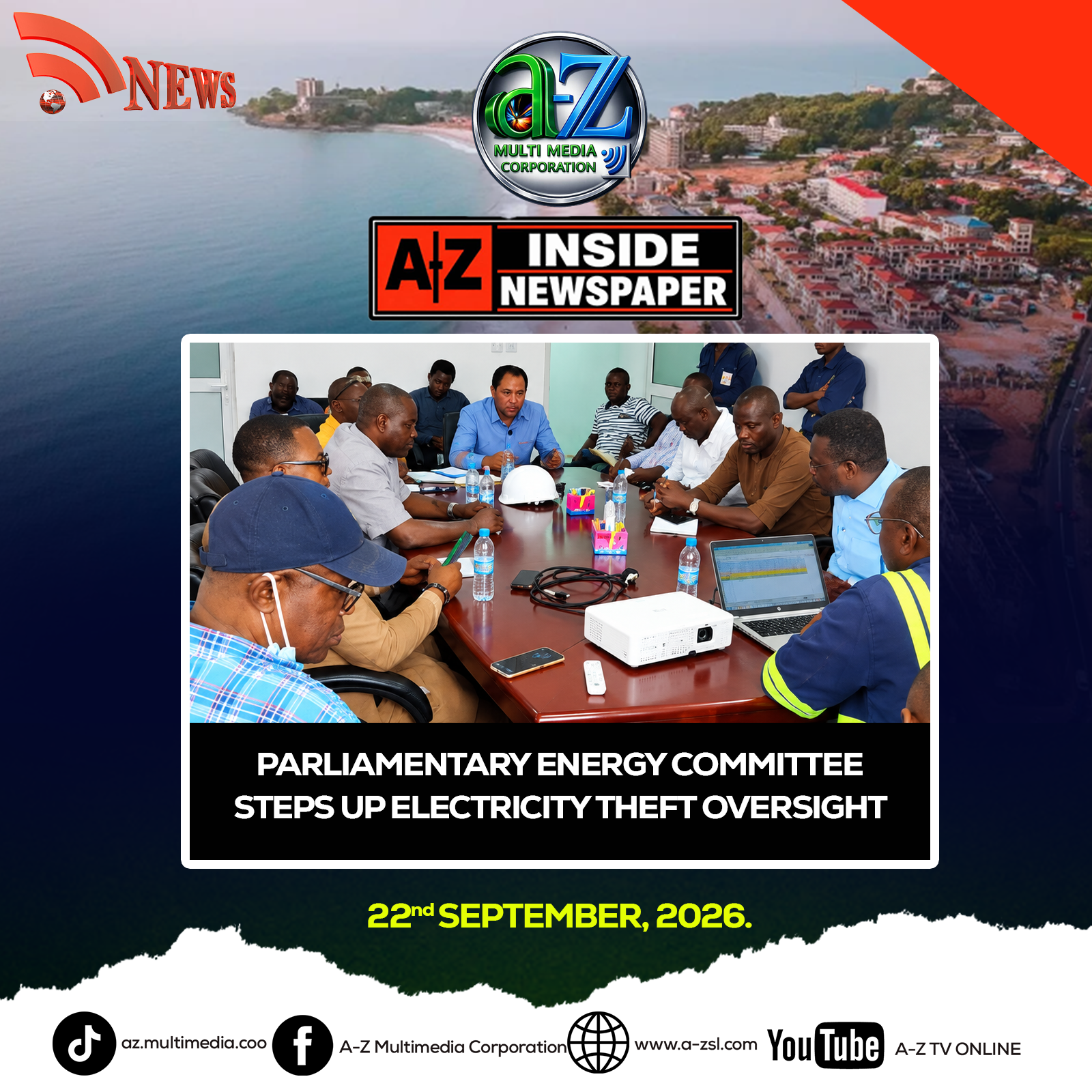
The Parliamentary Oversight Committee on Energy, chaired by Hon. Momoh Bockarie, has intensified efforts to tackle electricity theft through unannounced inspections of selected factories, hotels and other high-energy-consuming facilities.
The surprise inspections are aimed at examining electricity consumption by commercial and industrial establishments, assessing compliance with established procedures and identifying practices that may contribute to revenue losses in the electricity sector.
The Committee is particularly concerned about illegal electricity connections, meter tampering, meter bypassing and other forms of unauthorized electricity consumption that could deprive the Electricity Distribution and Supply Authority (EDSA) of revenue.
Factories, large hotels, processing facilities and other industrial establishments can consume significant amounts of electricity. Where electricity is illegally abstracted or meters are manipulated, the consequences can extend beyond revenue losses.
Such practices can place additional pressure on the distribution network and undermine the financial sustainability of the electricity sector.
The Committee said unannounced inspections allow oversight officials and technical personnel to observe facilities under normal operating conditions and identify suspected irregularities that might otherwise be concealed.
The exercise also forms part of Parliament’s broader responsibility to scrutinize the performance of public institutions and ensure that national resources are properly managed.
During its oversight activities, the Committee examined concerns surrounding revenue leakages and the potential impact of electricity theft on EDSA’s ability to collect payment for power supplied to consumers.
Committee members expressed concern that large-scale electricity theft, where established, could have serious financial consequences, particularly because high-consumption facilities account for substantial electricity usage.
The Committee therefore stressed the need for stronger monitoring, accurate metering, effective billing and enforcement against individuals or institutions found to be illegally consuming electricity.
Revenue collection is particularly important because the electricity sector requires substantial resources to purchase power, maintain infrastructure, service existing systems and expand access to communities.
The Committee also emphasized that no individual or institution should be above the law, stressing that enforcement measures should apply equally to all electricity consumers, regardless of their commercial, social or political standing.
Where credible evidence of electricity theft is established, the Committee said the appropriate authorities should investigate and take action in accordance with Sierra Leonean law and applicable regulations.
The involvement of EDSA officials, Ministry of Energy technical personnel and law enforcement authorities during such operations can also assist in documenting suspected violations and preserving evidence where further investigation or prosecution may be required.
However, the Committee stressed the importance of properly investigating allegations discovered during oversight inspections and ensuring that affected businesses are given due process before being publicly identified as offenders.
Electricity theft is not only an institutional concern, as its effects can ultimately be felt by households and businesses that legitimately pay for electricity.
When electricity is consumed without being properly metered or paid for, the utility loses revenue that could otherwise be used to maintain transformers, distribution lines, substations and other critical infrastructure.
For businesses operating legitimately, effective enforcement is also important to ensure that companies that pay their electricity bills are not placed at a competitive disadvantage against establishments benefiting from illegal connections.
The Parliamentary Oversight Committee on Energy is therefore seeking greater accountability throughout the electricity supply chain while encouraging consumers to comply with established electricity regulations.
As the Committee intensifies its oversight, the effectiveness of the exercise will ultimately be measured not simply by the number of surprise inspections conducted, but by documented reductions in electricity theft, improved revenue collection, successful enforcement where violations are proven and better electricity services for consumers.
For Sierra Leone, where reliable and affordable electricity remains central to economic growth, industrial development and household wellbeing, tackling electricity theft remains an important part of building a more accountable and financially sustainable energy sector.